

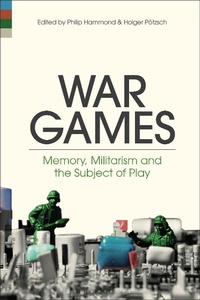
War Games
Memory, Militarism and the Subject of Play
1st Edition
Published on 12. December 2019
288 pages
978-1-5013-5117-4 (ISBN)
Description

Many of today's most commercially successful videogames, from Call of Duty to Company of Heroes, are war-themed titles that play out in what are framed as authentic real-world settings inspired by recent news headlines or drawn from history. While such games are marketed as authentic representations of war, they often provide a selective form of realism that eschews problematic, yet salient aspects of war. In addition, changes in the way Western states wage and frame actual wars makes contemporary conflicts increasingly resemble videogames when perceived from the vantage point of Western audiences.
This interdisciplinary volume brings together scholars from games studies, media and cultural studies, politics and international relations, and related fields to examine the complex relationships between military-themed videogames and real-world conflict, and to consider how videogames might deal with history, memory, and conflict in alternative ways. It asks: What is the role of videogames in the formation and negotiation of cultural memory of past wars? How do game narratives and designs position the gaming subject in relation to history, war and militarism? And how far do critical, anti-war/peace games offer an alternative or challenge to mainstream commercial titles?
This interdisciplinary volume brings together scholars from games studies, media and cultural studies, politics and international relations, and related fields to examine the complex relationships between military-themed videogames and real-world conflict, and to consider how videogames might deal with history, memory, and conflict in alternative ways. It asks: What is the role of videogames in the formation and negotiation of cultural memory of past wars? How do game narratives and designs position the gaming subject in relation to history, war and militarism? And how far do critical, anti-war/peace games offer an alternative or challenge to mainstream commercial titles?
Reviews / Votes
The volume is separated into three interrelated thematic sections: 'Militarism and the Gaming Subject' addresses players' situatedness within military-themed games; 'Playing War, History, and Memory' looks at the role of games in influencing military history and cultural memory; and 'Wargames/Peacegames' focuses on how conceptual frameworks are embedded in military-themed games. Though the volume addresses both analog and digital games, it focuses on events in Europe and European games. This is a boon not a limitation in that it adds depth, richness, and specificity to the study of both games and the cultural/historical perspectives addressed. The game This War of Mine, which is based on the living conditions and atrocities civilians endured during the Siege of Sarajevo, is treated in more than one essay ... Summing Up: Highly recommended. Upper-division undergraduates through faculty; professionals. * CHOICE * The impressive range of perspectives in this collection bring new insight and nuance to the expanding field of war and games. * Debra Ramsay, Lecturer in Film, University of Exeter, UK * Beginning with the predominant tension, and indeed contradiction, between war and games, Hammond and Poetzsch have put together a remarkable collection of essays which at turns surprises, challenges and even provokes the reader into engaging with a core theme running through historical and military themed video games. Namely, how can games (a theoretically ludic and playful medium) deal with war (a vicious and destructive phenomenon which is anything but playful)? The answers to this core question vary from one contributor to another. Some offer approaches from the perspectives of historical enquiry and critical theory. Others are involved in questions of player identification, empathy and collective or public memory. Still others use reception methods like participant observation and empirical fieldwork to understand what players take away from this fundamentally interactive medium of games. What all of the responses in this carefully and cleverly edited collection do offer, however, is a sustained and thoughtful meditation on the centrality of conflict to ludology, ludology to conflict, and the effects of wargaming on players, games, society and the industry. An excellent compendium for an era dominated by war and mediated simulacra of warfare, War Games has brought together some of the cutting-edge scholars working in the emerging discipline of historical gaming to produce a meaningful and important discussion of how war and games are critically and culturally enmeshed in twenty-first-century society. * Dr. Andrew B.R. Elliott, Senior Lecturer in Media and Cultural Studies, University of Lincoln, UK *More details
Edition
1. Auflage
Language
English
Place of publication
New York
United States
Publishing group
Bloomsbury Publishing PLC (Digital)
Target group
Professional and scholarly
Illustrations
19 bw illus
ISBN-13
978-1-5013-5117-4 (9781501351174)
Copyright in bibliographic data and cover images is held by Nielsen Book Services Limited or by the publishers or by their respective licensors: all rights reserved.
Schweitzer Classification
Other editions
Additional editions
Book
06/2021
Bloomsbury Academic USA
€59.67
Shipment within 15-20 days
Book
12/2019
Bloomsbury Academic USA
€161.80
Shipment within 15-20 days
Persons
Philip Hammond is Professor of Media and Communications at London South Bank University, UK. His previous publications include Media, War and Postmodernity (2007) and Screens of Terror (2011).
Holger Poetzsch is Associate Professor in Media and Documentation Studies at UiT - The Arctic University of Norway. He publishes widely in such journals as Games & Culture, Game Studies, and New Media and Society.
Holger Poetzsch is Associate Professor in Media and Documentation Studies at UiT - The Arctic University of Norway. He publishes widely in such journals as Games & Culture, Game Studies, and New Media and Society.
Content
Notes on Contributors
Acknowledgements
Introduction: Studying War and Games
Philip Hammond (London South Bank University, UK) and Holger Poetzsch (UiT - The Arctic University of Norway)
I: Militarism and the Gaming Subject
1. Reality Check: Videogames as Propaganda for Inauthentic War
Philip Hammond (London South Bank University, UK)
2. Playing in the End Times: Wargames, Resilience and the Art of Failure
Kevin McSorley (University of Portsmouth, UK)
3. The Political Economy of Wargames: The Production of History and Memory in Military Video Games
Emil Lundedal Hammar (UiT - The Arctic University of Norway) and Jamie Woodcock (University of Oxford, UK)
4. Understanding War Game Experiences: Applying Multiple Player Perspectives to Game Analysis
Kristine Jorgensen (University of Bergen, Norway)
II: Playing War, History, and Memory
5. Playing the Historical Fantastic: Zombies, Mecha-Nazis and Making Meaning about the Past Through Metaphor
Adam Chapman (University of Gothenburg, Sweden)
6. Machine(s) of Narrative Security: Mnemonic Hegemony and Polish Games about Violent Conflicts
Piotr Sterczewski (Jagiellonian University in Krakow, Poland)
7. National Memories and the First World War: The Many Sides of Battlefield 1
Chris Kempshall (the Imperial War Museum, UK)
8. Let's Play War: Cultural Memory, Celebrities and Appropriations of the Past
Stephanie de Smale (Utrecht University, the Netherlands)
III: Wargames/Peacegames
9. The Wargame Legacy: How Wargames Shaped the Roleplaying Experience from Tabletop to Digital Games
Dimitra Nikolaidou (Aristotle University of Thessaloniki, Greece)
10. Critical War Game Development: Lessons Learned from Attentat 1942
Vit Sisler (Charles University, Czech Republic)
11. Simulating War Dynamics: A Case Study of the Game-based Learning Exercise Mission Z: One Last Chance
Joakim Arnoy (Narvik War and Peace Centre, Norway)
12. Positioning Players as Political Subjects: Forms of Estrangement and the Presentation of War in This War of Mine and Spec Ops: The Line
Holger Poetzsch (UiT - The Arctic University of Norway)
Afterword: War/Game
Matthew Thomas Payne (University of Notre Dame, USA)
Index
Acknowledgements
Introduction: Studying War and Games
Philip Hammond (London South Bank University, UK) and Holger Poetzsch (UiT - The Arctic University of Norway)
I: Militarism and the Gaming Subject
1. Reality Check: Videogames as Propaganda for Inauthentic War
Philip Hammond (London South Bank University, UK)
2. Playing in the End Times: Wargames, Resilience and the Art of Failure
Kevin McSorley (University of Portsmouth, UK)
3. The Political Economy of Wargames: The Production of History and Memory in Military Video Games
Emil Lundedal Hammar (UiT - The Arctic University of Norway) and Jamie Woodcock (University of Oxford, UK)
4. Understanding War Game Experiences: Applying Multiple Player Perspectives to Game Analysis
Kristine Jorgensen (University of Bergen, Norway)
II: Playing War, History, and Memory
5. Playing the Historical Fantastic: Zombies, Mecha-Nazis and Making Meaning about the Past Through Metaphor
Adam Chapman (University of Gothenburg, Sweden)
6. Machine(s) of Narrative Security: Mnemonic Hegemony and Polish Games about Violent Conflicts
Piotr Sterczewski (Jagiellonian University in Krakow, Poland)
7. National Memories and the First World War: The Many Sides of Battlefield 1
Chris Kempshall (the Imperial War Museum, UK)
8. Let's Play War: Cultural Memory, Celebrities and Appropriations of the Past
Stephanie de Smale (Utrecht University, the Netherlands)
III: Wargames/Peacegames
9. The Wargame Legacy: How Wargames Shaped the Roleplaying Experience from Tabletop to Digital Games
Dimitra Nikolaidou (Aristotle University of Thessaloniki, Greece)
10. Critical War Game Development: Lessons Learned from Attentat 1942
Vit Sisler (Charles University, Czech Republic)
11. Simulating War Dynamics: A Case Study of the Game-based Learning Exercise Mission Z: One Last Chance
Joakim Arnoy (Narvik War and Peace Centre, Norway)
12. Positioning Players as Political Subjects: Forms of Estrangement and the Presentation of War in This War of Mine and Spec Ops: The Line
Holger Poetzsch (UiT - The Arctic University of Norway)
Afterword: War/Game
Matthew Thomas Payne (University of Notre Dame, USA)
Index
