

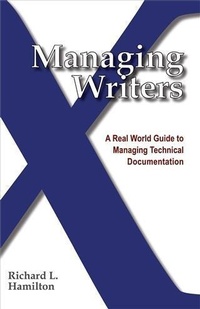
Managing Writers
A Real World Guide to Managing Technical Documentation
Published on 15. January 2009
282 pages
978-1-4571-8226-6 (ISBN)
Description

Managing Writers is a practical guide to managing documentation projects in the real world. It is informal, but concise, using examples from the author's experience working with and managing technical writers. It looks beyond big project, big team methodologies to the issues faced by smaller, less well-funded projects.
Managing Writers is for technical writers, both freelancers and employees, documentation managers, and managers in other disciplines who are responsible for documentation; anyone who may need to manage, full or part-time, a documentation project.
Inside the Book
- Leading People
- Leading Projects
- Leading Technology
- Glossary, Bibliography, and Index
More details
Other editions
Additional editions
Book
01/2009
XML Press
€30.50
Shipment within 3-4 weeks
Content
- Intro
- Managing Writers
- Table of Contents
- Preface
- Audience
- Structure
- Acknowledgements
- Part I. Getting Started
- Chapter 1. Introduction
- Chapter 2. The Elements of Technical Writing
- The Product
- The Developers
- The Audience
- The Tasks
- The Deliverables
- The Environment
- The Schedule
- Putting it Together
- Chapter 3. Power and Influence
- Part II. Managing People
- Chapter 4. Working with Human Resources
- The Good Old Days
- The HR World Today
- When you Must Work with HR
- Maintaining a Good Relationship with HR
- Chapter 5. Hiring
- What Makes a Great Technical Writer?
- Evaluating a Candidate
- Evaluating a résumé
- Checking the web
- Conducting a phone screening
- Conducting an interview
- Selecting the interview team
- Preparing the interview team
- Evaluating candidates
- Evaluating writing samples
- Checking references
- Using Contractors and Contract Services
- Regular employees
- Contractors
- Contract services
- Off-Shoring
- Hiring non-employee staff
- Managing the Hiring Process
- Chapter 6. Motivating
- What Does it Mean to Motivate?
- Common Demotivators
- Removing Demotivators
- Building a Motivated Team
- Chapter 7. Managing Change
- The Burning Platform
- The Change Function
- Leading Change
- Perceived crisis
- Desired future state
- Pain of adoption
- Attitudes towards change
- Chapter 8. Employee Performance Evaluation
- The Ritual
- Gathering Input
- Writing the Evaluation
- The Employee Discussion
- Preparing for the discussion
- Discussing objectives
- Discussing rankings and ratings
- Handling difficult situations
- Wrapping up the discussion
- Employee Ranking and Rating
- What are ranking and rating?
- Problems with ranking and rating
- Formulating rankings and ratings
- Common elements
- Ranking and rating meetings
- Some final thoughts on rating and ranking
- Part III. Managing Projects
- Chapter 9. Development Methodologies
- Sequential Model
- Iterative Model
- The Good
- The Bad
- The Ugly
- The real world
- Chapter 10. Project Planning
- Rules of Thumb
- Defining Objectives
- Defining Deliverables
- Creating Schedules
- Managing the dimensions of scheduling
- Scheduling deliverables
- Estimating effort
- Identifying dependencies
- Assumptions, Risks, and Contingencies
- Assumptions
- Risks
- Contingency plans
- Assigning Resources
- Combining Schedules
- Dealing with Unreasonable Schedules
- Documentation debt
- Working with project management
- Miscellanea
- Writing the Plan
- Chapter 11. Tracking
- Basic Tracking
- Advanced Tracking
- Tracking up
- Tracking across
- Other considerations
- Early Warning Signs
- Chapter 12. Measurement and Metrics
- The Impact of Measurement
- Management Strategies
- Measurement Strategies
- What to measure
- Who should measure
- How to use measurements
- Summing Up
- Chapter 13. Localizing Your Documentation
- Internationalization and Localization
- Internationalization
- Characters and character sets
- Local conventions
- Generated text
- Localization
- Translation
- What You Need to Know
- Scheduling Localization
- Minimizing Translation Costs
- Chapter 14. Single Sourcing
- Content Reuse
- Content Repurposing
- Part IV. Managing Technology
- Chapter 15. Living with Technology
- Rules of Thumb
- Chapter 16. Acquiring Technology
- Defining the Problem
- Defining Requirements for a Solution
- Gathering input
- Defining use cases
- Writing the Requirements Specification
- Introduction
- Overall description
- Use cases
- Functional requirements
- Non-functional requirements
- Working with Vendors
- Chapter 17. Building a Business Case
- Business Case Basics
- Profit Centers and Cost Centers
- Building a cost center business case
- Building a profit center business case
- How to look like a profit center
- Writing the Business Case
- Business need
- Proposed solution
- Cost
- Benefits
- Selling the Business Case
- Caveats and Limitations
- Chapter 18. XML Technology
- The Origins of XML
- Key Concepts
- Schemas
- Semantic markup
- Data independence
- XML Pros and Cons
- Reasons to use XML
- Reasons not to use XML
- Choosing an XML Schema
- Content
- Deliverables
- Customization
- Scale
- Cost
- Buzz
- Putting it together
- Chapter 19. Using the Internet
- Where are You Starting From?
- Developing Content for the Internet
- Getting the Most out of the Internet
- Book-ware
- Block-ware
- Custom-ware
- Web 2.0 and Beyond
- Wikis
- News groups
- Webinars
- Social networking
- Chapter 20. Managing Content
- Content Management Concepts
- Organizing content
- Storing and retrieving content
- Sharing content
- Publishing content
- Workflow Management and Collaboration
- Content Management Systems
- Essential functionality
- Additional functionality
- Selection guidelines
- Rolling your own
- Information architecture on a shoe string
- Chapter 21. Avoiding Common Pitfalls
- Misunderstanding or Ignoring Your Real Needs
- Misunderstanding Your Users
- Misunderstanding Your Requirements
- Misunderstanding Your Processes
- Ignoring Your Intuition
- Underestimating the Cost of Change
- Chapter 22. Epilogue
- Appendix A. Documentation Plan Template
- Executive Summary
- Objectives
- Overview of Deliverables
- Schedule
- Assumptions
- Risks and Contingencies
- Resources
- Approvals
- Glossary
- Bibliography
- Index
- Blank Page
