

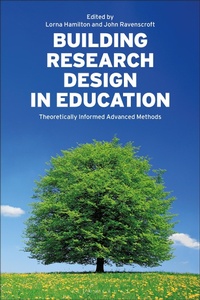
Building Research Design in Education
Theoretically Informed Advanced Methods
1st Edition
Published on 14. June 2018
288 pages
978-1-350-01951-5 (ISBN)
Description

Building Research Design in Education provides insights into the ways in which foundational knowledge of research and research processes can be applied in order to build rigorous research design. If your research is to have meaning and value, this text will enable you to make informed choices and decisions about your design, bearing in mind the complex ideas and theoretical framing needed to underpin it.
Drawing on the research expertise of the contributors, this text initially introduces the foundations for differing ideas around epistemology and ontology, then splits into four parts looking at quantitative, qualitative and mixed methods research approaches as well as other possibilities for research, including newer or emerging forms of research. Throughout, good research design is shown as taking many shapes with its premise always being rooted in a clear understanding of what is known and what is knowable according to the researcher's world view, in harmony with epistemological and ontological roots.
Chapters include learning activities, case examples of international research, essential reading, as well as further advanced reading suggestions, and online resources with additional exemplars and activities. This book is for the advanced student who already has an insight into the basics of research and is wanting to ensure a robust approach to research construction and reflection.
Drawing on the research expertise of the contributors, this text initially introduces the foundations for differing ideas around epistemology and ontology, then splits into four parts looking at quantitative, qualitative and mixed methods research approaches as well as other possibilities for research, including newer or emerging forms of research. Throughout, good research design is shown as taking many shapes with its premise always being rooted in a clear understanding of what is known and what is knowable according to the researcher's world view, in harmony with epistemological and ontological roots.
Chapters include learning activities, case examples of international research, essential reading, as well as further advanced reading suggestions, and online resources with additional exemplars and activities. This book is for the advanced student who already has an insight into the basics of research and is wanting to ensure a robust approach to research construction and reflection.
More details
Edition
1. Auflage
Language
English
Place of publication
London
United Kingdom
Publishing group
Bloomsbury Publishing PLC
Target group
College/higher education
Illustrations
20 bw illus
ISBN-13
978-1-350-01951-5 (9781350019515)
Copyright in bibliographic data and cover images is held by Nielsen Book Services Limited or by the publishers or by their respective licensors: all rights reserved.
Schweitzer Classification
Other editions
Additional editions
Lorna Hamilton | John Ravenscroft
Building Research Design in Education
Theoretically Informed Advanced Methods
Book
06/2018
Bloomsbury Academic
€33.50
Shipment within 15-20 days
Persons
Lorna Hamilton is Senior Lecturer in the School of Education, University of Edinburgh, UK.
John Ravenscroft is Professor in the School of Education, University of Edinburgh, UK.
John Ravenscroft is Professor in the School of Education, University of Edinburgh, UK.
Content
List of Figures
List of Tables
Notes on Contributors
Introduction, Lorna Hamilton and John Ravenscroft
1. Building a Research Design: Thinking about Knowledge and What It Means to Education Research, John Ravenscroft and Pete Allison
Part I: Building Quantitative Research Designs
2. Cross-Sectional and Longitudinal Surveys, Ellen Boeren
3. Experimental and Quasi-Experimental Research Design in Education, Katie Cebula
Part II: Building Qualitative Research Designs
4. Qualitative Research Design: Principles, Choices and Strategies, Jane Brown
5. Theoretical Grounding in Case Study Research, Lorna Hamilton and Dimitra Tsakalou
Part III: Building Mixed Methods Research Designs
6. Mixed Methods Research: Achieving a Robust Design, Fiona O'Hanlon
7. International and Comparative Research Design, Ellen Boeren
Part IV: Other Possibilities of Shaping Research Design
8. Collaborative Ethnography: What Is It and How Can You Start Doing It?, Luke Eric Lassiter
9. Participatory Action Research with Young People, Christina McMellon and Mary Mitchell
10. Speculative Method as an Approach to Researching Emerging Educational Issues and Technologies, Jen Ross
11. Evaluating Technologies for Children's Learning: The Challenges, and Steps to Address Them, Andrew Manches
Conclusion
References
Index
List of Tables
Notes on Contributors
Introduction, Lorna Hamilton and John Ravenscroft
1. Building a Research Design: Thinking about Knowledge and What It Means to Education Research, John Ravenscroft and Pete Allison
Part I: Building Quantitative Research Designs
2. Cross-Sectional and Longitudinal Surveys, Ellen Boeren
3. Experimental and Quasi-Experimental Research Design in Education, Katie Cebula
Part II: Building Qualitative Research Designs
4. Qualitative Research Design: Principles, Choices and Strategies, Jane Brown
5. Theoretical Grounding in Case Study Research, Lorna Hamilton and Dimitra Tsakalou
Part III: Building Mixed Methods Research Designs
6. Mixed Methods Research: Achieving a Robust Design, Fiona O'Hanlon
7. International and Comparative Research Design, Ellen Boeren
Part IV: Other Possibilities of Shaping Research Design
8. Collaborative Ethnography: What Is It and How Can You Start Doing It?, Luke Eric Lassiter
9. Participatory Action Research with Young People, Christina McMellon and Mary Mitchell
10. Speculative Method as an Approach to Researching Emerging Educational Issues and Technologies, Jen Ross
11. Evaluating Technologies for Children's Learning: The Challenges, and Steps to Address Them, Andrew Manches
Conclusion
References
Index
