

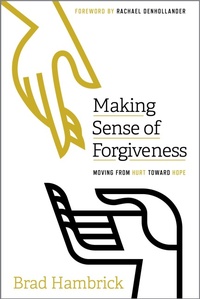
Making Sense of Forgiveness
Description

Clichés, glib answers, and quick solutions are shared all too often with those who are struggling to forgive or embrace forgiveness. We know Jesus calls us to forgive, but it can be hard to know what that looks like in complicated, messy relationships. Pastor and counselor Brad Hambrick helps readers to understand that forgiveness is the start of a journey that doesn't erase the past, but honestly confronts hurt and clears the way for a hope-filled discussion on how to move toward healing.
Too often forgiveness is viewed as the culmination of a journey, but when someone says, "I forgive you," they are not saying, "Things are all better now." They are saying, "I have decided to relate to your offense towards me differently." Hambrickhelps readers make sense of forgiveness biblically and relationally by addressing a variety of common questions that arise when we have been hurt: Does forgiveness mean restoration of trust? Am I supposed to "forgive and forget"? What is the role of biblical wisdom and boundaries on the road to forgiveness?
Making Sense of Forgiveness speaks to those who are struggling by acknowledging the seriousness of their pain, explaining the difference between forgiveness and reconciliation, and helping readers understand the relationship between forgiveness and emotional freedom. The author explores the characteristics of God's forgiveness toward us and how that shapes our own forgiveness.
Includes a foreword from lawyer, activist, and former gymnast Rachael Denhollander.
More details
Other editions
Additional editions
Person
Brad Hambrick, ThM, EdD, serves as the Pastor of Counseling at The Summit Church in Durham, NC. He also serves as Assistant Professor of Biblical Counseling at Southeastern Baptist Theological Seminary, a council member of the Biblical Counseling Coalition, and has authored several books including God's Attributes: Rest for Life's Struggles, and served as general editor for the Becoming a Church that Cares Well for the Abused curriculum.
Content
- Intro
- Foreword
- Introduction: A Guide to the Journey Ahead
- Section 1: Definitions and Misunderstandings
- Chapter 1: Remember, Forgiveness Begins with Pain
- Chapter 2: Five Things Forgiveness Is Not
- Chapter 3: Three Dimensions of Forgiveness
- Chapter 4: Three Things We Don't Need to Forgive
- Chapter 5: Why We Shouldn't Forgive Misinterpretations
- Section 2: Embracing God's Forgiveness
- Chapter 6: God's Forgiveness to Us: Unconditional?
- Chapter 7: "Forgive and Forget" and an Omniscient God
- Chapter 8: Intrapersonal Forgiveness: Should I Forgive Myself?
- Section 3: Wisely Extending Forgiveness
- Chapter 9: The Uncomfortable Reality: Forgiveness Is Never Deserved
- Chapter 10: Can Boundaries and Forgiveness Coexist?
- Chapter 11: Forgiveness and Manipulative Repentance
- Chapter 12: Trust As a Proportional Virtue
- Chapter 13: Identifying Wise Trust on a Spectrum
- Chapter 14: Crisis and Postcrisis Forgiveness
- Chapter 15: Remembering Well after Forgiveness
- Section 4: Embracing Forgiveness from Others
- Chapter 16: Is Embracing Forgiveness from People Harder Than from God?
- Chapter 17: Forgiveness and Shame, Not Just Guilt
- Chapter 18: The Offensiveness of God Forgiving Sins against Me
- Section 5: Moving toward What Is Commonly Called "Closure"
- Chapter 19: Forgiveness and Emotional Freedom
- Chapter 20: Love Covers a Multitude of Sins
- Chapter 21: Forgiveness and Leaving Room for the Wrath of God
- Chapter 22: Forgiveness and Protecting Other Vulnerable People
- Chapter 23: Forgiveness and Emotional Maturity: Root and Fruit
- Section 6: Avoiding Ministry Mishaps
- Chapter 24: When Discussing Parables about Forgiveness
- Chapter 25: When Discussing Narratives Involving Forgiveness
- Chapter 26: When Using Criminal or Traumatic Offenses as Illustrations of Forgiveness
- Chapter 27: Forgiveness and the Assurance of Salvation: Religious Scrupulosity
- Conclusion: The Next Chapter of Your Life
