

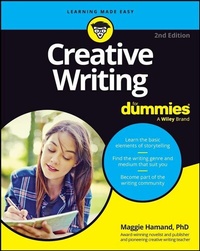
Creative Writing For Dummies
2nd Edition
Published on 24. August 2023
400 pages
978-1-394-19669-2 (ISBN)
Description

Unlock your creative potential and write something special
Ever dream of writing a book, article, poem, or play that means something to you--and maybe to someone else as well? Do you have an idea you're ready to get down on paper? In Creative Writing For Dummies, you'll learn how to unleash your creative side and become a confident and productive writer.
Discover the essential elements of storytelling, including structure, characterization, setting, dialogue, and plot, as you navigate the countless ways you can express yourself with the written word. Explore the media and methods you can use to help find an audience--from traditional to self-publishing, social media, blogging, and more!
Creative Writing For Dummies also shows you how to:
* Write in all sorts of different formats, including screenplays, scripts, creative nonfiction, poetry, short stories, novels, and beyond
* Navigate the world of social media and learn how it can contribute to getting your work read by more people in more places
* Understand the new, online nature of contemporary journalism and the proliferation of news and blogging sites
A can't-miss roadmap to getting your first--or hundred-and-first--story, poem, or script committed to paper, Creative Writing For Dummies is an essential read for aspiring, amateur, and professional writers everywhere.
Ever dream of writing a book, article, poem, or play that means something to you--and maybe to someone else as well? Do you have an idea you're ready to get down on paper? In Creative Writing For Dummies, you'll learn how to unleash your creative side and become a confident and productive writer.
Discover the essential elements of storytelling, including structure, characterization, setting, dialogue, and plot, as you navigate the countless ways you can express yourself with the written word. Explore the media and methods you can use to help find an audience--from traditional to self-publishing, social media, blogging, and more!
Creative Writing For Dummies also shows you how to:
* Write in all sorts of different formats, including screenplays, scripts, creative nonfiction, poetry, short stories, novels, and beyond
* Navigate the world of social media and learn how it can contribute to getting your work read by more people in more places
* Understand the new, online nature of contemporary journalism and the proliferation of news and blogging sites
A can't-miss roadmap to getting your first--or hundred-and-first--story, poem, or script committed to paper, Creative Writing For Dummies is an essential read for aspiring, amateur, and professional writers everywhere.
More details
Other editions
Additional editions
Maggie Hamand
Creative Writing For Dummies
Book
09/2023
2nd Edition
Wiley
€24.00
Shipment within 15-20 days
Content
- Cover
- Title Page
- Copyright Page
- Table of Contents
- Introduction
- About This Book
- Foolish Assumptions
- Icons Used in This Book
- Beyond the Book
- Where to Go from Here
- Part 1 Getting Started
- Chapter 1 You and Your Writing
- Focusing on Writing as Well as You Can
- Examining Why You Want to Write
- Identifying the Kind of Writing You Want to Do
- Considering different genres
- Confirming your favorite form of expression
- Discovering Your Own Specific Talent
- Practicing Your Writing
- Putting in the hours
- Reading and re-reading
- Overcoming Common Writing Obstacles
- Silencing your inner critic
- Thinking creatively
- Letting the Ideas Come
- Playing with Words
- Making nouns and verbs stronger
- Taking out adverbs and adjectives
- Writing in different tenses
- Avoiding cliché
- Doing writing exercises
- Learning from imitation
- Developing an ear for good prose
- Offering Tips for New Writers
- Don't worry about publication
- Write for yourself
- Draft, don't edit - yet!
- Don't write too fast
- Pace yourself
- Put aside your ego
- Chapter 2 Getting into the Write Mindset
- Finding a Writing Time that Works for You
- Designating a Writing Space
- Writing at home
- Clearing the kitchen table
- Retreating to the garden shed
- Tucking away in a corner
- Finding a place nearby
- Assembling Your Writing Tools
- Avoiding Distractions
- Overcoming the Blank Page Syndrome
- Understanding the causes
- Writing your way off the blank page
- When blank page syndrome makes an extended stay: Dealing with writer's block
- Separating Drafting and Editing
- Organizing Your Writing: Developing a Routine and Sticking to It
- Working electronically
- Keeping track of all that paper
- Learning to Live with a Degree of Chaos
- Realizing the importance of not knowing
- Taking time to develop your ideas
- Chapter 3 Finding Material to Work With
- Writing from Experience
- Realizing your own wide experience
- Mining memories
- Making use of other people's experiences
- Writing what you - and other people - know
- Engaging Emotions
- Taking a Step Back: Reflecting on Your Experiences and Emotions
- Trying Techniques to Transform Your Experiences
- Making use of myth and reality
- Be selective: Focusing on significant moments
- Jumping in time
- Transforming fact into fiction
- Part 2 Introducing the Elements of Creative Writing
- Chapter 4 Creating Characters
- Defining Different Kinds of Characters
- Discovering Where Characters Come From
- Detailing Clues about Your Characters
- Portraying Personality
- Fleshing out your character's . . . well, flesh
- Inhabiting a body
- Leaving room for imperfection
- Sharing a character's thoughts and feelings
- Letting actions speak for your characters
- Listening to how your characters talk
- Revealing Character Indirectly
- Gathering friends and enemies
- Choosing a name
- Putting first names first
- Adding last names and family names
- Taking care in choosing foreign names
- Avoiding Stereotypes and Tapping into Archetypes
- Diversifying stereotypes
- Uncovering archetypes: The Jungian personality theory
- Chapter 5 Giving Characters a Voice with Dialogue
- Remembering that Dialogue Is a Two-Way Street
- Distinguishing Voices
- Creating natural rhythm
- Constructing a voice
- Talking in Varied Situations
- Getting into he said, she said
- Speaking face to face
- Talking on the telephone
- Containing a crowd
- Creating a Dynamic with Dialogue
- Keeping it short
- Paying attention to place
- Revealing the Subtext
- Using Accents and Dialect
- Conveying foreign accents
- Remembering historical voices
- Laying Out Dialogue
- Chapter 6 Choosing a Narrator
- Defining Voices
- Focusing on first and third person
- Surprising with the second-person voice
- Finding the Right Point of View
- Getting personal with first person
- Becoming a traditional storyteller
- Riding a stream of consciousness
- Conniving with the unreliable narrator
- Using a journal format
- Writing letters
- Representing one character's view
- Switching perspectives
- Being the all-seeing, all-knowing narrator
- Observing from a distance
- Recording past history
- Deciding How Close to Be to the Character
- Handling Multiple Narrators
- Chapter 7 Describing Your World
- Recognizing the Power of Description
- Signaling importance
- Observing the details
- Being authentic
- Using All the Senses
- Employing the Tools of Description
- Comparing with similes and metaphors
- Exploring symbols
- Creating a Sense of Place
- Tantalizing with exotic places
- Imagining places of fantasy
- Creating Mood and Suspense
- Chapter 8 Plotting Your Way
- Exploring Classic Plots
- Seeing the classic plots in everyday life
- Managing main plots and sub-plots
- Plotting Consciously and Unconsciously
- Thinking stories through ahead of time
- Writing off the cuff
- Merging conscious and unconscious plotting
- Keeping focused
- Asking the Central Question and Including the Essential Elements
- Seeing character as plot
- Balancing plot and character
- Revealing motivation
- Handling connection and coincidence
- Delivering a punch
- Including conflict
- Concluding with the climax
- Resolving the question
- Hooking Your Reader
- Creating suspense
- Foreshadowing
- Springing surprises
- Chapter 9 Setting Up a Solid Structure
- Dividing Your Work into Chapters and Parts
- Creating chapters and scenes
- Using acts and scenes in plays and screenplays
- Making verses and stanzas
- Following the Three-Act Structure
- Making a good beginning
- Setting the scene
- Crafting an alluring opening line
- Starting in the middle with an inciting incident
- Keeping the tension going in the middle
- Ending well
- Building to the climax and resolution
- Examining types of endings
- Writing within a Time Frame
- Lining up a linear narrative
- Going linear with flashbacks
- Writing backward
- Jumping around in time
- Leaving a gap in the narrative
- Connecting short stories
- Telling a story within a story
- Going around in circles stories
- Chapter 10 From Drafting to Rewriting and Editing: Making Your Work Shine
- Producing the First Draft
- Trying different techniques
- Letting it go and coming back later
- Becoming Your Own Editor
- Reviewing your first draft
- Correcting common English errors
- Staying on top of spelling
- Grasping the basics of grammar
- Paying attention to sentence construction
- Eliminating overused words and phrases
- Ensuring that the structure's sound
- Cutting and pasting to improve readability
- Adding texture
- Paring down
- Eliminating backstory
- Recruiting a Trusted Reader
- Part 3 Writing Fiction
- Chapter 11 When Less is More: Crafting Short Stories
- Defining the Short Story
- Writing the Short Story
- Structuring a short story
- Making every word count
- Joining stories together
- Exploring Short-Story Genres
- Finding Short-Story Ideas
- Developing Your Writing Skills: Entering Short-Story Competitions
- Considering competition basics
- Making your story stand out from the crowd
- Finding an Outlet for Your Short Fiction
- Literary magazines
- Anthologies
- Women's magazines
- Science fiction magazines
- Radio
- The Internet
- Live events
- Growing a Short Story into a Novella
- Chapter 12 Writing the Novel
- Aspiring to the Literary Novel
- Considering the characteristics of the literary novel
- Exploring experimental fiction
- Creating Entertaining Commercial Fiction
- Romancing the fiction
- Conforming to the basic requirements of romantic fiction
- Playing with variations on the romantic theme
- Uncovering crime and detective fiction
- Increasing the excitement with thrillers and adventure stories
- Imagining science fiction and fantasy
- Categorizing science fiction
- Focusing on fantasy
- Embracing horror
- Trying erotic fiction
- Chapter 13 Once Upon a Time: Writing for Children
- Dispelling the "It's Easy to Write for Kids" Myth
- Before Schooling Begins: Writing for the Under 5s
- Following the three "Rs"
- Feeling the rhythm
- Taking time to rhyme
- Repeating yourself
- Sounding out words
- Making objects come to life
- Showing coping skills
- Learning to Read Alone: Writing for 5- to 9-Year-Olds
- Captivating the Confident Reader: Age 9 to 13
- Moving Toward More Mature Themes: Teenage Readers
- Crossover fiction
- Retelling old tales
- Exploring the Variety of Books for Children
- Crafting comic books
- Considering nonfiction for children
- Chapter 14 Penning Plays
- Setting Up the Dramatic Structure
- Going over some ground rules
- Sticking with the classic three-act structure
- Getting Started and Developing Your Play
- Putting a Play Together: The Artistic Process
- Sorting Out Types of Play
- Formatting Your Script
- Seeing Theater Spaces
- Writing for Radio
- Creating interest with sound
- Conveying mood with music
- Getting Your Work Out There
- Chapter 15 Writing Screenplays
- Writing a Screenplay: The Stages
- Crafting an enticing logline
- Expanding on your idea with the synopsis
- Giving your idea the full treatment
- Preparing for the Collaborative Process
- Adapting an Existing Story
- Securing options
- Simplifying the story
- Formatting a Screenplay
- Additional Considerations for Writing for TV
- Selling Your Script
- Chapter 16 Rhymes and Reasons: Writing Poetry
- Getting Started with a Poem
- Reviewing the Main Elements of Poetry
- Writing in rhyme
- Keeping rhythm or meter
- Repeating patterns
- Moving forward in feet
- Considering blank verse
- Separating poems into stanzas
- Opting for a freer form: Free verse
- Listening to the Language of Poetry
- Looking into imagery
- Using simile, metaphor, and allegory
- Employing other language devices
- Hearing sounds
- Finding a Poetic Form You Prefer
- From ballads to limericks: Exploring common forms
- Performing performance poetry
- Considering prose poems
- Part 4 Exploring Nonfiction
- Chapter 17 Breaking into Journalism
- Stick to the Facts: Writing News Articles
- Working through the five Ws
- Giving the story structure
- Following some rules of news writing
- Getting the Scoop: Putting Press Releases to Good Use
- Penning Features
- Providing Your Opinion: Writing Reviews
- Lining up a Reoccurring Column
- Interviewing Newsmakers
- Pitching and Selling Your Articles
- Getting the market right
- Making contact
- Considering Radio and Television Journalism
- Regular, immediate radio
- Internet radio and podcasts
- Television journalism
- Chapter 18 Writing from Life: Giving a Voice to the Past
- Writing about Yourself: Autobiography
- Determining the form
- Misery memoirs
- Letters, journals, and diaries
- Memoir and the autobiographical novel
- Writing about Others: Biography
- Entwining biography with autobiography
- Considering different types of biography
- Choosing your subject
- Researching your biography
- Contacting family, friends, and people you know
- Discovering strangers and historical figures
- Finding your sources
- Structuring Your Story
- Chapter 19 Crafting Narrative Nonfiction
- Exploring the World of Narrative Nonfiction
- Writing Narrative Nonfiction
- Research your subject
- Focus on people
- Reflect on what you know
- Involve the senses
- Add dialogue
- Create a structure
- Examining Genres within Narrative Nonfiction
- Adventure
- Autobiography and memoir
- Biography
- Essay
- History
- Medical and scientific
- Reportage
- Travel
- True crime
- Chapter 20 Travel Writing: Tales for Armchair Explorers
- Reporting about Places
- Doing the Actual Travelling
- Booking free or cheap travel
- Finding a good destination
- Writing on the journey
- Tackling a Travel Book
- Choosing a genre
- Deciding on a concept
- Chapter 21 All About Blogging
- Making Your Blog Work for You
- Choosing a format
- Giving your blog a clear and interesting title
- Paying attention to your posts
- Avoiding pitfalls
- Setting about Blogging
- Blogging on your own website
- Opting for a hosted blog
- Making your first post
- Publicizing Your Blog
- Turning Blogs into Books
- Part 5 Finding an Audience
- Chapter 22 Finding Professionals to Publish Your Book
- Getting to Know the World of Publishing
- Being absorbed in mainstream publishing
- Adding in the advantages of a smaller publisher
- Examining the selection process
- Dealing with mainstream publishers
- Looking at the process in a small publishing house
- Fitting into slots and schedules
- Looking at How Publishing Houses Are Organized
- Editorial
- Publicity
- Art
- Marketing
- Production
- The sales team
- The distributor
- The rights team
- Tallying the Mathematics of Publishing
- Print runs
- Trade discounts
- Being Accepted into the Publishing Process
- Finding Out About Agents
- Understanding how agents work
- Approaching an agent
- Sending in your manuscript
- Getting Your Book Ready to Send Out
- Knocking your book into tip-top shape
- Consulting an editorial consultancy
- Chapter 23 Staying in Control with Self-Publishing
- Weighing Some Self-Publishing Options
- Accentuating the positive
- Considering the commitment
- The simplest option: Creating ebooks and print-on-demand copies
- Reaching a wider market with more traditional publishing practices
- Calculating the Cost of Self-Publishing
- Assisted Self-Publishing Services: Hiring Help
- Getting the Word Out: Marketing Your Self-Published Book
- Set up an author website
- Create your own Advanced Information sheet (AI)
- Make use of Amazon features
- Creating an author page on Amazon Author Central
- Entering your book in Amazon promos
- Pushing Amazon pre-orders
- Securing Reviews for Your Self-Published Title
- Book bloggers
- Book reviews by professionals
- Reader reviews
- Free advertising on social media
- Paid advertising
- Entering prizes
- Chipping In to Help Cover Costs: Hybrid Publishing
- Author Beware: Avoiding Vanity Publishing
- Chapter 24 Becoming a Professional
- Sharing Your Work with Other Aspiring Writers
- Joining a free writing circle
- Paying for structured workshops and courses
- Getting credit: Earning a writing degree
- The college courses
- How to apply
- Fielding Feedback
- Preparing for the workshop experience
- Handling teacher and group feedback
- Taking In Local Readings, Events, and Launches
- Attending Book Fairs
- Frequenting Literary Festivals
- Considering a Writing Retreat or Residency
- Choosing a writing retreat
- Going for a writer's residency
- Getting Out There and Read: Your First Work in Print
- Upping Your Odds of Publication: Entering Writing Competitions
- Part 6 The Part of Tens
- Chapter 25 Ten Top Tips for Writers
- Write for Yourself
- Enjoy the Journey
- Be Specific
- Show, Don't Tell
- Read and Re-read
- Be Open to What's Around You
- Learn from Others
- Write and Rewrite
- Anticipate Rejection
- Don't Give Up
- Chapter 26 Ten Ways to Get Noticed
- Practice Your Pitch and Keep it Short
- Ignore the Opinions of Family and Friends
- Be Focused
- Perfect Your Work First
- Don't Argue with Editors and Agents
- Be Modest
- Attend Events and Maintain Your Image
- Network Like Mad
- Don't Take a Rejection Too Personally
- Stay Positive and Believe in Yourself
- Index
- EULA
