

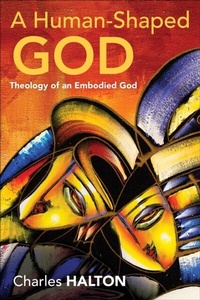
A Human-Shaped God
Description

A Human-Shaped God approaches the humanlike accounts of God in the Old Testament as the starting places for theology and uses them to build a picture of the divine. This understanding of God is then brought into conversation with traditional conceptions that depict God as a being who knows everything that happens, is at every place at the same time, is constant and unchanging, and does not ultimately have material form. But instead of pitting the Old Testament's humanlike view of God against traditional theology and assuming that only one of these understandings is correct, A Human-Shaped God posits that theologians should embrace both of these constructions simultaneously. This is a new way of theological inquiry that embraces both the humanlike characteristics of God and the transcendence of God in traditional theology. By seeing and understanding the humanlike depictions of God in the Old Testament and by using the rich language of traditional theology together in tandem, the reader acquires a much deeper and meaningful understanding of God.
All prices
More details
Other editions
Additional editions
Person
Charles Halton is External Affiliate at the Centre of the Social-Scientific Study of the Bible at St. Mary's University, Twickenham. He formerly served as an assistant professor of theology at Houston Baptist University, taught Old Testament and Semitic languages at Southern Seminary, and was a fellow of the Advanced Seminar in the Humanities in Venice, Italy. He was a Founder, Managing Editor, and Director of Media for the Marginalia Review of Books, a magazine of intellectual culture and a channel of the Los Angeles Review of Books. He currently serves as the editor of Genesis: History, Fiction, or Neither? and coauthor, editor, and translator (with Saana Svärd) of Women's Writing of Ancient Mesopotamia: An Anthology of the Earliest Female Authors. He translated the cuneiform collection of the Carnegie Museum of Natural History in Pittsburgh and has contributed to various academic journals, including the Journal of Biblical Literature, Ancient Near Eastern Studies, and the Cuneiform Digital Library Notes. He has also contributed to publications including the monograph Reading Akkadian Hymns and Prayers and The Dictionary of the Old Testament: Wisdom, Poetry & Writings.
Content
- Intro
- Endorsements
- Half Title
- Title Page
- Copyright
- Dedication
- Contents
- Acknowledgments
- A Short Note to the Reader
- 1. Imagining a Human-Shaped God
- The Real God vs. the God of Our Imagination
- Shaping God with Our Words
- An Accurate Understanding of God Is Not of Utmost Importance
- Choosing to Imagine a Full-Orbed God
- 2. God, Humanlike and Not
- The Chronicler's Kids
- Who's Afraid of Contradiction?
- Metaphor
- God as Hyperobject
- Anthropomorphisms
- But Are They Metaphors?
- 3. God's Body
- What Is a Body?
- Localized Presence
- God in a Land
- God and the Temple
- God in Wood and Stone
- Temporary Theophanies
- Embodiment
- Gender and Sex
- 4. God's Mind
- What Is a Mind?
- Mind-Body Connection
- Things God Doesn't Know
- The Goings-On of Earth
- The Ways God Learns
- Changes in God's Mind
- 5. God's Emotions
- What Is Emotion?
- Love
- Sadness
- Hate
- Anger
- What Does God Do for God's Affects?
- 6. God's Character
- What Is Character?
- Just
- Patient
- Vengeful
- Jealous
- Forgiving
- Forgetting
- 7. Embracing a Humanlike God
- A Theology of Hermeneutic Activity
- From Monster to Mystery
- A Basis for Relationship
- A Humanlike God and the Incarnation
- Index of Biblical References
- Index of Subjects

