

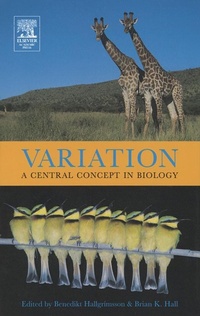
Variation
A Central Concept in Biology
Published on 4. May 2011
592 pages
978-0-08-045446-7 (ISBN)
Description

Darwin's theory of evolution by natural selection was based on the observation that there is variation between individuals within the same species. This fundamental observation is a central concept in evolutionary biology. However, variation is only rarely treated directly. It has remained peripheral to the study of mechanisms of evolutionary change. The explosion of knowledge in genetics, developmental biology, and the ongoing synthesis of evolutionary and developmental biology has made it possible for us to study the factors that limit, enhance, or structure variation at the level of an animals' physical appearance and behavior. Knowledge of the significance of variability is crucial to this emerging synthesis. Variation situates the role of variability within this broad framework, bringing variation back to the center of the evolutionary stage.
- Provides an overview of current thinking on variation in evolutionary biology, functional morphology, and evolutionary developmental biology
- Written by a team of leading scholars specializing on the study of variation
- Reviews of statistical analysis of variation by leading authorities
- Key chapters focus on the role of the study of phenotypic variation for evolutionary, developmental, and post-genomic biology
More details
Other editions
Additional editions
Book
08/2005
Academic Press
€93.50
Shipment within 15-20 days
Content
ForewordChapter 1. Variation and Variability: Central Concepts in BiologyChapter 2. Variation from Darwin to the Modern SynthesisChapter 3. The Statistics of VariationChapter 4. Landmark Morphometrics and the Analysis of VariationChapter 5. Variation in OntogenyChapter 6. Constraints on Variation from Genotype through Phenotype to FitnessChapter 7. Developmental Origins of VariationChapter 8. Canalization, Cryptic Variation and Developmental Buffering: A Critical Examination and Analytical PerspectiveChapter 9. Mutation and Phenotypic Variation: Where is the connection Capacitators, Stressors, Phenotypic Variability and Evolutionary ChangeChapter 10. Within Individual Variation: Developmental Noise versus Developmental StabilityChapter 11. Developmental Constraints, Modules and EvolvabilityChapter 12. Developmental Regulation of VariabilityChapter 13. Role of Stress in Evolution: From Individual Adaptability to Evolutionary AdaptationChapter 14. Environmentally Contingent Variation: Phenotypic Plasticity and Norms of ReactionChapter 15. Variation and Life History EvolutionChapter 16. AntisymmetryChapter 17. Variation in Structure and its Relationship to Function: Correlation, Explanation and ExtrapolationChapter 18. A Universal Generative Tendency Toward Increased Organismal ComplexityChapter 19. Variation and Versatility in MacroevolutionChapter 20. Variation and Developmental Biology: Prospects for the FutureChapter 21. Phenogenetics: Genotypes, Phenotypes, and VariationChapter 22. The Study of Phenotypic VariabilityIndex
