

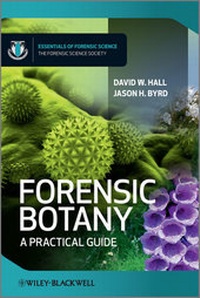
Forensic Botany
A Practical Guide
Published on 8. May 2012
216 pages
978-1-119-94572-7 (ISBN)
Description

Forensic Botany: A Practical Guide is an accessible introduction to the way in which botanical evidence is identified, collected and analysed in criminal cases. Increasingly this form of evidence is becoming more important in forensic investigation and yet there are few trained botanists able to assist in such cases. This book is intended to show how useful simple collection methods and standard plant analysis can be in the course of such investigations and is written in a clear and accessible manner to enhance understanding of the subject for the non-specialist.
Clearly structured throughout, this book combines well known collection techniques in a field oriented format that can be used for casework. Collection of evidence differs from formal plant collection in that most professional plant collectors are gathering entire plants or significant portions of a plant for permanent storage and reference. Evidence frequently consists of fragments, sometimes exceedingly tiny. Exemplars (examples of reference plants) are collections of plants made in the manner a botanist would collect them. These collections are necessary to link or exclude evidence to or from a scene. Various methods that allow easy collection, transportation, and preservation of evidence are detailed throughout the book.
This book is written for those who have no formal background working with plants. It can be used as a practical guide for students taking forensic science courses, law enforcement training, legal courses, and as a template for plant collection at any scene where plants occur and where rules or laws are involved. Veterinarians, various environmental agencies, anthropologists, and archeologists are examples of disciplines that are more recently in need of plant evidence. Veterinarians are becoming more active in pursuing cases of animals that have been abused or are victims of illegal killing. Anthropologists and archeologists are often called to help with body recovery in outdoor environments. Environmental agencies are increasingly forced to adopt rules for resource protection, are in need of a guide for procedures for plant evidence collection and application.
The format of the book is designed to present the reader with all the information needed to conduct a botanical analysis of a crime scene; to highlight the forensic significance of the botanical evidence that may be present; how to collect that evidence in the correct manner and preserve and store that evidence appropriately- also shows how to conduct a laboratory analysis of the plants.
Reviews / Votes
"This book entitled Forensic Botany: A Practical Guide isan excellent guide and teaching tool for biological evidencetraining, a resource for scientists, law enforcement and attorneysalike, and review material before trial. Forensic guidelines forplant material are limited and training is specialized; therefore,this truly is an excellent, readable scientific guide for theforensic community." (Journal of ForensicSciences, 1 July 2013)More details
Other editions
Additional editions
Book
06/2012
Wiley
€77.50
Article not available at the moment
Book
06/2012
1st Edition
Wiley
€142.50
Article not available at the moment
Software
05/2012
Wiley
€194.95
No shipping information available
Persons
Content
- FORENSIC BOTANY :A PRACTICAL GUIDE
- Contents
- List of contributors
- Series Foreword
- Prologue: the begining
- 1 Introduction to forensic botany
- Botanical evidence in legal investigations
- Legal plant definition
- Botanical evidence in legal investigations
- Alibis
- Timing
- Gravesite growth
- Stomach contents
- Summary
- 2 Plants as evidence
- Types of plants
- Vascular plants
- Flowering plants
- Nonvascular plants
- Nonplant groups traditionally studied by botanists
- Fungi
- Lichens
- Plant habitats and associations
- Ecology
- Lack of habitat
- Plant characteristics/plant morphology
- Basic plant characteristics for the forensic investigator
- Habit
- Woody plants
- Herbaceous plants
- Stems
- Leaves
- Hairs
- Roots
- Flowers
- Fruits
- Plant dispersal
- 3 Evidence collection and analysis
- Initial crime scene notation
- Where to search for evidence
- Storage
- Documentation of botanical evidence
- How to have botanical evidence analysed
- Where to find a botanist
- Types of cases
- Evidence analysis
- Laboratory report
- Transportation of botanical evidence
- Evidence retention and disposition
- Step-wise method for the collection of botanical evidence
- Equipment required
- Appendix 3.1
- Crime scene data
- Habitat documentation
- Scene location
- Collection information needed for each botanical sample
- Appendix 3.2
- Botany field data sheet
- Appendix 3.3
- Botany laboratory examination data format
- Appendix 3.4
- Evidence log
- 4 Expert evidence
- The common law
- The United States experience
- The decision in Frye v. United States
- The codified federal rules of evidence
- The decision in Daubert v. Merrill Dow
- The scientific method
- The "pure opinion" rule
- The United Kingdom experience
- The criminal procedure rules 2010, s.33
- The law commission consultation paper no. 190
- 5 Use and guidelines for plant DNA analyses in forensics
- Introduction
- Types of samples and collection for DNA analyses
- Uses of genetic data
- Plant species identification
- Identification of population of origin
- Identification of individual plants
- Genotyping methods
- General considerations
- DNA extraction
- Microsatellites
- Random/anonymous markers
- Genetic interpretation
- Finding a laboratory for analysis
- Case studies
- Conclusions
- References
- 6 A primer on forensic microscopy
- Microscopes and microscopic botanical structures relevant to forensic botany
- The hand-lens (also known as a loupe)
- The stereo microscope (also known as a dissecting microscope)
- The compound microscope
- The scanning electron microscope
- The importance of reference collections in microscopic analysis
- Preparation and documentation of specimen evidence for microscopic examination
- Hand-Lens and stereomicroscope observation
- Compound microscope observation
- SEM observation
- References
- 7 Plant anatomy
- The lindbergh case
- Further reading
- 8 Palynology, pollen, and spores, partners in crime: what, why, and how
- Terminology
- What are pollen and spores?
- Chemical and physical resistance
- Where are they found and how do they travel?
- Wind
- Insects and birds
- Water distribution
- What does pollen look like?
- The use of pollen for non-forensic work
- The use of pollen in the forensic setting
- Plants growing in the relevant location(s)
- Pollen rain
- Method of pollination
- Transfer and persistence
- Types of sample(s) and location(s) from where they were obtained
- When should pollen samples be collected?
- How to collect and store pollen samples
- Consideration of other types of scientific analyses
- Collection tools
- Accidental contamination
- Plants and soil
- Clothing and footwear
- Vehicles
- Human bodies
- Other items
- Storage of samples
- How many samples to collect?
- Who can collect pollen samples and where can an analyst be found?
- Collection
- Processing
- Identification of pollen and interpretation of findings
- Costs and turnaround times
- Case examples
- Murder and genocide
- Investigative work
- Accidental contamination
- Absence of pollen
- Summary
- References
- 9 Algae in forensic investigations
- Finding an algal botanist and identifying algae
- Algal diversity
- Application of algal evidence in forensic investigations
- Collection and processing of algal evidence in forensic investigations
- Procedures for application 1: linking suspects to specific aquatic crime scenes or physical evidence
- Procedures for application 2: diatom test for drowning
- Procedures for application 3: diagnosis of algaltoxin poisoning
- Procedures for application 4: PMSI estimation
- Acknowledgements
- References
- 10 Case Studies in forensic botany
- Placing people or objects at scenes
- Case study 1
- Case study 2
- Case study 3
- Case study 4
- Case study 5
- Case study 6
- Case study 7
- Case study 8
- Case study 9
- Determining time of death
- Case study 1
- Case study 2
- Case study 3
- Case study 4
- Case study 5
- Case study 6
- Index
- Supplemental Images
