

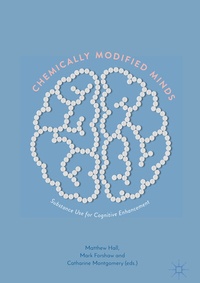
Chemically Modified Minds
Description

This innovative edited collection brings together leading international academics to explore the use of various non-prescription and prescription substances. From a psychosocial perspective, the authors discuss the complex reasons behind their adoption, the ways in which they are misused, and links between use and cognitive enhancement. While studies on substance use to date have examined the aetiology and effects in the context of sporting performance, addiction and recreational use, there has been little work which explores their wider misuse to improve cognitive enhancement.
With medical sociology and social psychology at its core, this important volume shows the complex reasons behind the misuse of various substances, how these are connected to contemporary desire for increased mental performance, and why the potential health risks and possibly harmful side effects do not act as deterrents.
More details
Other editions
Additional editions
Persons
Dr Matthew Hall is the Programme Leader for Psychology, and Chair of the Research and Ethics Committee at Arden University; Associate Academic, University of Derby; and Editor for the Journal of Gender Studies. He actively publishes, and his research interests include: health; new, mediated and cyberspace identities; image-based sexual violence; online violations; cognitive enhancement; body modification; disability; gender and sexuality; body image and image consciousness.
Dr Mark Forshaw is a Health Psychologist and Subject Leader at Liverpool John Moores University. He is a Past President of the Institute of Health Promotion & Education, and a previous trustee of the British Psychological Society amongst other organisations. He is the author of numerous books on health psychology, research, and critical thinking.
Dr Catharine Montgomery is a Reader in Psychopharmacology at Liverpool John Moores University. She is co-leader of the Research Centre for Brain and Behaviour at LJMU, and is on the steering group for the Liverpool Centre for Alcohol Research. She has expertise in the effects of substance use on psychological functioning, and has published numerous journal articles and book chapters in this area.
Content
Chapter 1: Introduction.- Chapter 2: Psychosocial Motivators of "Smart Drug" Use Amongst University Students.- Chapter 3: Nutraceuticals as Cognitive Enhancers.- Chapter 4: Nutritional Interventions to Improve Cognitive Function.- Chapter 5: Being Limitless: A Discursive Analysis of Online Accounts of Modafinil Use.- Chapter 6: The Role of Glycemic Control in Cognitive Functioning.- Chapter 7: A Familiar Landscape in the Brave New World: Ethics of Cognitive Enhancement.- Chapter 8: Afterword.
