

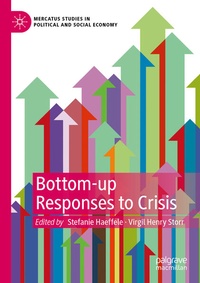
Bottom-up Responses to Crisis
Description

Crises occur in all societies across world, and can be natural (such as hurricanes, flooding, and earthquakes), man-made (such as wars and economic downturns), or, often, a combination of both (such as famines, the flooding of New Orleans in 2005 after Hurricane Katrina and subsequent levy failures, and the earthquake, tsunami, and nuclear disaster in Japan in 2011). Crises cause fatalities, injuries, and property damages as well as introduce uncertainty and challenges for individuals, societies, and polities. Yet, we see individuals and communities rebounding effectively from crises all the time. How do communities go about returning to normalcy and beginning again the mundane life of every day affairs?
This edited volume looks at bottom-up responses to crises. The chapters in this volume will highlight the ingenuity and persistence of individuals and private organizations as well as discuss the possibilities, limitations, and adaptability of bottom-up responses. It argues that there are many ways that local leaders, entrepreneurs, and community members can play a role in their own recovery by examining the capabilities, feedback mechanisms, and network effects of decentralized crisis response and recovery efforts. Chapters will focus on the role of local emergency managers in the disaster management process and offer suggestions for reform and the role of businesses, citizens, and children in providing crisis response and recovery. This book will also consider theories of self-governance and nonviolent action in encouraging and sustaining bottom-up recovery.More details
Other editions
Additional editions
Persons
Stefanie Haeffele is Deputy Director, Academic and Student Programs and senior fellow, F. A. Hayek Program for Advanced Study in Philosophy, Politics, and Economics at the Mercatus Center at George Mason University, USA. She earned her M.A. and Ph.D. in economics at George Mason University and her B.B.A. from the University of North Alabama, and previously worked in emergency and disaster management at both the Federal Emergency Management Agency and then the US Forest Service as a Presidential Management Fellow.
Virgil Henry Storr is Vice President, Academic and Student Programs, and Don C. Lavoie Research Fellow, F. A. Hayek Program for Advanced Study in Philosophy, Politics, and Economics at the Mercatus Center at George Mason University, USA. He also is Associate Professor of Economics at George Mason University. Dr. Storr received his Ph.D. in economics from George Mason University and his B.A. from Beloit College.Content
1. Introduction.- 2. The What, How, and Why of Bottom-up Rebuilding and Recovery after Natural Disasters.- 3. Nonviolent Action.- 4. The Private Sector's Contribution to Natural Disaster Response.- 5. Formation of Public-Private Partnerships by Local Emergency Managers.- 6. Children Take Charge: Helping Behaviors and Organized Action among Young People after Hurricane Katrina.- 7. Bottom-up State-building.- 8. Government Intervention Induced Structural Crises: Exploratory Notes on the Patterns of Evolution and Response.
