

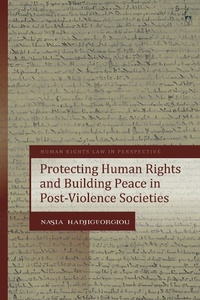
Protecting Human Rights and Building Peace in Post-Violence Societies
1st Edition
Published on 20. February 2020
272 pages
978-1-5099-2344-1 (ISBN)
Description

This book critically examines the relationship between protecting human rights and building peace in post-violence societies. It explores the conditions that must be present, and strategies that should be adopted, for the former to contribute to the latter. The author argues that human rights can aid peacebuilding efforts by helping victims of past violence to articulate their grievance, and by encouraging the state to respond to and provide them with a meaningful remedy. This usually happens either through a process of adjudication, whereby human rights can offer guidance to the judiciary as to the best way to address such grievances, or through the passing and implementation of human rights laws and policies that seek to promote peace. However, this positive relationship between human rights and peace is both qualified and context specific. Through an interdisciplinary and comparative analysis of four case studies, the book identifies the conditions that can support the effective use of human rights as peacebuilding tools. Developing these, the book recommends a series of strategies that peacebuilders should adopt and rely on.
Winner of the Constantinos Emilianides Award in Law for 2020 (joint conferment).
Winner of the Constantinos Emilianides Award in Law for 2020 (joint conferment).
More details
Series
Edition
1. Auflage
Language
English
Place of publication
London
United Kingdom
Publishing group
Bloomsbury Publishing PLC
Target group
College/higher education
ISBN-13
978-1-5099-2344-1 (9781509923441)
Copyright in bibliographic data and cover images is held by Nielsen Book Services Limited or by the publishers or by their respective licensors: all rights reserved.
Schweitzer Classification
Other editions
Additional editions
Nasia Hadjigeorgiou
Protecting Human Rights and Building Peace in Post-Violence Societies
Book
08/2021
Hart Publishing
€65.79
Shipment within 15-20 days
Nasia Hadjigeorgiou
Protecting Human Rights and Building Peace in Post-Violence Societies
Book
02/2020
Hart Publishing
€133.70
Shipment within 15-20 days
Person
Nasia Hadjigeorgiou is an Assistant Professor in Transitional Justice and Human Rights at the University of Central Lancashire (Cyprus).
Content
1. Introduction
I. Introduction
II. The Central Question
III. An Anatomy of the Relationship between Human Rights and Peace
IV. The Methodology
V. Conclusion
2. Clarifying the End: A Workable Definition of Peace
I. Introduction
II. Rejecting the Current Accounts of Peace
III. Forging a New Definition of Peace
IV. Conclusion
3. The Means and the End Connected: A Framework for the Relationship between Human Rights and Peace
I. Introduction
II. Defining the Means
III. The Means and the End Unconnected
IV. Resolving Conflicts and Building Peace
V. Human Rights as Tools in the Conflict Resolution Process
VI. Conclusion
4. Promoting Objective Peace through Human Rights Adjudication
I. Introduction
II. The Nature of the Conflict Being Adjudicated
III. The Type of Court Adjudicating the Conflict
IV. The Impact of Timing on the Successful Adjudication of the Conflict
V. Conclusion
5. Promoting Objective Peace through Human Rights Implementation
I. Introduction
II. The Importance of Political Willingness to Implement Human Rights
III. The Devil is in the Detail: The Importance of Careful Drafting
IV. Looking beyond the Wording of the Statute: Human Rights Bodies and their Powers
V. Strategies for Better Human Rights Implementation
VI. Conclusion
6. Protecting Human Rights and Promoting Subjective Peace
I. Introduction
II. Protecting Human Rights and Inducing Social and Psychological Change
III. The Gap between the Legal and the Real: Making a Meaningful Change in People's Lives
IV. Peace must be Built and be Seen to be Built
V. Strategies for Promoting Subjective Feelings of Peace
VI. Conclusion
7. Conclusion
I. Introduction
II. Informing the Liberal Peacebuilding Critique
III. Getting from Peace in the Books to Peace on the Ground
IV. The Need for Further Research
I. Introduction
II. The Central Question
III. An Anatomy of the Relationship between Human Rights and Peace
IV. The Methodology
V. Conclusion
2. Clarifying the End: A Workable Definition of Peace
I. Introduction
II. Rejecting the Current Accounts of Peace
III. Forging a New Definition of Peace
IV. Conclusion
3. The Means and the End Connected: A Framework for the Relationship between Human Rights and Peace
I. Introduction
II. Defining the Means
III. The Means and the End Unconnected
IV. Resolving Conflicts and Building Peace
V. Human Rights as Tools in the Conflict Resolution Process
VI. Conclusion
4. Promoting Objective Peace through Human Rights Adjudication
I. Introduction
II. The Nature of the Conflict Being Adjudicated
III. The Type of Court Adjudicating the Conflict
IV. The Impact of Timing on the Successful Adjudication of the Conflict
V. Conclusion
5. Promoting Objective Peace through Human Rights Implementation
I. Introduction
II. The Importance of Political Willingness to Implement Human Rights
III. The Devil is in the Detail: The Importance of Careful Drafting
IV. Looking beyond the Wording of the Statute: Human Rights Bodies and their Powers
V. Strategies for Better Human Rights Implementation
VI. Conclusion
6. Protecting Human Rights and Promoting Subjective Peace
I. Introduction
II. Protecting Human Rights and Inducing Social and Psychological Change
III. The Gap between the Legal and the Real: Making a Meaningful Change in People's Lives
IV. Peace must be Built and be Seen to be Built
V. Strategies for Promoting Subjective Feelings of Peace
VI. Conclusion
7. Conclusion
I. Introduction
II. Informing the Liberal Peacebuilding Critique
III. Getting from Peace in the Books to Peace on the Ground
IV. The Need for Further Research
