

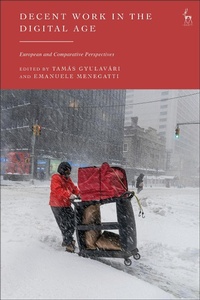
Decent Work in the Digital Age
European and Comparative Perspectives
1st Edition
Published on 20. October 2022
416 pages
978-1-5099-5825-2 (ISBN)
Description

This book explores the legal and practical implications of the digital age for employment and industrial relations. To that end, the book analyses the problems arising from the digitalisation of work and the negative effects on working conditions in fields such as platform work, robotisation, discrimination, data protection, and freedom of speech. It also looks at how to ensure decent working conditions for workers affected by digitalisation, by investigating the minimum standards that should be ensured to mitigate negative effects - and how these could be best guaranteed by legislation and collective bargaining.
The book presents a theoretical framework on the impact of automatisation, robotics, and digitalisation on the very basic principles of individual and collective labour law. The chapters provide an in-depth analysis of new patterns of work prompted by digitalisation, including: classification of platform workers; recognition of employment and social security rights; competition law aspects of platform work; remote (tele)work arrangements; algorithmic decision-making and remote surveillance; data protection and privacy; and social media in working environments.
The book is an important reference for academics and researchers, social partners, and policy makers with an interest in labour law and industrial relations.
The book presents a theoretical framework on the impact of automatisation, robotics, and digitalisation on the very basic principles of individual and collective labour law. The chapters provide an in-depth analysis of new patterns of work prompted by digitalisation, including: classification of platform workers; recognition of employment and social security rights; competition law aspects of platform work; remote (tele)work arrangements; algorithmic decision-making and remote surveillance; data protection and privacy; and social media in working environments.
The book is an important reference for academics and researchers, social partners, and policy makers with an interest in labour law and industrial relations.
More details
Edition
1. Auflage
Language
English
Place of publication
London
United Kingdom
Publishing group
Bloomsbury Publishing PLC
Target group
Professional and scholarly
College/higher education
ISBN-13
978-1-5099-5825-2 (9781509958252)
Copyright in bibliographic data and cover images is held by Nielsen Book Services Limited or by the publishers or by their respective licensors: all rights reserved.
Schweitzer Classification
Other editions
Additional editions
Tamas Gyulavari | Emanuele Menegatti
Decent Work in the Digital Age
European and Comparative Perspectives
Book
04/2024
Hart Publishing
€75.70
Shipment within 15-20 days
Persons
Tamás Gyulavári is Professor of Labour Law and Chair of the Labour Law Department at Pázmány Péter Catholic University in Budapest, Hungary.
Emanuele Menegatti is Professor of Labour Law and Dean of the School of Economics and Management at the University of Bologna, Italy.
Emanuele Menegatti is Professor of Labour Law and Dean of the School of Economics and Management at the University of Bologna, Italy.
Content
Foreword
Tonia Novitz (University of Bristol, UK)
1. Labour, Law, and Digitalisation
Tamás Gyulavári (Pázmány Péter Catholic University, Hungary) and Emanuele Menegatti (University of Bologna, Italy)
PART I
THE IMPACT OF AUTOMATISATION AND DIGITALISATION ON WORK RELATIONS
2. Digitalisation and Basic Principles of Labour Law
Manfred Weiss (Goethe University, Germany)
3. The Impact of Automatisation and Robotics on Collective Labour Relations: Meeting an Unprecedented Challenge
Edoardo Ales (University of Naples 'Parthenope', Italy)
4. EU Law and Digitalisation of Employment Relations
Iacopo Senatori (University of Modena and Reggio Emilia, Italy)
PART II
PLATFORM WORK AND AGILE WORK ARRANGEMENTS
5. Classification of Platform Workers: A Scholarly Perspective
Martin Gruber-Risak (University of Vienna, Austria)
6. The Classification of Platform Workers Through the Lens of Judiciaries: A Comparative Analysis
Emanuele Menegatti (University of Bologna, Italy)
7. Floor of Rights for Platform Workers
Tamás Gyulavári (Pázmány Péter Catholic University, Hungary)
8. Working Time Flexibility: Merits to Preserve and Potentials to Adjust to Change
Gábor Kártyás (Pázmány Péter Catholic University, Hungary)
9.Which Welfare Rights for Platform Workers?
Marius Olivier (Nelson Mandela University and Northwest University, South Africa; University of Western Australia)
10. Competition Law Implications of Platform Work
Tihamér Tóth (Pázmány Péter Catholic University, Hungary)
11. Decent Teleworking: Lessons from the Pandemic
Carla Spinelli (University of Bari Aldo Moro, Italy)
PART III
REGULATING THE ALGORITHM
12. The Challenges of Management by Algorithm: Exploring Individual and Collective Aspects
Jeremias Adams-Prassl (University of Oxford, UK)
13. Automation, Autonomy, Augmentation: Labour Regulation and the Technological Transformation of Managerial Prerogatives
Antonio Aloisi (IE University, Spain)
14. Discrimination by Algorithms at Work
Sylvaine Laulom (Cour De Cassation, France)
PART IV
DATA PROTECTION AND PRIVACY AT WORK
15. Regulating Worker Privacy and Data Protection: Exploring the Global Source System
Frank Hendrickx (University of Leuven, Belgium)
16. From Monitoring of the Workplace to Surveillance of the Workforce
David Mangan (Maynooth University, Ireland)
17. Social Media and Freedom of Speech in Employment: Limitations on Employees' Right to Self-Expression
András Koltay (Pázmány Péter Catholic University, Hungary)
Tonia Novitz (University of Bristol, UK)
1. Labour, Law, and Digitalisation
Tamás Gyulavári (Pázmány Péter Catholic University, Hungary) and Emanuele Menegatti (University of Bologna, Italy)
PART I
THE IMPACT OF AUTOMATISATION AND DIGITALISATION ON WORK RELATIONS
2. Digitalisation and Basic Principles of Labour Law
Manfred Weiss (Goethe University, Germany)
3. The Impact of Automatisation and Robotics on Collective Labour Relations: Meeting an Unprecedented Challenge
Edoardo Ales (University of Naples 'Parthenope', Italy)
4. EU Law and Digitalisation of Employment Relations
Iacopo Senatori (University of Modena and Reggio Emilia, Italy)
PART II
PLATFORM WORK AND AGILE WORK ARRANGEMENTS
5. Classification of Platform Workers: A Scholarly Perspective
Martin Gruber-Risak (University of Vienna, Austria)
6. The Classification of Platform Workers Through the Lens of Judiciaries: A Comparative Analysis
Emanuele Menegatti (University of Bologna, Italy)
7. Floor of Rights for Platform Workers
Tamás Gyulavári (Pázmány Péter Catholic University, Hungary)
8. Working Time Flexibility: Merits to Preserve and Potentials to Adjust to Change
Gábor Kártyás (Pázmány Péter Catholic University, Hungary)
9.Which Welfare Rights for Platform Workers?
Marius Olivier (Nelson Mandela University and Northwest University, South Africa; University of Western Australia)
10. Competition Law Implications of Platform Work
Tihamér Tóth (Pázmány Péter Catholic University, Hungary)
11. Decent Teleworking: Lessons from the Pandemic
Carla Spinelli (University of Bari Aldo Moro, Italy)
PART III
REGULATING THE ALGORITHM
12. The Challenges of Management by Algorithm: Exploring Individual and Collective Aspects
Jeremias Adams-Prassl (University of Oxford, UK)
13. Automation, Autonomy, Augmentation: Labour Regulation and the Technological Transformation of Managerial Prerogatives
Antonio Aloisi (IE University, Spain)
14. Discrimination by Algorithms at Work
Sylvaine Laulom (Cour De Cassation, France)
PART IV
DATA PROTECTION AND PRIVACY AT WORK
15. Regulating Worker Privacy and Data Protection: Exploring the Global Source System
Frank Hendrickx (University of Leuven, Belgium)
16. From Monitoring of the Workplace to Surveillance of the Workforce
David Mangan (Maynooth University, Ireland)
17. Social Media and Freedom of Speech in Employment: Limitations on Employees' Right to Self-Expression
András Koltay (Pázmány Péter Catholic University, Hungary)
