

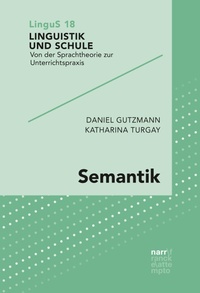
Semantik
1st Edition
Published on 12. May 2025
162 pages
978-3-381-11403-0 (ISBN)
Description

Dass Wörter und zusammengesetzte sprachliche Ausdrücke eine wörtliche Bedeutung haben, ist allen Sprecher:innen einer Sprache mehr oder weniger bewusst. Doch wie lässt sich diese Bedeutung (unabhängig vom kommunikativen Sinn) präzise und genau beschreiben? Und wie ergibt sich die Bedeutung von komplexen Ausdrücken aus den Einzelteilen? Mit genau diesen Fragen beschäftigt sich die linguistische Semantik, in die dieses Buch kompakt einführt. Dabei orientiert es sich nach einer Übersicht über grundlegende Annahmen der Semantik sowie einem Überblick über Bedeutungsrelationen an den für die Sprachdidaktik wichtigen Wortarten und Beschreibungsebenen: Semantische Aspekte von Verben und den Kategorien der Nominalphrase, Adjektiven, sogenannten "Füllwörtern" sowie Appositionen werden anschaulich und ausführlich behandelt. Durch seinen Fokus auf unterrichtsrelevante Kategorien ist dieses Buch insbesondere an den Bedürfnissen von Lehrer:innen und Lehramtsstudierenden ausgerichtet.
More details
Other editions
Additional editions
Daniel Gutzmann | Katharina Turgay
Semantik
Book
05/2025
1st Edition
Narr Francke Attempto
€19.90
Available immediately
Persons
Prof. Dr. Daniel Gutzmann ist Professor für Germanistische Linguistik/Sprachsystem an der Ruhr-Universität Bochum.
Prof. Dr. Katharina Turgay ist apl. Professorin für Germanistische Linguistik an der Ruhr-Universität Bochum.
Prof. Dr. Katharina Turgay ist apl. Professorin für Germanistische Linguistik an der Ruhr-Universität Bochum.
Content
1 Semantik ist Bedeutungswissenschaft
1.1 Was ist Semantik?
1.2 Was ist Semantik nicht?
1.3 Was ist Bedeutung?
1.4 Semantik und Schule
1.5 Worum wird es hier gehen?
1.6 Aufgaben
2 Bedeutungsrelationen
2.1 Bedeutungsrelationen der Ähnlichkeit
2.2 Bedeutungsrelationen der Opposition
2.3 Bedeutungsrelationen der Verwandtschaft
2.4 Mehrdeutigkeiten (Ambiguitäten)
2.5 Lexikalische Semantik und Schule
2.6 Aufgaben
3 Semantik des Verbs
3.1 Grundlegendes zur Verbsemantik
3.2 Semantik des Tempus
3.3 Semantik des Verbmodus
3.4 Aufgaben
4 Semantik der Nominalphrase
4.1 Grundlegendes zur Nominalsemantik
4.2 Semantik der Definitheit
4.3 Semantik von Numerus
4.4 Semantik von Genus und Person
4.5 Kasus und thematische Rollen
4.6 Aufgaben
5 Semantik weiterer Kategorien
5.1 Semantik von Adjektiven
5.2 Semantik von "Füllwörtern"
5.3 Semantik von Appositionen
5.4 Aufgaben
1.1 Was ist Semantik?
1.2 Was ist Semantik nicht?
1.3 Was ist Bedeutung?
1.4 Semantik und Schule
1.5 Worum wird es hier gehen?
1.6 Aufgaben
2 Bedeutungsrelationen
2.1 Bedeutungsrelationen der Ähnlichkeit
2.2 Bedeutungsrelationen der Opposition
2.3 Bedeutungsrelationen der Verwandtschaft
2.4 Mehrdeutigkeiten (Ambiguitäten)
2.5 Lexikalische Semantik und Schule
2.6 Aufgaben
3 Semantik des Verbs
3.1 Grundlegendes zur Verbsemantik
3.2 Semantik des Tempus
3.3 Semantik des Verbmodus
3.4 Aufgaben
4 Semantik der Nominalphrase
4.1 Grundlegendes zur Nominalsemantik
4.2 Semantik der Definitheit
4.3 Semantik von Numerus
4.4 Semantik von Genus und Person
4.5 Kasus und thematische Rollen
4.6 Aufgaben
5 Semantik weiterer Kategorien
5.1 Semantik von Adjektiven
5.2 Semantik von "Füllwörtern"
5.3 Semantik von Appositionen
5.4 Aufgaben
