

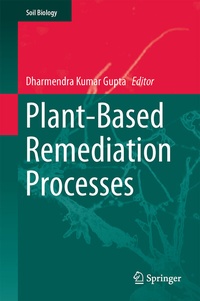
Plant-Based Remediation Processes
Description

Phytoremediation is an emerging technology that employs higher plants for the clean-up of contaminated environments. Basic and applied research have unequivocally demonstrated that selected plant species possess the genetic potential to accumulate, degrade, metabolize and immobilize a wide range of contaminants.
The main focus of this volume is on the recent advances of technologies using green plants for remediation of various metals and metalloids. Topics include biomonitoring of heavy metal pollution, amendments of higher uptake of toxic metals, transport of heavy metals in plants, and toxicity mechanisms. Further chapters discuss agro-technological methods for minimizing pollution while improving soil quality, transgenic approaches to heavy metal remediation and present protocols for metal remediation via in vitro root cultures.
More details
Other editions
Additional editions
Content
Phytoremediation protocols: An overview.- Protocols for applying phytotechnologies in metal contaminated soils.- Metal/metalloid phytoremediation: Ideas and future.- Remediation mechanisms of tropical plants for lead contaminated environment.- Impact of metal/metalloid contaminated areas on plant growth.- Metal remediation via in vitro root cultures.- Use of wetland plants in bioaccumulation of heavy metals.- A multi-disciplinary challenge for phytoremediation of metal-polluted pyrite waste.- Phyto-transport and assimilation of selenium.- Phytostabilization as soil remediation strategy.- Flax (Linum usitatissimum L.) and hemp (Cannabis sativa L.) as fibre crops for phytoextraction of heavy metals: Biological, agro-technological and economical point of view.- Transgenic approaches to enhance phytoremediation of heavy metal and metalloid polluted soils.- Phytoremediation towards the future: Focus on bioavailable contaminants.
