

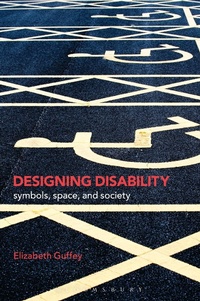
Designing Disability
Symbols, Space, and Society
1st Edition
Published on 28. December 2017
240 pages
978-1-350-00425-2 (ISBN)
Description

Designing Disability traces the emergence of an idea and an ideal - physical access for the disabled - through the evolution of the iconic International Symbol of Access (ISA). The book draws on design history, material culture and recent critical disability studies to examine not only the development of a design icon, but also the cultural history surrounding it.
Infirmity and illness may be seen as part of human experience, but 'disability' is a social construct, a way of thinking about and responding to a natural human condition. Elizabeth Guffey's highly original and wide-ranging study considers the period both before and after the introduction of the ISA, tracing the design history of the wheelchair, a product which revolutionised the mobility needs of many disabled people from the 1930s onwards. She also examines the rise of 'barrier-free architecture' in the reception of the ISA, and explores how the symbol became widely adopted and even a mark of identity for some, especially within the Disability Rights Movement.
Yet despite the social progress which is inextricably linked to the ISA, a growing debate has unfurled around the symbol and its meanings. The most vigorous critiques today have involved guerrilla art, graffiti and studio practice, reflecting new challenges to the relationship between design and disability in the twenty-first century.
Infirmity and illness may be seen as part of human experience, but 'disability' is a social construct, a way of thinking about and responding to a natural human condition. Elizabeth Guffey's highly original and wide-ranging study considers the period both before and after the introduction of the ISA, tracing the design history of the wheelchair, a product which revolutionised the mobility needs of many disabled people from the 1930s onwards. She also examines the rise of 'barrier-free architecture' in the reception of the ISA, and explores how the symbol became widely adopted and even a mark of identity for some, especially within the Disability Rights Movement.
Yet despite the social progress which is inextricably linked to the ISA, a growing debate has unfurled around the symbol and its meanings. The most vigorous critiques today have involved guerrilla art, graffiti and studio practice, reflecting new challenges to the relationship between design and disability in the twenty-first century.
More details
Edition
1. Auflage
Language
English
Place of publication
London
United Kingdom
Publishing group
Bloomsbury Publishing PLC
Target group
College/higher education
Illustrations
75 BW illus
ISBN-13
978-1-350-00425-2 (9781350004252)
Copyright in bibliographic data and cover images is held by Nielsen Book Services Limited or by the publishers or by their respective licensors: all rights reserved.
Schweitzer Classification
Other editions
Additional editions
Book
10/2019
Bloomsbury Visual Arts
€39.00
Shipment within 15-20 days
Book
12/2017
Bloomsbury Academic
€44.75
Article exhausted; check different version
Person
Elizabeth Guffey is Professor of Art and Design History and directs the MA in Modern and Contemporary Art, Criticism and Theory at the State University of New York, Purchase, USA. She was a founding editor of the journal Design and Culture, and is the author of books including Retro: The Culture of Revival (2013) and Posters: A Global History (2015).
Content
Acknowledgments
Illustrations
Introduction: Disability By Design?
Design's Misfit
Defining Disability
Defining a Symbol
PART ONE: History of an Idea: Access (- 1961)
Origins of a Misfit Design: The Advent of the Modern
Wheelchair (- 1945)
An Environmental Misfit
A Symbol of Defeat?
How to Behave in a Bath-Chair
The Chair That Changed the World
Fitting In (1945 - 1961)
Accessing a Culture on Four Wheels
The Nugent Ethic
An Attack on Barriers
PART TWO: Redesigning Signs and Space (1961 - 1974)
The Personal Politics of Signs (1961 - 1965)
What a Good Sign Can Do
Down the "Welfare Path"
The Ideologies of "Self-Help" and "Social Welfare Cultures"
Breaking Barriers
Signs of Discrimination (1965 - 1968)
The Secret Signs of Disabled People
Positive Discrimination and the Psychology of Disablement
Towards s Universal Sign
A Design for the Real World? (1968 - 1974)
A Technical Aid
Man and The Environment
A Misfit Head
A Positive Step Forward
PART THREE: A Mark of Identity? (1974 - Today)
Signs of Protest (1974 - 1990)
"The Selma of Handicapped Rights"
Rights and Protest
Passing the ADA: Compliance and Defiance
A Critical Design? (1990 - Today)
A Cry for Help
A 21st Century Makeover
Epilogue: The Beginning of the End?
Bibliography
Illustrations
Introduction: Disability By Design?
Design's Misfit
Defining Disability
Defining a Symbol
PART ONE: History of an Idea: Access (- 1961)
Origins of a Misfit Design: The Advent of the Modern
Wheelchair (- 1945)
An Environmental Misfit
A Symbol of Defeat?
How to Behave in a Bath-Chair
The Chair That Changed the World
Fitting In (1945 - 1961)
Accessing a Culture on Four Wheels
The Nugent Ethic
An Attack on Barriers
PART TWO: Redesigning Signs and Space (1961 - 1974)
The Personal Politics of Signs (1961 - 1965)
What a Good Sign Can Do
Down the "Welfare Path"
The Ideologies of "Self-Help" and "Social Welfare Cultures"
Breaking Barriers
Signs of Discrimination (1965 - 1968)
The Secret Signs of Disabled People
Positive Discrimination and the Psychology of Disablement
Towards s Universal Sign
A Design for the Real World? (1968 - 1974)
A Technical Aid
Man and The Environment
A Misfit Head
A Positive Step Forward
PART THREE: A Mark of Identity? (1974 - Today)
Signs of Protest (1974 - 1990)
"The Selma of Handicapped Rights"
Rights and Protest
Passing the ADA: Compliance and Defiance
A Critical Design? (1990 - Today)
A Cry for Help
A 21st Century Makeover
Epilogue: The Beginning of the End?
Bibliography
