

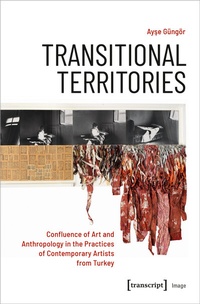
Transitional Territories
Confluence of Art and Anthropology in the Practices of Contemporary Artists from Turkey
1st Edition
Published on 4. April 2022
262 pages
978-3-8394-6031-3 (ISBN)
Description

Ayse Güngör investigates art practices between art and anthropology in Turkey, as well as the implications of contemporary art for those disciplines. She discusses various approaches based on anthropological theories on the forms of relation and theories of artistic practices on socio-political issues. Based on long-term research with contemporary artists such as Nil Yalter, Gülsün Karamustafa, Esra Ersen, Kutlug Ataman, Tayfun Serttas, Köken Ergun, Dilek Winchester and Artikisler Collective, this book analyzes the objectives of art and anthropology in order to determine new possibilities and divergences arising from this interdisciplinary confluence.
More details
Series
Thesis
Doctoral thesis
2019
Technische Universität Berlin
Language
English
Place of publication
Bielefeld
Germany
Target group
Professional and scholarly
Illustrations
35
35 s/w Abbildungen
40 SW-Abbildungen
File size
7,37 MB
ISBN-13
978-3-8394-6031-3 (9783839460313)
DOI
10.14361/9783839460313
Schweitzer Classification
Other editions
Additional editions
Ayse Güngör
Transitional Territories
Confluence of Art and Anthropology in the Practices of Contemporary Artists from Turkey
Book
04/2022
1st Edition
transcript
€45.00
Shipment within 5-7 days
Person
Ayse Güngör, born in 1985, completed her PhD in Art History at Technische Universität Berlin. In 2020, she worked as a Postdoc Fellow at Kunsthistorisches Institut Florenz - Max Planck Institut. She organized several workshops on »Art and Anthropology« and has teaching experience from various universities, including Technische Universität Berlin, where she is still working as a lecturer. In addition to her research, she is also working as a freelance curator in Berlin. Her research interests include the relation between art and anthropology, politics of aesthetics, and visual anthropology.
Content
- Cover
- Contents
- Table of Figures
- INTRODUCTION
- 1. Key Concepts
- 2. Scope of the Research
- 3. Research Questions
- 4. Methodology
- 5. Theoretical Significance of the Research
- 6. Research Structure
- CHAPTER I - ON THE RELATION BETWEEN ART AND ANTHROPOLOGY
- 1. An Introduction to the Relationship Between Art and Anthropology
- 2. Critiques of Ethnographic Practices and Representation
- 3. Experimental Strategies in Anthropology and Aesthetic Implications of the Anthropological Research
- CHAPTER II - AN ANTHROPOLOGICAL APPROACH TO CONTEMPORARY ART
- 1. Questioning Hal Foster's Concept 'Ethnographic Turn in Arts'
- 2. Ethnographic Fieldwork as an Artistic Practice
- 3. Art, Anthropology and Socially Engaged Art Practices
- 4. Practices Between Art and Anthropology
- 5. New Genealogies and Representation Strategies
- CHAPTER III - THE EMERGENCE OF CONTEMPORARY ART IN TURKEY
- 1. The Recognition of "Contemporary" in the Art Scene of Turkey
- 2. Breaking Points in the Contemporary Art in Turkey
- 3. Impacts of Globalization in Contemporary Art Scene in Turkey
- 4. From Socially Engaged Art to Ethnographic Practices
- CHAPTER IV - ANTHROPOLOGICAL PRACTICES OF CONTEMPORARY ARTISTS FROM TURKEY
- I. An Introduction to Art and Anthropology Practices in the Context of Turkey
- 1. Approaching Immigrant Communities Through Art: Nil Yalter
- 2. Unveiling Hybrid Identities: Gülsün Karamustafa
- 3. Social Engagement Strategies: Esra Ersen
- 4. Construction of Identity: Kutlug Ataman
- 5. Doing Archival Ethnography: Tayfun Serttas
- 6. Doing Fieldwork as an Artist: Köken Ergun
- 7. Situationist Strategies in Everyday Life: Dilek Winchester
- 8. A Critical Approach to Documentation: Artıkisler Video Collective
- CONCLUSION
- Evaluation of the Theoretical Discussions
- Overview of the Case
- Discussion of the Works in Context
- General Evaluation
- Concluding Remarks
- Acknowledgments
- Bibliography
