

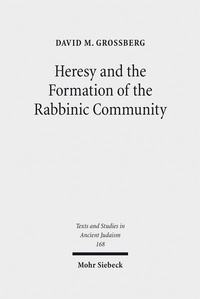
Heresy and the Formation of the Rabbinic Community
1st Edition
Published on 13. July 2017
277 pages
978-3-16-155334-9 (ISBN)
Description

Zwischen dem 1. und dem 6. Jahrhundert n.Chr. systematisierte eine Gruppe von Weisen, die in der Wissenschaft als die rabbinische Gemeinde bezeichnet wird, ihr Konzept des Judentums in Werken wie der Mishna und dem Talmud. David M. Grossberg bietet einen neuen Zugang die Entstehung dieser Gemeinde zu denken. Statt einem Auslöser für die Gründung nachzugehen, untersucht er die sukzessive Entwicklung des Konzepts eines autorisierten rabbinischen Kollektivs. Die klassischen rabbinischen Texte zeichnen ein facettenreiches Millieu von Sadduzäern, Pharisäern, Sündern und Sektierern, welche auf komplexe und wechselnde Art und Weise mit frommen Weisen, Lehrern und Richtern interagierten. Doch diese Darstellung stimmt nur teilweise mit der sozialen Realität überein, in der diese antiken Weisen tatsächlich lebten und wirkten. Der Autor behauptet, dass das Hauptziel dieser Texte nicht war, tatsächliche Gegner der Rabbiner zu beschreiben, sondern Abgrenzungen zwischen Rabbinern und anderen und innerhalb der entstehenden rabbinischen Bewegung zu schaffen und zu verstärken.
More details
Other editions
Additional editions
David M. Grossberg
Heresy and the Formation of the Rabbinic Community
Book
06/2017
1st Edition
Mohr Siebeck
€149.00
Article exhausted; check different version
Person
Content
1 - Cover [Seite 1]
2 - Contents [Seite 8]
3 - Acknowledgements [Seite 10]
4 - Introduction: The Formation of the Rabbinic Community [Seite 12]
4.1 - I. Yavneh and the Myth of Origins [Seite 15]
4.2 - II. The Sage Idea and the Development of a Collective [Seite 19]
4.3 - III. Heresy and the Formation of Community [Seite 25]
4.4 - IV. A Note on Style and Method [Seite 30]
5 - Chapter 1: The Meaning and End of Heresy in Rabbinic Literature [Seite 38]
5.1 - I. Heresy in Rabbinic Literature? [Seite 39]
5.2 - II. Heresy as a Category [Seite 43]
5.3 - III. Heresy as hairesis [Seite 48]
5.4 - IV. Heresy as Heresiological Discourse [Seite 52]
5.5 - V. Heresy and Boundary Rhetoric in the Ancient World [Seite 59]
6 - Chapter 2: Varieties of Minim in the Second Temple and Rabbinic Period [Seite 61]
6.1 - I. Heresy and Minut [Seite 62]
6.2 - II. Minim as Insiders in the Late Second Temple and Early Rabbinic Periods [Seite 68]
6.3 - III. Minim as Hybrids in the Early Christian Period [Seite 83]
6.4 - IV. Minim as Outsiders in the Late Rabbinic Period [Seite 99]
7 - Chapter 3: Co-opting the Sinners of Israel [Seite 103]
7.1 - I. The Sinners of Israel and the Sinners of the Nations of the World [Seite 103]
7.2 - II. Sinners, Pomegranates, and Good Deeds [Seite 109]
7.3 - III. An Israelite Who Sins [Seite 117]
7.4 - IV. All Israel Have a Portion in the World to Come [Seite 121]
8 - Chapter 4: Meshummadim Who Provoke the Rabbis [Seite 127]
8.1 - I. Meshummadim, Apostates, and "The Time of Persecutions" [Seite 128]
8.2 - II. Flagrant Meshummadim [Seite 138]
8.3 - III. Meshummadim From Appetite and To Provoke [Seite 143]
8.4 - IV. Provoking the Torah and the Rabbis [Seite 150]
9 - Chapter 5: Apiqorsim Who Disrespect the Rabbis [Seite 155]
9.1 - I. Epicureans, Sadducees, and Divine Providence [Seite 156]
9.2 - II. Disrespecting the Rabbis [Seite 163]
9.3 - III. Apiqorsim and Irreverence [Seite 167]
9.4 - IV. Apiqorsim, minim, and Dangerous Verses [Seite 169]
9.5 - V. Know How to Avoid an Apiqoros [Seite 173]
10 - Chapter 6: Two Powers and the Ascent of Rabbi Elisha [Seite 178]
10.1 - I. Elisha ben Abuyah as an Absolute Other [Seite 179]
10.2 - II. Elisha ben Abuyah as a Failed Rabbi [Seite 182]
10.3 - III. Elisha's Ascent and Divine Multiplicity [Seite 187]
10.4 - IV. Metatron's Transgression and Heavenly Proscriptions [Seite 196]
10.5 - V. Elisha's Transgression and the Heavenly Voice [Seite 198]
11 - Chapter 7: The Failed Rabbi and Those Who Cause the Public to Sin [Seite 204]
11.1 - I. The Mechanics of Atonement in Rabbinic Tradition [Seite 205]
11.2 - II. Gehazi as a Failed Rabbi [Seite 211]
11.3 - III. The Failed Rabbi in the Babylonian Talmud [Seite 217]
12 - Conclusion: Boundary Rhetoric, Community Formation, and Rabbinic Judaism [Seite 228]
13 - Appendix: Synoptic Presentation of b. Hagigah 15a and 3 Enoch for Chapter Six [Seite 236]
14 - Bibliography [Seite 238]
15 - Index of Primary Sources [Seite 260]
15.1 - I. Hebrew Bible [Seite 260]
15.2 - II. Second Temple Period Jewish Literature [Seite 261]
15.3 - III. New Testament [Seite 262]
15.4 - IV. Rabbinic Literature [Seite 262]
15.4.1 - Mishnah [Seite 263]
15.4.2 - Tannaitic Midrash [Seite 264]
15.4.3 - Palestinian Talmud [Seite 265]
15.4.4 - Classical Palestinian Midrash [Seite 266]
15.4.5 - Later Midrash [Seite 269]
15.5 - V. Greco-Roman and Early Christian Literature [Seite 270]
15.6 - VI. Hekhalot and Medieval Jewish Literature [Seite 270]
16 - Index of Modern Authors [Seite 272]
17 - Index of Subjects [Seite 277]
2 - Contents [Seite 8]
3 - Acknowledgements [Seite 10]
4 - Introduction: The Formation of the Rabbinic Community [Seite 12]
4.1 - I. Yavneh and the Myth of Origins [Seite 15]
4.2 - II. The Sage Idea and the Development of a Collective [Seite 19]
4.3 - III. Heresy and the Formation of Community [Seite 25]
4.4 - IV. A Note on Style and Method [Seite 30]
5 - Chapter 1: The Meaning and End of Heresy in Rabbinic Literature [Seite 38]
5.1 - I. Heresy in Rabbinic Literature? [Seite 39]
5.2 - II. Heresy as a Category [Seite 43]
5.3 - III. Heresy as hairesis [Seite 48]
5.4 - IV. Heresy as Heresiological Discourse [Seite 52]
5.5 - V. Heresy and Boundary Rhetoric in the Ancient World [Seite 59]
6 - Chapter 2: Varieties of Minim in the Second Temple and Rabbinic Period [Seite 61]
6.1 - I. Heresy and Minut [Seite 62]
6.2 - II. Minim as Insiders in the Late Second Temple and Early Rabbinic Periods [Seite 68]
6.3 - III. Minim as Hybrids in the Early Christian Period [Seite 83]
6.4 - IV. Minim as Outsiders in the Late Rabbinic Period [Seite 99]
7 - Chapter 3: Co-opting the Sinners of Israel [Seite 103]
7.1 - I. The Sinners of Israel and the Sinners of the Nations of the World [Seite 103]
7.2 - II. Sinners, Pomegranates, and Good Deeds [Seite 109]
7.3 - III. An Israelite Who Sins [Seite 117]
7.4 - IV. All Israel Have a Portion in the World to Come [Seite 121]
8 - Chapter 4: Meshummadim Who Provoke the Rabbis [Seite 127]
8.1 - I. Meshummadim, Apostates, and "The Time of Persecutions" [Seite 128]
8.2 - II. Flagrant Meshummadim [Seite 138]
8.3 - III. Meshummadim From Appetite and To Provoke [Seite 143]
8.4 - IV. Provoking the Torah and the Rabbis [Seite 150]
9 - Chapter 5: Apiqorsim Who Disrespect the Rabbis [Seite 155]
9.1 - I. Epicureans, Sadducees, and Divine Providence [Seite 156]
9.2 - II. Disrespecting the Rabbis [Seite 163]
9.3 - III. Apiqorsim and Irreverence [Seite 167]
9.4 - IV. Apiqorsim, minim, and Dangerous Verses [Seite 169]
9.5 - V. Know How to Avoid an Apiqoros [Seite 173]
10 - Chapter 6: Two Powers and the Ascent of Rabbi Elisha [Seite 178]
10.1 - I. Elisha ben Abuyah as an Absolute Other [Seite 179]
10.2 - II. Elisha ben Abuyah as a Failed Rabbi [Seite 182]
10.3 - III. Elisha's Ascent and Divine Multiplicity [Seite 187]
10.4 - IV. Metatron's Transgression and Heavenly Proscriptions [Seite 196]
10.5 - V. Elisha's Transgression and the Heavenly Voice [Seite 198]
11 - Chapter 7: The Failed Rabbi and Those Who Cause the Public to Sin [Seite 204]
11.1 - I. The Mechanics of Atonement in Rabbinic Tradition [Seite 205]
11.2 - II. Gehazi as a Failed Rabbi [Seite 211]
11.3 - III. The Failed Rabbi in the Babylonian Talmud [Seite 217]
12 - Conclusion: Boundary Rhetoric, Community Formation, and Rabbinic Judaism [Seite 228]
13 - Appendix: Synoptic Presentation of b. Hagigah 15a and 3 Enoch for Chapter Six [Seite 236]
14 - Bibliography [Seite 238]
15 - Index of Primary Sources [Seite 260]
15.1 - I. Hebrew Bible [Seite 260]
15.2 - II. Second Temple Period Jewish Literature [Seite 261]
15.3 - III. New Testament [Seite 262]
15.4 - IV. Rabbinic Literature [Seite 262]
15.4.1 - Mishnah [Seite 263]
15.4.2 - Tannaitic Midrash [Seite 264]
15.4.3 - Palestinian Talmud [Seite 265]
15.4.4 - Classical Palestinian Midrash [Seite 266]
15.4.5 - Later Midrash [Seite 269]
15.5 - V. Greco-Roman and Early Christian Literature [Seite 270]
15.6 - VI. Hekhalot and Medieval Jewish Literature [Seite 270]
16 - Index of Modern Authors [Seite 272]
17 - Index of Subjects [Seite 277]
