
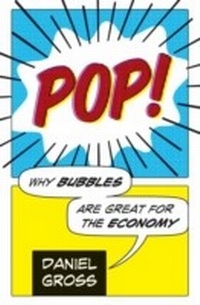
Pop!
Description
Alles über E-Books | Antworten auf Fragen rund um E-Books, Kopierschutz und Dateiformate finden Sie in unserem Info- & Hilfebereich.
Bubbles?from hot stocks in the 1920s to hot stocks in the 1990s?are much-lamented features of contemporary economic life. Time and again, American investors, seduced by the lures of quick money, new technologies, and excessive optimism, have shown a tendency to get carried away. Time and again, they have appeared foolish when the bubble burst. The history of finance is filled with tragic tales of shattered dreams, bankruptcies, and bitter recriminations.
But what if the I-told-you-so lectures about bubbles tell only half the story? What if bubbles accomplish something that can only be seen in retrospect? What if the frenzy of irrational economic enthusiasm lays the groundwork for sober-minded opportunities, growth, and innovation? Could it be that bubbles wind up being a competitive advantage for the bubble-prone U.S. economy?
In this entertaining and fast-paced book?you'll laugh as much as you cry?Daniel Gross convincingly argues that every bubble has a golden lining. From the 19th-century mania for the telegraph to the current craze in alternative energy, from railroads to real estate, Gross takes us on a whirlwind tour of reckless investors and pie-in-the-sky promoters, detailing the mania they created?but also the lasting good they left behind.
In one of the great ironies of history, Gross shows how the bubbles once generally seen as disastrous have actually helped build the commercial infrastructures that have jump-started American growth. If there is a secret to the perennial resilience and exuberance of the American economy, Gross may just have found it in our peculiar capacity to blow financial bubbles?and successfully clean up the mess.
All prices
More details
Other editions
Additional editions

Person
Daniel Gross, the "Moneybox" columnist for Slate, is the author of several books and is a contributor to the "Economic View" column in the Sunday New York Times. His writing also appears frequently in magazines such as New York and Wired. Gross was educated at Cornell University and holds an A.M. in American history from Harvard University. He lives with his family in Connecticut.

System requirements
File format: ePUB
Copy protection: Adobe-DRM (Digital Rights Management)
System requirements:
- Computer (Windows; MacOS X; Linux): Install the free reader Adobe Digital Editions prior to download (see eBook Help).
- Tablet/smartphone (Android; iOS): Install the free app Adobe Digital Editions or the app PocketBook before downloading (see eBook Help).
- E-reader: Bookeen, Kobo, Pocketbook, Sony, Tolino and many more (not Kindle).
The file format ePub works well for novels and non-fiction books – i.e., „flowing” text without complex layout. On an e-reader or smartphone, line and page breaks automatically adjust to fit the small displays.
This eBook uses Adobe-DRM, a „hard” copy protection. If the necessary requirements are not met, unfortunately you will not be able to open the eBook. You will therefore need to prepare your reading hardware before downloading.
Please note: We strongly recommend that you authorise using your personal Adobe ID after installation of any reading software.
For more information, see our ebook Help page.
File format: ePUB
Copy protection: Watermark-DRM (Digital Rights Management)
System requirements:
- Computer (Windows; MacOS X; Linux): Use a reading software that can process the file format ePUB: e.g., Adobe Digital Editions or FBReader – both free (see eBook Help).
- Tablet/Smartphone (Android; iOS): Before downloading, install the free app Adobe Digital Editions (see eBook Help).
- E-reader: Bookeen, Kobo, Pocketbook, Sony, Tolino and many more (not Kindle).
The file format ePUB works well for novels and non-fiction books – i.e., „flowing” text without complex layout. On an e-reader or smartphone, line and page breaks automatically adjust to fit the small displays.
This eBook uses Watermark-DRM, a „soft” copy protection. This means that there are no technical restrictions to prevent illegal distribution. However, there is a personalised watermark embedded in the eBook that can be used to identify the purchaser of the eBook in the event of misuse and to provide evidence for legal purposes.
For more information, see our eBook Help page.