

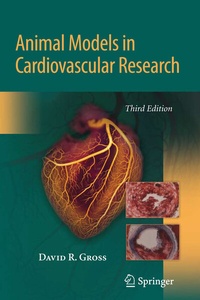
Animal Models in Cardiovascular Research
Description

Interest in the humane and scientifically justifiable use of research animals has intensified since the publication of the 2nd edition of Animal Models in Cardiovascular Research . This completely revised and updated edition will provide information essential to any researcher interested in using animal models for cardiovascular research, or any research which requires normal cardiovascular function. The format and presentation will be changed to make the text more easy to read and use: (1) This edition is in outline format, for ease and utility. (2) The opening chapter includes more information on the cardiovascular effects of post-operative analgesia and will address the recognition of pain behavior in species commonly used in research settings, particularly rats and mice. (3) New edition includes reference material more useful to researchers using transgenic and naturally occurring animal models to dissect these mechanisms.
More details
Other editions
Additional editions
Person
Dr. David R. Gross entered private veterinary practice after earning the DVM degree from Colorado State University in 1960. In 1974 he was awarded the PhD degree in physiology from the Ohio State University beginning a 36-year career in academics that culminated as professor and head of the Department of Veterinary Biosciences in the College of Veterinary Medicine, University of Illinois, Urbana-Champaign. Dr. Gross' research career encompassed 58 funded projects totaling over $5.5 million and 91 papers published in refereed journals using a wide variety of animal models. Ironically his three most-cited research papers received no external funding. He and his colleagues showed that feeding dietary cholesterol to rabbits induced Alzheimer's-like lesions in the brain. Their work also showed that surgery involving cardiopulmonary bypass resulted in Alzheimer's-like brain lesions in pigs. With another group of colleagues he helped pioneer minimally invasive coronary artery bypass grafting techniques using the pig as a model.
