

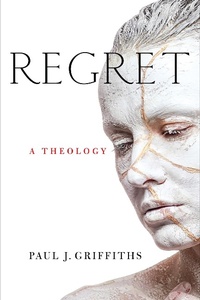
Regret
A Theology
Published on 15. February 2021
158 pages
978-0-268-20027-5 (ISBN)
Description

In this brilliant theological essay, Paul J. Griffiths takes the reader through all the stages of regret.
To various degrees, all human beings experience regret. In this concise theological grammar, Paul J. Griffiths analyzes this attitude toward the past and distinguishes its various kinds. He examines attitudes encapsulated in the phrase, "I would it were otherwise," including regret, contrition, remorse, compunction, lament, and repentance. By using literature (especially poetry) and Christian theology, Griffiths shows both what is good about regret and what can be destructive about it. Griffiths argues that on the one hand regret can take the form of remorse-an agony produced by obsessive and ceaseless examination of the errors, sins, and omissions of the past. This kind of regret accomplishes nothing and produces only pain. On the other hand, when regret is coupled with contrition and genuine sorrow for past errors, it has the capacity both to transfigure the past-which is never merely past-and to open the future. Moreover, in thinking about the phenomenon of regret in the context of Christian theology, Griffiths focuses especially on the notion of the LORD's regret. Is it even reasonable to claim that the LORD regrets? Griffiths shows not only that it is but also that the LORD's regret should structure how we regret as human beings.
Griffiths investigates the work of Henry James, Emily Dickinson, Tomas Transtroemer, Paul Celan, Jane Austen, George Herbert, and Robert Frost to show how regret is not a negative feature of human life but rather is essential for human flourishing and ultimately is to be patterned on the LORD's regret. Regret: A Theology will be of interest to scholars and students of philosophy, theology, and literature, as well as to literate readers who want to understand the phenomenon of regret more deeply.
To various degrees, all human beings experience regret. In this concise theological grammar, Paul J. Griffiths analyzes this attitude toward the past and distinguishes its various kinds. He examines attitudes encapsulated in the phrase, "I would it were otherwise," including regret, contrition, remorse, compunction, lament, and repentance. By using literature (especially poetry) and Christian theology, Griffiths shows both what is good about regret and what can be destructive about it. Griffiths argues that on the one hand regret can take the form of remorse-an agony produced by obsessive and ceaseless examination of the errors, sins, and omissions of the past. This kind of regret accomplishes nothing and produces only pain. On the other hand, when regret is coupled with contrition and genuine sorrow for past errors, it has the capacity both to transfigure the past-which is never merely past-and to open the future. Moreover, in thinking about the phenomenon of regret in the context of Christian theology, Griffiths focuses especially on the notion of the LORD's regret. Is it even reasonable to claim that the LORD regrets? Griffiths shows not only that it is but also that the LORD's regret should structure how we regret as human beings.
Griffiths investigates the work of Henry James, Emily Dickinson, Tomas Transtroemer, Paul Celan, Jane Austen, George Herbert, and Robert Frost to show how regret is not a negative feature of human life but rather is essential for human flourishing and ultimately is to be patterned on the LORD's regret. Regret: A Theology will be of interest to scholars and students of philosophy, theology, and literature, as well as to literate readers who want to understand the phenomenon of regret more deeply.
Reviews / Votes
"Avoiding the simple distinction between shame and guilt, Griffiths thinks theologically about regret in a manner that gestures toward Easter. He shows how regret can be the first tool in a technology of the heart, one that works repentance. In this way, he identifies how the feeling with which many now wrestle is, in fact, necessary for their being made whole by the gospel." -The Christian Century"Paul Griffiths' Regret: A Theology probes what it means to be in situations that we wish were otherwise, and the attitudes-regret, as well as remorse, contrition, and penance-that surround them. A Catholic theologian's task, he tells us with a wink, is not to be right, but to be interesting." -The Way
"Paul Griffiths's Regret: A Theology offers a concise itinerary of what he calls 'the otherwise-attitudes, with penance as their culmination, lament as their entry point, remorse as their deformed sibling, contrition as their heart, and avowal as the beginning of the transfiguration of what's regretted.' . . . Griffiths is an astonishingly gifted thinker, writer, and teacher." -Church Life Journal
"In his new book, Griffiths performs . . . an analysis on a range of statements about regret, many of them drawn from literary works, in an effort to see what Christians can say about the topic. . . . Griffiths writes that theology first of all must respond to God. After that, 'it should seek to be interesting.' Regret certainly is." -Commonweal
"Paul Griffiths's Regret is very well written, and composed in a highly readable style. It is a brilliant piece of analytic phenomenology, taking the reader through all the stages of regret. The discussions about the permanent residue of the regrettable are brilliant, and Griffiths's fine analytic thinking cannot be too highly praised." -Francesca Aran Murphy, author of God Is Not a Story
"Griffiths's book is a theological reflection upon regret-a concentrated meditation upon the theological meaning of the desire that things might have been otherwise. It is both brilliant and wonderfully idiosyncratic, as is the case with all of Griffiths's writings." -David Bentley Hart, author of Theological Territories
"A lucidly-written, sharply thought-out, and consistently clear-eyed account of an existential issue that is common to all humanity, and which has particularly important contours within Christian faith: What, if anything, can be done about things that we have done, or somehow participated in, and which we have come to regret?" -International Journal of Systematic Theology
All prices
More details
Edition
New edition
Language
English
Place of publication
Notre Dame IN
United States
Edition type
New edition
Product notice
Reflowable
ISBN-13
978-0-268-20027-5 (9780268200275)
Copyright in bibliographic data and cover images is held by Nielsen Book Services Limited or by the publishers or by their respective licensors: all rights reserved.
Schweitzer Classification
Other editions
Person
Paul J. Griffiths formerly held the Warren Chair of Catholic Theology at Duke Divinity School. He is the author of numerous books, including Christian Flesh and The Practice of Catholic Theology: A Modest Proposal.
Content
1. The LORD's Regrets
2. Faults
3. Time
4. Lament
5. Remorse
6. Contrition
7. Confession
8. Penance
2. Faults
3. Time
4. Lament
5. Remorse
6. Contrition
7. Confession
8. Penance
