

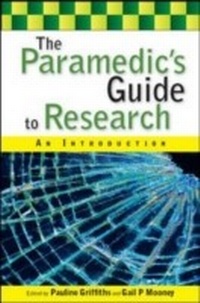
The Paramedic's Guide to Research: An Introduction
1st Edition
Published on 1. October 2011
184 pages
978-0-335-24137-8 (ISBN)
Description

"This is an excellent text which covers all of the important research methods in the field, including randomised control trials. A strong component of the text is the inclusion of chapters on ethics and the future of paramedic research...The use of paramedic examples throughout the chapters will help students and other budding paramedic researchers connect with the subject matter and help them link theory, evidence and practice." Professor Peter O'Meara, La Trobe Rural Health School, La Trobe University, Australia This practical book provides a no nonsense guide for student and qualified paramedics looking to understand the key elements of research, and what it means for their profession. The authors explain key concepts and methodologies to help you get to grips with the nature of paramedic research and how it works in practice. By drawing on a wealth of cases and examples, research is placed firmly in the context of clinical practice. The book will enable you to critique research and to engage in small-scale research projects of your own.
Emphasising what you need to know, the book includes information on: Knowledge that underpins practice Key elements of qualitative and quantitative research Research ethics and evidence based practice Undertaking a literature review Dissemination of research findings Considerations of the future for paramedic research Written by experienced lecturers, the authors offer practical advice and tips to more advanced researchers on getting work published and giving oral and poster presentations at conferences. Contributors: Jayne Cutter, Gary Rolfe, Megan Rosser, Julia Williams, Malcolm Woollard
"This is an excellent text which covers all of the important research methods in the field, including randomised control trials. A strong component of the text is the inclusion of chapters on ethics and the future of paramedic research...The use of paramedic examples throughout the chapters will help students and other budding paramedic researchers connect with the subject matter and help them link theory, evidence and practice." Professor Peter O'Meara, La Trobe Rural Health School, La Trobe University, Australia This practical book provides a no nonsense guide for student and qualified paramedics looking to understand the key elements of research, and what it means for their profession. The authors explain key concepts and methodologies to help you get to grips with the nature of paramedic research and how it works in practice. By drawing on a wealth of cases and examples, research is placed firmly in the context of clinical practice. The book will enable you to critique research and to engage in small-scale research projects of your own.
Emphasising what you need to know, the book includes information on: Knowledge that underpins practice Key elements of qualitative and quantitative research Research ethics and evidence based practice Undertaking a literature review Dissemination of research findings Considerations of the future for paramedic research Written by experienced lecturers, the authors offer practical advice and tips to more advanced researchers on getting work published and giving oral and poster presentations at conferences. Contributors: Jayne Cutter, Gary Rolfe, Megan Rosser, Julia Williams, Malcolm Woollard
Emphasising what you need to know, the book includes information on: Knowledge that underpins practice Key elements of qualitative and quantitative research Research ethics and evidence based practice Undertaking a literature review Dissemination of research findings Considerations of the future for paramedic research Written by experienced lecturers, the authors offer practical advice and tips to more advanced researchers on getting work published and giving oral and poster presentations at conferences. Contributors: Jayne Cutter, Gary Rolfe, Megan Rosser, Julia Williams, Malcolm Woollard
"This is an excellent text which covers all of the important research methods in the field, including randomised control trials. A strong component of the text is the inclusion of chapters on ethics and the future of paramedic research...The use of paramedic examples throughout the chapters will help students and other budding paramedic researchers connect with the subject matter and help them link theory, evidence and practice." Professor Peter O'Meara, La Trobe Rural Health School, La Trobe University, Australia This practical book provides a no nonsense guide for student and qualified paramedics looking to understand the key elements of research, and what it means for their profession. The authors explain key concepts and methodologies to help you get to grips with the nature of paramedic research and how it works in practice. By drawing on a wealth of cases and examples, research is placed firmly in the context of clinical practice. The book will enable you to critique research and to engage in small-scale research projects of your own.
Emphasising what you need to know, the book includes information on: Knowledge that underpins practice Key elements of qualitative and quantitative research Research ethics and evidence based practice Undertaking a literature review Dissemination of research findings Considerations of the future for paramedic research Written by experienced lecturers, the authors offer practical advice and tips to more advanced researchers on getting work published and giving oral and poster presentations at conferences. Contributors: Jayne Cutter, Gary Rolfe, Megan Rosser, Julia Williams, Malcolm Woollard
More details
Language
English
Place of publication
Buckingham
United Kingdom
Target group
College/higher education
ISBN-13
978-0-335-24137-8 (9780335241378)
Copyright in bibliographic data and cover images is held by Nielsen Book Services Limited or by the publishers or by their respective licensors: all rights reserved.
Schweitzer Classification
Other editions
Additional editions
Book
11/2011
Open University Press
€32.50
Shipment within 15-20 days
Pauline Griffiths | Gail Mooney
The Paramedic's Guide to Research: An Introduction
Book
10/2011
Open University Press
Unfortunately, price unknown
Available (delivery time upon request)
Persons
Pauline Griffiths is Senior Lecturer, Director of Pre-qualifying Studies, College of Human and Health Sciences, Swansea University, Wales. Pauline has a clinical background in neuroscience and acute medicine. Gail P Mooney is Director of Postgraduate Studies, College of Human and Health Science, Swansea University, Wales. Gail's clinical background is in critical care having worked in a number of intensive care units.
Pauline Griffiths is Senior Lecturer, Director of Pre-qualifying Studies, College of Human and Health Sciences, Swansea University, Wales. Pauline has a clinical background in neuroscience and acute medicine. Gail P Mooney is Director of Postgraduate Studies, College of Human and Health Science, Swansea University, Wales. Gail's clinical background is in critical care having worked in a number of intensive care units.
Pauline Griffiths is Senior Lecturer, Director of Pre-qualifying Studies, College of Human and Health Sciences, Swansea University, Wales. Pauline has a clinical background in neuroscience and acute medicine. Gail P Mooney is Director of Postgraduate Studies, College of Human and Health Science, Swansea University, Wales. Gail's clinical background is in critical care having worked in a number of intensive care units.
Content
- Intro
- The Paramedic's Guide to Research
- Contents
- About the editors
- About the contributors
- Abbreviations
- 1 Research and the paramedic
- Learning outcomes for the chapter
- Introduction
- About this book
- What is research?
- What is a profession?
- Development of the paramedic role
- Knowledge to inform paramedic practice
- Clinical decision making
- Paramedic research
- The research process: an overview
- Structure of this book
- References
- 2 Knowledge to underpin paramedic practice
- Learning outcomes for the chapter
- The nature of knowledge
- Knowledge and practice
- How practice knowledge is generated
- Qualitative and quantitative paradigms
- How do you choose which method to use?
- Philosophical underpinnings
- Core elements of research studies
- Critiquing research
- Conclusion
- References
- 3 Evidence based practice in paramedic practice
- Learning outcomes for the chapter
- Introduction
- Definitions of evidence based practice
- Benefits of evidence based practice
- The origins and purpose of clinical governance and evidence based practice
- The components of evidence based practice
- Research
- Clinical opinion and expertise
- Patient preferences
- Resources
- Sources of evidence
- Strengthening the evidence base for paramedic practice
- Barriers to evidence based practice
- Implementing evidence based practice
- Conclusion
- References
- Useful evidence based practice websites/databases
- 4 Conducting ethical research in paramedic practice
- Learning outcomes for the chapter
- Introduction
- What will paramedics research?
- Research governance
- Research proposals
- Ethical research
- Autonomy
- Consent and informed consent
- Veracity and fidelity
- Nonmaleficence
- Conclusion
- References
- Useful websites
- 5 Conducting a critical literature review in paramedic practice
- Learning outcomes for the chapter
- Introduction
- What is a literature review?
- The purpose of a literature review
- Identifying a topic
- Searching the literature
- Critiquing the literature
- The layout of the literature review
- Referencing
- Conclusion
- References
- Further reading
- Useful websites
- 6 Qualitative research in paramedic practice: an overview
- Learning outcomes for the chapter
- Introduction
- What is the purpose of qualitative research?
- Why choose a qualitative approach?
- Characteristics of qualitative research
- Reflexivity
- What does a qualitative research study look like?
- Research problem, question and aim/statement of purpose
- Sampling
- Data collection
- Interviews
- Observation
- Approaches to analysis in qualitative research
- What do we mean by qualitative data analysis?
- What is important in assessing the quality of research using qualitative approaches?
- Dissemination of the research findings
- Conclusion
- References
- 7 Using qualitative research methods in paramedic practice
- Learning outcomes for the chapter
- Introduction
- How do you choose the 'right' research approach?
- Ethnography
- Phenomenology
- Grounded theory
- Generic qualitative research
- Conclusion
- References
- 8 Quantitative research in paramedic practice: an overview
- Learning outcomes for the chapter
- Introduction
- Research questions: hypothesis and null hypothesis
- Quantitative approaches to designing research studies
- Sampling
- Types of probability sampling
- Types of non-probability sampling
- Data collection methods
- Rigour in quantitative research
- Reliability
- Statistical concepts
- Descriptive statistics
- Inferential statistics
- Significance testing
- Using a quantitative research critiquing tool
- Conclusion
- References
- Additional reading
- 9 Using quantitative research methods in paramedic practice
- Learning outcomes for the chapter
- Introduction
- Experimental research
- Randomised controlled trials
- Quasi-experiments
- Non-experimental research
- Case control studies
- Cohort studies
- Cross-sectional studies
- Data collection in non-experimental studies
- Clinical audit and service evaluations
- Conclusion
- References
- Recommended reading
- 10 Researching paramedic clinical practice: a practical guide
- Learning outcomes for the chapter
- Introduction
- Identifying research questions from practice
- Undertaking small-scale research projects
- Dissemination
- Writing for publication
- Presentations
- Oral presentations
- Poster presentations
- Raising awareness in your professional peer-group
- Conclusion
- References and further reading
- 11 The future for paramedic research
- Learning outcomes for the chapter
- Introduction
- Considering your practice
- What to research?
- Challenges of paramedic research and practice
- Political influences on paramedic research and practice
- Developing professional knowledge
- Influencing your practice through research
- Personal knowledge
- Conclusion
- References
- Further reading
- Glossary
- Index
