

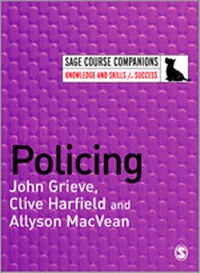
Policing
1st Edition
Published on 21. May 2007
240 pages
978-1-84860-534-3 (ISBN)
Description

This is the first course guide that has been developed for students of policing. It identifies the core themes and additional source material, providing an essential overview for students and a reference point for use throughout their studies.
The Policing Course Companion is designed to complement and work alongside existing literature. It provides:
" Easy access to the key themes in policing
" Helpful summaries of the approach taken by the main course textbooks
" Guidance on the essential study skills required to pass the course
" Help with developing critical thinking
" Taking it Further sections that suggest how readers can extent their thinking beyond the "received wisdom"
" Pointers to success in course exams and written assessment exercises
The SAGE Course Companion in Policing is much more than a revision guide for undergraduates; it is an essential tool that will help readers take their course understanding to new levels and help them achieve success in their undergraduate course.
John Grieve is a former Director of Intelligence for the Metropolitan Police, where he also held a number of other senior roles. He is now Chair of the John Grieve Centre for Policing and Community Safety and Emeritus Professor at London Metropolitan University.
Clive Harfield is a former police Inspector and is now the Deputy Director of the John Grieve Centre for Policing and Community Safety, London Metropolitan University.
Allyson MacVean is Founder and Director of the John Grieve Centre for Policing and Community Safety, London Metropolitan University.
The Policing Course Companion is designed to complement and work alongside existing literature. It provides:
" Easy access to the key themes in policing
" Helpful summaries of the approach taken by the main course textbooks
" Guidance on the essential study skills required to pass the course
" Help with developing critical thinking
" Taking it Further sections that suggest how readers can extent their thinking beyond the "received wisdom"
" Pointers to success in course exams and written assessment exercises
The SAGE Course Companion in Policing is much more than a revision guide for undergraduates; it is an essential tool that will help readers take their course understanding to new levels and help them achieve success in their undergraduate course.
John Grieve is a former Director of Intelligence for the Metropolitan Police, where he also held a number of other senior roles. He is now Chair of the John Grieve Centre for Policing and Community Safety and Emeritus Professor at London Metropolitan University.
Clive Harfield is a former police Inspector and is now the Deputy Director of the John Grieve Centre for Policing and Community Safety, London Metropolitan University.
Allyson MacVean is Founder and Director of the John Grieve Centre for Policing and Community Safety, London Metropolitan University.
Reviews / Votes
"This concise and accessible study guide will be an important resource for undergraduate students who need to understand the 'nuts and bolts' of police work and professional practice. In this interactive text, key concepts are clearly explained. It includes a range of activities and further reading that will enable students to think further about the challenges confronting 21st century policing "Professor Eugene McLaughlin, City University London
All prices
More details
Series
Language
English
Place of publication
London
United Kingdom
Target group
College/higher education
ISBN-13
978-1-84860-534-3 (9781848605343)
Copyright in bibliographic data and cover images is held by Nielsen Book Services Limited or by the publishers or by their respective licensors: all rights reserved.
Schweitzer Classification
Other editions
Persons
Allyson MacVean was the founder and first Director of the John Grieve Centre for Policing and Community Safety. Prior to this position, Allyson worked in the Serious and Organized Crime Unit at the Home Office. Her interests include police intelligence, the policing of investigations, policing child sexual abusers and police education. Her books include co-editor of The Handbook of Intelligence Policing (OUP, 2008), Policing Paedophiles on the Internet (New Police Bookshop, 2004) and Sage Course Companions: Policing (Sage Publications, 2007).
Content
PART ONE: INTRODUCTION
Introduction to your Course Companion
Using this Book
Introducing the Features
Researching Police Organizations
The Study of Policing
A Brief Introduction
PART TWO: POLICING
Running Themes in Policing
The Policing Framework
The Emergence and History of Policing
The Function and Role of the Police
Governance, Structure and Accountability
Public Engagement and the Police
Philosophies of Policing - Keeping the Peace and Enforcing the Law
Comparative Policing
International and Transnational Policing
Partnership and Police Reform
The Practice of Policing
Policing Public Order
Criminal Investigation
Policing and Evidence
Policing Different Types of Crime
Policing Organized Crime
Policing Cyberspace
Policing Terrorism
Private Policing
The Cultural Context of Policing
Police Ethics and Human Rights
The Organizational Culture of the Police
Race and Diversity
Gender and Policing
The Police and the Media
PART THREE: STUDY AND REVISION SKILLS
General Introduction
How to Get the Most Out of Your Lectures
How to Make the Most of Seminars
Essay Writing Tips
Revision Hints and Tips
Exam Tips
Tips on Interpreting Essay and Exam Questions
PART FOUR: ADDITIONAL RESOURCES
Glossary, Abbreviations and Useful Websites
Acts and Documents Relevant to the Constitution of Policing in England and Wales
References and Additional Reading
Introduction to your Course Companion
Using this Book
Introducing the Features
Researching Police Organizations
The Study of Policing
A Brief Introduction
PART TWO: POLICING
Running Themes in Policing
The Policing Framework
The Emergence and History of Policing
The Function and Role of the Police
Governance, Structure and Accountability
Public Engagement and the Police
Philosophies of Policing - Keeping the Peace and Enforcing the Law
Comparative Policing
International and Transnational Policing
Partnership and Police Reform
The Practice of Policing
Policing Public Order
Criminal Investigation
Policing and Evidence
Policing Different Types of Crime
Policing Organized Crime
Policing Cyberspace
Policing Terrorism
Private Policing
The Cultural Context of Policing
Police Ethics and Human Rights
The Organizational Culture of the Police
Race and Diversity
Gender and Policing
The Police and the Media
PART THREE: STUDY AND REVISION SKILLS
General Introduction
How to Get the Most Out of Your Lectures
How to Make the Most of Seminars
Essay Writing Tips
Revision Hints and Tips
Exam Tips
Tips on Interpreting Essay and Exam Questions
PART FOUR: ADDITIONAL RESOURCES
Glossary, Abbreviations and Useful Websites
Acts and Documents Relevant to the Constitution of Policing in England and Wales
References and Additional Reading
