

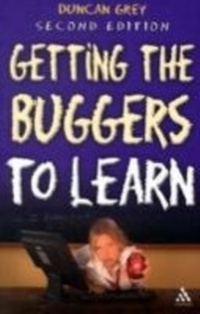
Getting the Buggers to Learn 2nd Edition
2nd Edition
Published on 27. August 2009
216 pages
978-1-4411-9320-9 (ISBN)
Description

'provides an excellent synopsis of a range of different aspects of student learning ... a thorough and thought-provoking book ...' TES
'If I had to choose just one book to teach best practice for learning across the curriculum, then Getting the Buggers to Learn would be a hot contender. It is also an excellent resource for any thinking skills programme ... I wish I had had access to this book when I developed a research model for students at my school ... The book is clearly structured and sequenced [and] it is easy to navigate your way round and find information quickly ... Don't walk, run to your local bookshop and order a copy of this book immediately.' Teacher review
The new edition of this successful book is an invaluable guide for teachers, containing a variety of strategies to develop students' learning skills. Covering everything from traditional learning approaches to more innovative methods, such as how technology and the media can be used to great effect, Duncan Grey writes accessibly and entertainingly. Brimming with top tips and innovative advice, this book will prove extraordinarily helpful to teachers everywhere. This edition features fully-updated sections on assessment, teaching and learning styles and thinking skills.
'If I had to choose just one book to teach best practice for learning across the curriculum, then Getting the Buggers to Learn would be a hot contender. It is also an excellent resource for any thinking skills programme ... I wish I had had access to this book when I developed a research model for students at my school ... The book is clearly structured and sequenced [and] it is easy to navigate your way round and find information quickly ... Don't walk, run to your local bookshop and order a copy of this book immediately.' Teacher review
The new edition of this successful book is an invaluable guide for teachers, containing a variety of strategies to develop students' learning skills. Covering everything from traditional learning approaches to more innovative methods, such as how technology and the media can be used to great effect, Duncan Grey writes accessibly and entertainingly. Brimming with top tips and innovative advice, this book will prove extraordinarily helpful to teachers everywhere. This edition features fully-updated sections on assessment, teaching and learning styles and thinking skills.
Reviews / Votes
"Despite the title (first published in 2008), this is a serious guide for teaching students information literacy skills. An educational consultant/veteran teacher emphasizes that information and communication technologies (ICT) are changing teachers' roles from the traditional 'chalk, talk, sit, listen' approach. In the context of the UK National Curriculum, Grey presents teacher tools, tips, and resources for developing learning-to-learn skills in an ICT world. He also discusses alternative learning environments, and the influence of external factors on learning." -Eithne O'Leyne, BOOK NEWS, Inc.More details
Series
Edition
2nd edition
Language
English
Place of publication
New York
United States
Target group
Professional and scholarly
ISBN-13
978-1-4411-9320-9 (9781441193209)
Copyright in bibliographic data and cover images is held by Nielsen Book Services Limited or by the publishers or by their respective licensors: all rights reserved.
Schweitzer Classification
Other editions
Additional editions
Duncan Grey
Getting the Buggers to Learn 2nd Edition
Book
08/2009
2nd Edition
Continuum International Publishing Group Ltd.
€20.00
Shipment within 3-4 weeks
Person
Duncan Grey is an educational consultant and experienced teacher.
Content
Introduction
1 Starting Points
2. Frameworks for Information Literacy
3 Integrating Information Skills into the curriculum
4 Individual Learning Skills
5 Study and Revision skills
6 Assessment
7 Teaching and Learning Styles
8 Working together
9 Thinking Skills
10 Alternative Approaches
11 The Learning-Centred Environment
12 Health and Diet
13 How Computers Can Help
14 Resources
Appendices
Bibliography
1 Starting Points
2. Frameworks for Information Literacy
3 Integrating Information Skills into the curriculum
4 Individual Learning Skills
5 Study and Revision skills
6 Assessment
7 Teaching and Learning Styles
8 Working together
9 Thinking Skills
10 Alternative Approaches
11 The Learning-Centred Environment
12 Health and Diet
13 How Computers Can Help
14 Resources
Appendices
Bibliography
