

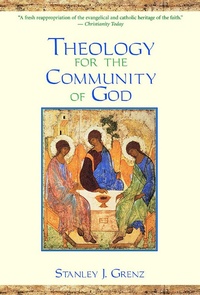
Theology for the Community of God
Published on 31. January 2000
616 pages
978-1-4674-3074-6 (ISBN)
Description

This proven systematic theology represents the very best in evangelical theology. Stanley Grenz presents the traditional themes of Christian doctrine -- God, humankind, Christ, the Holy Spirit, the church, and the last things--all within an emphasis on God's central program for creation, namely, the establishment of community. Masterfully blending biblical, historical, and contemporary concerns, Grenz's respected work provides a coherent vision of the faith that is both intellectually satisfying and expressible in Christian living. Available for the first time in paperback.
More details
Other editions
Additional editions
Stanley J. Grenz
Theology for the Community of God
Book
01/2000
William B. Eerdmans Publishing Company
€46.00
No shipping information available
Content
- Intro
- Title Page
- Copyright
- Dedication
- Contents
- Preface
- Introduction: The Nature and Task of Theology
- The Theological Task
- The Historical Development of Theology
- Developments in the Meaning of the Term
- The Need for Theology in the Church
- The Task of Theology and the Church
- The Relationship of Theology to Other Concepts
- Theology and Faith
- Theology and Religious Studies
- Theology and the Sciences
- Theology and Truth
- The Ongoing Nature of the Theological Task
- Dangers in the Theological Enterprise
- Substitution
- Dogmatism
- Intellectualism
- Theological Method
- The Sources for Theology
- The Reformation Debate
- Contextualization and Experience
- The Threefold Norm of Theology
- The Integrative Motif of Theology
- Representative Alternatives
- The Kingdom of God
- The Community of God
- The Eschatological Community
- The Structure of the Theological System
- Theology and Ethics
- Part 1 Theology: The Doctrine of God
- 1. The God Who Is
- The Reality of God in an Era of Atheism
- In the Era of the Bible: Which God?
- The Rivalry of the Gods
- The Universality of God
- In the Christian Era: Does God Exist?
- The Ontological Argument
- The Cosmological and Teleological Arguments
- The Moral Argument
- The Rise of Intellectual Atheism
- The Critique of the First Cause
- The Critique of the Concept of God
- The Elimination of the Idea of God
- Theology and the Modern Situation
- The Assertion of the Uniqueness of Christianity
- The Reformulation of the Proofs
- The Appeal to Anthropology
- Christian Faith in the Contemporary Context
- Knowledge of God in an Era of Agnosticism
- The Claim to Know God and Intellectual Agnosticism
- Epistemological Agnosticism
- Logical Positivism
- Agnosticism and the Incomprehensible God
- The Means to Knowledge of God
- Knowledge of God through Reason
- Knowledge of God through Religious Experience
- Knowledge of God through God's Self-Revelation
- Knowing God
- Knowing God as Subject
- Knowing God in History
- Knowing God and the Concept of Community
- 2. The Triune God
- Trinitarian Doctrine in Theological History
- The Situation of the First Christians
- The One God
- Jesus' Lordship
- The Spirit's Presence
- Historical Development of Trinitarian Doctrine
- The Deity of Jesus
- The Deity of the Spirit
- Formulating Trinitarian Doctrine
- Trinitarian Doctrine in Post-Cappadocian Theology
- Eastern and Western Conceptions
- The Filioque Controversy
- Decline of the Doctrine
- Recovery of the Doctrine
- The Formulation of Trinitarian Doctrine
- The Content of Trinitarian Doctrine
- God Is One
- God Is Three
- God Is a Diversity
- God Is a Unity
- The Filioque and the Relational Trinity
- Analogies to the Trinity
- The Theological Implication of Trinitarian Doctrine
- Love as the Essence of God
- Love and the Inner Dynamic of God
- Love as the Fundamental Divine Attribute
- Love and the Divine Holiness, Jealousy, and Wrath
- Love and the Other Moral Attributes
- Trinitarian Doctrine and Christian Life
- Trinitarian Prayer
- Trinitarian Ethics
- 3. The Relational God
- The Nature of the Relational God
- God as (a) Being
- God as Transcendent and Immanent
- God as Spirit
- Hegel's Conception of "Spirit"
- The Biblical Conception of "Spirit"
- Theological Implications
- God as Person
- The Philosophical Concept of "Person"
- Personhood and God's Relationship to the World
- Personhood and God
- The Name of God
- The Divine Attributes
- The Attributes and the Divine Substance
- The Medieval Debate
- The Doxological Position
- The Division of the Attributes
- The Eternal God
- Eternality and Our Experience of Time
- Attributes Related to God's Eternality
- The Good God
- Holiness
- Compassion
- God as the Moral Standard
- The Practical Importance of the Attributes
- 4. The Creator God
- God as the Creator of the World
- The Creation of the World as the Act of God
- The Free Act of Creation
- The Loving Act of Creation
- The Creation of the World as a Trinitarian Act
- The Role of the Father
- The Role of the Son
- The Role of the Spirit
- The Act of Creation and the Sovereign Creator
- Present and Final Sovereignty
- De Jure and De Facto Sovereignty
- God's Future
- The Time of Creation
- Creation as Past
- Creation as Future
- Creation and Essence
- God as the Providential Administrator of the World
- "Community" as God's Purpose for Creation
- The Doctrine of Providence in Recent Theology
- The Classical Position
- Providence in Liberal Theology
- The Destruction of Providence
- God's Administration of His World
- Preservation
- Concurrence
- Government
- Part 2 Anthropology: The Doctrine of Humanity
- 5. The Human Identity and Our Origin in God
- Our Place in Creation
- Humankind and the Cosmos in Changing Cultural Contexts
- The "Premodern" Answer
- The Modern Answer
- Christian Faith and the Insights of Anthropology
- The Concept of "Openness to the World"
- The Theological Significance of the Concept
- "Openness to the World" and General Revelation
- The Question of General Revelation in Theology
- The Meaning of General Revelation
- The Place of General Revelation in Theological History
- The Theological Importance of General Revelation
- Revelation in the Human Person
- Revelation in Nature
- The Limit of General Revelation
- God as Our Origin
- The Existential Significance
- God as the Ground of Personal Existence
- God as Universal Father
- The Essential Significance
- Our Temporal Origin
- The Question of the "First Human"
- The Traditional Position
- The Mythical View
- The Underlying Hermeneutical Question
- The "First Human" and Evolution
- Considerations in the Evolution Debate
- Adam as a Historical Person
- Anthropology and Our Temporal Origin
- The Temporal Beginning of Humankind
- The Temporal Beginning of Each Person
- The Unity of Humankind
- 6. Our Nature as Persons Destined for Community
- Our Ontological Nature
- Autonomy versus Determinism
- The Focus on Autonomy
- The Focus on Essence
- The Christian Perspective
- Human Substances
- The Idea of Substantial Entities
- The Trichotomist and Dichotomist Viewpoints
- Substantial Entities and Modern Theology
- The Contemporary Wholistic Alternative
- Death and the Whole Person
- The Origin of the Soul
- Traditional Alternatives
- The Classical Debate and the Contemporary Context
- The Soul and Our Ontological Nature
- Humans as the Image of God
- The Image of God in Theological History
- The Structural View
- The Relational View
- The Dynamic View
- The Image of God in the Bible
- The Divine Image in the Genesis Creation Narratives
- The Divine Image Elsewhere in Genesis
- The Image of God in the New Testament
- The Theological Significance of the Image of God
- The Divine Image as a Special Standing
- The Divine Image as a Special Fellowship
- The Divine Image as an Eschatological Reality
- The Divine Image as a Special Community
- 7. Sin: The Destruction of Community
- The Nature of Sin
- Biblical Terms for Sin
- Old Testament Words for Sin
- New Testament Words for Sin
- Sin and the Human Person
- Sin Infects the Core of Our Being
- Sin Perverts Goodness
- Sin Is Universal
- The Essence of Sin
- Sin as Failure
- Sin as Disruption of Community
- Sin as Revealed in the Gospel
- Original Sin
- The Fall of Humankind-the Fall of Adam
- The Garden
- The First Sin
- Consequences of the First Sin
- The First Sin and the Sin of Humankind
- Historical Suggestions
- The Reality of the Fall
- Original Sin and Guilt
- The Question of Guilt in Theological History
- The Biblical Basis for the Reformed View
- The Reality of Original Sin
- The Results of Sin: Our Human Situation
- Alienation
- Condemnation
- Enslavement
- Depravity
- 8. Our Spiritual Co-Creatures
- The Nature of the Spiritual Realities
- Angelology in Christian Theology
- The Middle Ages: Speculative Angelology
- The Reformation: Biblical Angelology
- The Enlightenment: Rejection of Angelology
- Contemporary Theology: A Renewed Interest
- A Biblical Theology of Angels
- Definition
- Angels in the Old Testament
- Angels in the New Testament
- A Biblical Theology of Demons
- Definitions
- Demons in the Old Testament
- Demons in the New Testament
- A Biblical Theology of Satan
- Names Related to Satan
- Satan in the Old Testament
- Satan in the New Testament
- Angelology and Structures of Existence
- The Structures of Existence
- The Function of the Structures
- The Existence of Structures
- Structures of Existence and the Bible
- Structures and Spiritual Beings
- Structures and the "Powers"
- Structures and Governance
- A Theology of the Structures
- God's Intent for the Structures
- The Evil Manipulation of Structures
- Structures and Christ
- The Demonic and Superstition
- Superstition and the Old Testament
- The Old Testament Opposition to Superstition
- The Presence of Superstition in Israel
- Superstition and Idolatry
- The Status of the Powers Lying behind Superstition
- The Reality of the Powers
- The Powers as Unreal
- A Christian Stance toward Superstition
- Part 3 Christology: The Doctrine of Christ
- 9. The Fellowship of Jesus the Christ with God
- Foundations: Jesus, the Divine One
- Development of the Affirmation of Jesus' Deity
- Christological Controversy in the Second Century
- The Arian Controversy
- The Basis of Christology
- The Foundation of Our Christological Affirmation
- Jesus' Sinlessness
- Jesus' Teaching
- Jesus' Death
- Jesus' Claim
- Jesus' Resurrection
- Jesus' Claim and His Resurrection
- The Historical Foundation and Faith
- Implications: Jesus as One with God
- Jesus' Unity with God
- Function versus Ontology
- Jesus as the Revealer of God
- Jesus' Fellowship with the Father
- Jesus' Compassion
- Jesus' Special Fellowship with God
- Jesus' Lordship
- The Cosmic Lord
- Our Personal Lord
- The Lord of History
- 10. The Fellowship of Jesus the Christ with Humankind
- Jesus as a Human
- Development of the Affirmation of Jesus' Humanity
- Apollinarianism
- The Council of Constantinople
- Jesus as Sharing in True Humanness
- Jesus and the Conditions of Human Existence
- Jesus and Human Growth
- Implications of Jesus' Humanness
- Jesus as the True Human
- The Foundation for Affirming Jesus as the True Human
- The Foundation in Jesus' Earthly Life
- The Foundational Importance of the Resurrection
- Jesus' Claim to Uniqueness
- The Content of Our Affirming Jesus as the True Human
- Jesus and the Resurrection
- Jesus and Community
- Jesus and the Upward Fall
- Jesus as the New Human
- Jesus as the Universal Human
- Jesus and the Marginalized
- Jesus and Women
- Jesus and the Individual
- 11. The Fellowship of Deity and Humanity in Jesus
- Jesus as Divine and Human
- The Historical Debate concerning Jesus' Person
- The Nestorian Controversy
- The Eutychian Controversy
- Christology after Chalcedon
- The Reformation Debate
- The Foundation for Affirming the Unity
- Jesus as the Word
- Jesus as the Son
- The Relationship between Deity and Humanity in Jesus
- Jesus and Revelation
- Jesus and Community
- The Incarnation
- The Incarnation in Theological History
- The Kenosis Theory
- Modifications to the Kenosis Theory
- The Incarnation as the Paradox of Grace
- The Critique of Incarnational Christology
- Criticisms of the Traditional Understanding
- Significance of the Incarnation
- Jesus' Preexistence
- The Problem of Preexistence
- The Meaning of Preexistence
- Jesus and Preexistence
- The Virgin Birth
- The Historical Context of the Modern Debate
- Affirmations of the Virgin Birth
- Reinterpretations of the Virgin Birth
- Current Debate about the Virgin Birth
- Protestants and the Virgin Birth
- Roman Catholics and the Virgin Birth
- Points of Debate concerning the Virgin Birth
- Theological Arguments
- Historical Arguments
- Textual Arguments
- The Virgin Birth and Christology
- 12. The Mission of Jesus
- The Vocation of the Earthly Jesus
- Fulfilling the Old Testament Hope
- Jesus as the Prophet
- Jesus as the Messiah
- Heralding the Divine Reign
- The Centrality of the Kingdom
- Jesus as the Son of Man
- The One Sent to Die
- Jesus' Consciousness of His Death
- Jesus as the Suffering Servant
- Jesus' Self-Consciousness
- The Atonement and the Mission of Jesus
- The Atonement in Theological History
- Dynamic Imagery
- Objective Imagery
- Subjective Imagery
- Modifications to Anselm's Theory
- The Significance of Jesus' Death in the New Testament
- Jesus' Death as Our Example
- Jesus' Death as Our Ransom
- Jesus' Death as Our Expiation
- Jesus Is Our Reconciliation
- Jesus' Death and Us
- The Atonement and the Human Predicament
- Our Reception of Christ's Atonement
- The Atonement and Community
- Christ's Substitution
- The Ongoing Work of Christ
- The Exaltation
- Jesus' Present and Future Ministry
- Jesus' Present Ministry
- Jesus' Ongoing Ministry
- Implication of Jesus' Ongoing Ministry for Prayer
- Part 4 Pneumatology: The Doctrine of the Holy Spirit
- 13. The Identity of the Holy Spirit
- The Spirit in Salvation History
- The Holy Spirit and the Old Testament Era
- The Spirit of God in the Old Testament
- Functions of the Spirit of God in the Old Testament
- Eschatological Direction of Old Testament Pneumatology
- The Holy Spirit and the Christ
- Jesus-the Bearer of the Spirit
- Jesus' Promise concerning the Coming Spirit
- Pentecost-the Fulfillment of Jesus' Promise
- The Spirit and the Community of Christ
- The Significance of Pentecost
- The Holy Spirit and the Risen Lord
- The Spirit in the Trinitarian Life
- The Foundation of Pneumatology in the Immanent Trinity
- The Basic Identity of the Spirit
- The Deity and Personhood of the Spirit
- The Holy Spirit and the Economic Trinity
- A Basic Understanding
- Aspects of the Spirit's Identity as the Power of God
- His Identity as the Eschatological Creator Spirit
- 14. The Spirit and the Scriptures
- The Spirit as the Foundation of Scripture
- Inspiration and Illumination
- The Concept of Inspiration
- The Concept of Illumination
- The One Act of the Spirit
- Functional and Canonical Approaches
- The Development of Scripture in the Community
- The Risk of Subjectivism
- The Task of the Spirit Speaking through Scripture
- Scripture as the Source of Spiritual Sustenance
- The Constitutional Role of Scripture
- The Bible and Revelation
- The Concept of Revelation
- Barth's Proposal
- Revelation in the Bible
- Revelation and Scripture
- The Bible as Revelation
- The Bible as Derivative Revelation
- The Bible as Functional Revelation
- The Bible as Mediate Revelation
- Biblical Authority
- The Trustworthiness of Scripture
- Verbal, Plenary Inspiration
- An Infallible, Inerrant Bible
- Biblical Authority and the Authority of the Spirit
- The Extent of Biblical Authority
- Our Sole Authority
- Our Authority in All of Life
- 15. The Dynamic of Conversion
- The Individual Aspect of Conversion
- Repentance
- Faith
- Our Response: Repentance and Faith
- The Divine Aspect of Conversion
- The Spirit's Activity in the Conversion Process
- Conviction
- Call
- Illumination
- Enablement
- Conversion and the Baptism of the Spirit
- Modern Pentecostalism
- Pentecostal View of Spirit Baptism and Tongues
- An Evaluation of the Pentecostal Position
- Spirit Baptism, Conversion, and Spirit Filling
- The Community Aspect of Conversion
- The Role of the Community in Conversion
- Proclamation of the Gospel
- Incorporation into a New Community
- Conversion and Church Initiation Rites
- Historical and Contemporary Positions
- The New Testament Teaching
- Conversion as Faith Expressed through Baptism
- 16. Individual Salvation: The Wider Perspective
- The Process of Salvation
- Conversion
- Conversion and the Human Predicament
- Conversion and the Establishment of Community
- Sanctification
- The Concept of Sanctification in the Bible
- The Theological Concept of Sanctification
- The Sanctification Process
- Perfectionism
- Glorification
- The Eternal Context of Salvation
- Divine Election
- The Controversy over the Five Points of Calvinism
- The Decrees of God
- Election to Community
- The Ordo Salutis
- Historical Perspective
- Representative Positions
- The Order of Salvation and the Future Community
- Part 5 Ecclesiology: The Doctrine of the Church
- 17. The Church-The Eschatological Covenant Community
- The Church as a Covenant People
- Ekklesia
- The Nation, the Body, and the Temple
- The Nation of God
- The Body of Christ
- The Temple of the Spirit
- The Church as Mystical, Universal, and Local
- The Marks of the Church
- The Classical Alternatives
- Biblical Consideration
- Balanced Congregationalism
- The Church as the Sign of the Kingdom
- The Biblical Conception of the Kingdom
- Old Testament Teaching about the Kingdom
- The Kingdom and Jesus
- The Biblical Drama of the Kingdom
- The Kingdom and the Church
- Church and Kingdom in Christian Thought
- The Church in the Kingdom
- Ecclesiological Implications
- The Church as Community
- The Basis in the Covenant and the Kingdom
- The Community of the Covenant
- Community and the Divine Purpose
- Community and the Divine Nature
- The Church as the Image of God
- The Church and the Spirit
- 18. The Ministry of the Community
- The Purpose of the Church
- The Church in God's Purposes
- The Church and the Purpose of Creation
- The Church and the Glory of God
- God's Purpose in Glorification
- The Mandate of the Church
- Worship
- The Focus of Worship
- The Means of Worship
- Edification
- Aspects of Edification
- The Church as a Praying People
- The Church as Community to Its Believers
- Outreach
- Outreach as Evangelism
- Outreach as Service
- 19. Community Acts of Commitment
- Acts of Commitment and the Church
- The Function of Acts of Commitment
- Sacrament or Ordinance
- The Meaning of "Ordinances"
- Commitment Acts and Community
- The Number of Commitment Acts
- The Historical Question
- Two Acts of Commitment
- Baptism: The Seal of Our Identity
- Background and History
- The Meaning of Baptism
- The Symbolic Significance of Baptism
- The Eschatological Orientation of Baptism
- Baptism and the Community
- The Impact of Baptism
- The Working of Baptism
- Baptism as a Divine Act
- Baptism as a Human Act
- Baptism as a Divine-Human Act
- The Subjects of Baptism
- Baptism and Faith
- Infant versus Believer's Baptism
- The Mode of Baptism
- The Lord's Supper: Reaffirming Our Identity
- The Presence of the Lord in the Celebration
- The Development of Transubstantiation
- The Protestant Reaction
- The Meaning of the Lord's Supper
- The Question of Terminology
- The Orientation to the Past
- The Orientation to the Future
- The Orientation to Community
- Our Presence at the Lord's Supper
- The Importance of Our Presence
- The Presence of Others at the Table
- 20. The Organization for Community Life
- Membership in the Community
- Community Membership in the First Century
- Baptism and Community Membership
- The Legacy of the Reformation
- The Pure Church Ideal
- Initiation into the Community
- Baptism after the First Century
- Sectarianism versus Denominationalism
- Beyond Denominationalism
- Community Structures
- The Government of the Community
- Models of Government
- New Testament Considerations
- Balancing Autonomy with the Associational Impulse
- Government within the Communities
- The Congregationalist Dilemma
- The Foundation of Democratic Congregationalism
- The Democratic Congregational Ideal in Practice
- Leadership for the Community
- Offices in the Communities
- Church Offices in the New Testament
- Church Offices in the Ecclesiastical Tradition
- New Testament Offices and Today's Church
- Offices of the Community
- The New Testament Background
- The Pastoral Office
- Ordination by the Community
- The Basis for the Practice of Pastoral Ordination
- The Biblical Foundation for Ordination
- The Theological Foundation for Ordination
- The Significance of Ordination
- The Meaning of the Act
- The Ordaining Body
- The Ordaining Event
- Part 6 Eschatology: The Doctrine of Last Things
- 21. The Consummation of Personal Existence
- The Significance of Death
- The Problem of Death
- The Problem of Definition
- Death and the Meaning of Life
- The Biblical Trajectory
- The Old Testament: Death as Ambiguous
- The New Testament: Hope in the Face of Death
- The Theological Significance of Death
- Death and the Biological Realm
- Death as Loss of Community
- Death's Loss of Ultimacy
- Overcoming Death in the Resurrection
- The Nature of Culminated Personal Life
- Contemporary Visions of the Culmination of Life
- The Christian Hope
- The Possibility of the Resurrection
- Hope in the Face of Death
- Competing Visions of Life after Death
- Death as the Entrance into Eternity
- Soul Sleep
- Conscious Existence of the Soul
- Biblical Insight into the Intermediate State
- The Old Testament Concept of Sheol
- The New Testament Basis for an Intermediate State
- The Biblical Conception of Life beyond Death
- The Situation of the Righteous beyond Death
- The Foundation: Hope for Resurrection
- The Realm beyond Death
- 22. The Consummation of History
- The Meaning of History
- Christian Hope in a Changed Context
- From Optimism to Pessimism
- The Challenge of a Pessimistic World
- Corporate Eschatology and the Biblical Message
- The Prophetic Vision
- The Apocalyptic Vision
- The Significance of History
- The Basic Characteristics of History
- History as God at Work Establishing Community
- The Presence of Community in and beyond History
- History's Goal as "Already"
- History's Goal as "Not Yet"
- The End as Grace
- The End as Judgment
- The Climax of History
- Apocalyptic and Millenarianism
- The Millennium in Christian Theology
- Postmillennialism
- Amillennialism
- Premillennialism
- The Deeper Issue of Millennialism
- Postmillennial Optimism
- Premillennial Pessimism
- Amillennial Realism
- Our Ultimate Hope
- The Era of the Imminent End of History
- The Biblical Understanding of Our Age
- The Eschatological Timetable
- 23. The Consummation of God's Cosmic Program
- The Transition from Creation to New Creation
- The Judgment of the Cosmos
- The Certainty of Cosmic Judgment
- The Purpose of Cosmic Judgment
- The Judgment of Humankind
- The Certainty of Our Judgment
- The Time of Our Judgment
- The Basis for Judgment
- Our Presence at the Judgment
- The Nature of the Judgment
- Eternal Rewards
- The Dark Side of the Judgment
- Universalism
- The Place of Universalism in the Church
- The Foundation of Universalism
- Difficulties with Universalism
- Conditional Immortality
- Its Presence in the Church
- The Foundation of Annihilationism
- Difficulties with Annihilationism
- The Reality of Hell
- The Foundation of the Doctrine
- Hell: The Eternal Tragedy
- The New Creation
- The New Creation as the Renewal of the Cosmos
- Renewal as the Completion of Creation
- The Relationship of the New to the Old
- The Implication of Cosmic Renewal
- The New Creation as Fullness of Community
- A Place Where God Is Present
- A Place of Fellowship
- A Place of Glorification
- 24. The Significance of Eschatology
- Eschatology as Insight into the Present
- Eschatology as God's Call in the Present
- The Foundation for God's Eschatological Call
- The Biblical Precedence
- The Implications for Theology
- Aspects of God's Eschatological Call
- A Call to Evangelism
- A Call to Holiness
- A Call to Steadfastness
- Eschatology as Insight for Living
- Eschatological Living as Hopeful Involvement
- Eschatological Living as Realistic Engagement
- Our Actions as Effective
- Our Actions as Penultimate
- Eschatological Living in the Light of the Eternal
