

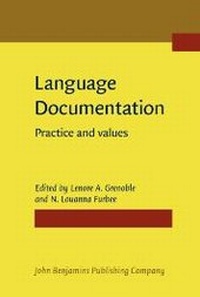
Language Documentation
Practice and values
1st Edition
Published on 25. November 2010
XVIII, 340 pages
978-90-272-8783-0 (ISBN)
Description

Language documentation, also often called documentary linguistics, is a relatively new subfield in linguistics which has emerged in part as a response to the pressing need for collecting, describing, and archiving material on the increasing number of endangered languages. The present book details the most recent developments in this rapidly developing field with papers written by linguists primarily based in academic institutions in North America, although many conduct their fieldwork elsewhere. The articles in this volume - position papers and case studies - focus on some of the most critical issues in the field. These include (1) the nature of contributions to linguistic theory and method provided by documentary linguistics, including the content appropriate for documentation; (2) the impact and demands of technology in documentation; (3) matters of practice in collaborations among linguists and communities, and in the necessary training of students and community members to conduct documentation activities; and (4) the ethical issues involved in documentary linguistics.
More details
Other editions
Additional editions
Book
11/2010
John Benjamins Publishing Co
€104.94
Shipment within 10-15 days
Persons
Content
- Language Documentation
- Title page
- LCC data
- Table of contents
- Contributors
- Preface
- 1. The origin of this book
- 2. The conversations and conference
- 2.1 Participants
- 2.2 The LSA conversations
- Appropriate roles for the LSA
- 3. The conference on language documentation: Theory, practice, and values
- 4. Conclusion
- Part 1 Praxis and values
- Language documentation
- 1. Theory and practice
- 1.1 The theory of linguistic description and the practice of language documentation
- 1.2 The dilemma of practice in absence of theoretical guidance
- 2. The metamodels approach: Emerging consensus for Tojolabal evidentials
- 3. Sharing responsibility
- 4. Chiwere adoptive kinship: Emergent phenomena, negotiated consensus
- 5. Conclusion
- 5.1 Trends
- 5.2 Changes in style of research and argument
- The linguist's responsibilities to the community of speakers
- 1. The changing world of ethical responsibilities, Part I: The linguistic community
- 2. The changing world of ethical responsibilities, Part II: Aboriginal research paradigms in the Canadian context
- 3. The Canadian context: Development of new research programs
- 4. A comparison with programs elsewhere
- 5. Consequences for linguistic documentation
- 6. Responsibilities to the community of speakers
- Language documentation
- Prologue
- 1. Characterizing languages in terms of their endangerment
- 2. Language documentation
- 3. Ownership and access
- 4. Endangered languages
- 5. Archived materials
- 6. Goals for collaboration
- Part 2 Adequacy in documentation
- Adequacy in documentation
- 1. Introduction
- 2. What is documentation?
- 3. What is the role of description vis-à-vis documentation?
- 4. What gets documented?
- 5. The role of uniqueness in documentation
- 6. Who gets documented?
- 7. Who does the documenting?
- 8. Who is the documentation for?
- 9. What does "adequacy in documentation" mean specifically for the work of linguists?
- 10. Conclusion
- Necessary and sufficient data collection
- 1. Introduction
- 2. Our Boasian legacy
- 3. Potawatomi legacy documentation
- 4. Lessons for modern endangered language documentation
- Documenting different genres of oral narrative in Cora (Uto-Aztecan)
- 1. Introduction
- 2. Two genres of Cora narrative
- 2.1 The genre níukari hí'iwahkari
- 2.2 The genre níukari míme'ekan
- 3. Comparisons and conclusions
- Constructing adequate language documentation for multifaceted cross-linguistic data
- 1. Theoretical issues
- 1.1 Data creation
- 1.2 Language-acquisition data
- 2. Values and practices
- 3. Training
- 4. Case study
- 4.1 Interlibrary collaboration
- 4.2 Institutional repository
- 5. Technology: The DTA tool
- 6. Conclusions
- Appendix 1
- Virtual Center
- Cornell University Virtual Linguistics Laboratory
- Data-Creation Steps
- Appendix 2
- Data Transcription and Analysis (DTA) Tool Sample Screens
- Part 3 Documentation technology
- Valuing technology
- 1. Introduction
- 2. Technology and linguistics
- 2.1 Introduction
- 2.2 Overview of Bird and Simons
- 2.3 The values-desiderata-recommendations model
- 3. Language documentation studies
- 3.1 Introduction
- 3.2 The fuzzy boundary between documentation and description
- 3.3 The consequences of technology for linguistics and language documentation
- 3.4 Some features of language documentation studies
- 3.5 The values of language documentation studies
- 3.6 Summary
- 4. A case study in conflicts
- 4.1 Similarities in the two lines of research
- 4.2 Differences in the two lines of research
- 4.3 Evaluating values
- Using the E-MELD School of Best Practices to create lasting digital documentation
- 1. Introduction: E-MELD in context
- 1.1 Background
- 2. Overview of the E-MELD School of Best Practices
- 2.1 What is the School?
- 2.2 The Classroom
- 2.3 Case Studies
- 2.4 Other rooms and facilities in the School
- 3. Using the School
- 3.1 Conducting background research
- 3.2 Researching best practices
- 3.3 Preparing to collect data
- 3.4 Storing and presenting data
- 3.5 Helping others
- 4. Future of the School
- Sharing data in small and endangered languages
- 1. Introduction
- 2. The perspective of PARADISEC
- 3. The LACITO archiving project
- 3.1 The archiving project
- 4. Sharing data: How and why?
- Representing minority languages and cultures on the World Wide Web
- 1. The Web as majority technology
- 2. Object-of-study websites
- 3. Subject-oriented websites
- 4. Group names and Web identities
- 5. Recommendations
- Part 4 Models of successful collaborations
- Beyond expertise
- 1. Background
- 2. What are linguists good for?
- 3. Why are linguists misunderstood?
- 4. What do communities want?
- 5. Getting the most out of your linguist
- 6. The intellectual-property issue
- 6.1 The data debate
- 6.2 The dissemination issue
- 7. Conclusion
- Models of successful collaboration
- 1. The different kinds of collaboration
- 2. The case for collaborative research
- 2.1 "Lone-ranger" linguistics versus collaborative work
- 2.2 Maximizing scarce resources
- 3. Case studies
- 3.1 Kickapoo language reacquisition (Grandstaff 2005)
- 3.2 The Ega documentation project
- 3.3 Monguor and Wutun: Two languages of Northern Tibet
- 3.4 Conclusions from case studies: The benefits of cooperation
- 4. Issues in ethics and responsibility
- Collaborations between academics
- Collaborations between speaker communities and outside academics
- The role of technology in collaboration
- 5. General principles of collaboration
- Working with language communities in unarchiving
- Saving languages, saving lives
- 1. Introduction
- 2. Background
- 3. The special role of NGOs in conflict areas
- 4. Deepening collaborations in health studies leading to language preservation activities
- 5. The health research NGO as nursery to a language documentation center
- Language documentation in the Tohono O'odham community
- 1. Background
- 2. Legacy documentation
- 3. Our community-based collaboration
- 4. Implications for other collaborative teams
- 5. Conclusion
- Documentation of pragmatics and metapragmatics
- 1. Introduction: Hmong language shift in North America
- 2. The data-collection process
- 2.1 Speakers
- 2.2 Data collection
- 3. Sociopragmatic change: Responses to invitations to play a courting game
- 4. Pragmalinguistic change: Increase in use of thov
- 5. Metapragmatic change: Comment on the use of thov
- 6. Discussion and conclusions
- Part 5 Training and careers in field linguistics
- Training graduate students and community members for native language documentation
- 1. Preparing to go to the "field"
- 1.1 Salvage linguistics
- 2. Salvage linguistics, education, and revitalization
- 3. Documentation and ethnic identity
- 4. Documentation and linguistic theory
- 5. Preparation for the field
- 6. Quick and dirty run-through of pre-field considerations, needs, intellectual tools, and physical tools
- 6.1 Field consultants
- 6.2 Equipment
- 6.3 Keeping up
- 6.4 The ad rem experience, a.k.a. "it's all data"
- 6.5 Know as much as you can before you get to the field
- 6.6 When the researcher is "from" the field
- 6.7 Dissemination
- 7. The bottom line
- Native speakers as documenters
- 1. Two trends in documentary linguistics
- 2. Language documentation training center program
- 3. Targeted documentation training
- 4. Products relevant to language communities
- 5. The role of the native speaker
- 6. Raising language awareness
- 7. Collaboration
- 8. Language documentation training center limitations
- 9. Conclusion
- Language documentation and field linguistics
- 1. Introduction
- 2. The role of technology
- 3. Stakeholders
- 3.1 Building successful collaborations
- 3.2 Intellectual-property rights
- 3.3 Other kinds of collaborations
- 4. Training
- 4.1 The limitations of traditional field-methods classes
- 4.2 Training in language documentation
- 4.3 Challenges in language documentation
- 5. Conclusions and future directions
- Selected online resources
- TOOLS
- Software
- Reference
- Institutes
- References
- Name index
- General index
