

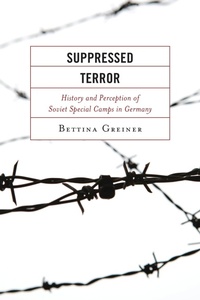
Suppressed Terror
History and Perception of Soviet Special Camps in Germany
1st Edition
Published on 24. April 2014
418 pages
979-8-216-30248-3 (ISBN)
Description

At the end of World War II, the Soviet secret police installed ten special camps in the Soviet occupation zone, later to become the German Democratic Republik. Between 1945 and 1950, roughly 154,000 Germans were held incommunicado in these camps. Whether those accused of being Nazis, spies, or terrorists were indeed guilty as charged, they were indiscriminately imprisoned as security threats and denied due process of the law. One third of the captives did not survive. To this day, most Germans have no knowledge of this postwar Stalinist persecution, even though it exemplifies in a unique way the entangled history of Germans as perpetrators and victims.
How can one write the history of victims in a "society of perpetrators?" This is only one of the questions Displaced Terror: History and Perception of Soviet Special Camps in Germany raises in exploring issues in memory culture in contemporary Germany. The study begins with a detailed description of the camp system against the backdrop of Stalinist security policies in a territory undergoing a transition from war zone to occupation zone to Cold War hot spot. The interpretation of the camps as an instrument of pacification rather than of denacification does not ignore the fact that, while actual perpetrators were a minority, the majority of the special camp inmates had at least been supporters of Nazi rule and were now imprisoned under life-threatening conditions together with victims and opponents of the defeated regime. Based on their detention memoirs, the second part of the book offers a closer look at life and death in the camps, focusing on the prisoners' self-organization and the frictions within these coerced communities. The memoirs also play an important role in the third and last part of the study. Read as attempts to establish public acknowledgment of violence suffered by Germans, they mirror German memory culture since the end of World War II.
How can one write the history of victims in a "society of perpetrators?" This is only one of the questions Displaced Terror: History and Perception of Soviet Special Camps in Germany raises in exploring issues in memory culture in contemporary Germany. The study begins with a detailed description of the camp system against the backdrop of Stalinist security policies in a territory undergoing a transition from war zone to occupation zone to Cold War hot spot. The interpretation of the camps as an instrument of pacification rather than of denacification does not ignore the fact that, while actual perpetrators were a minority, the majority of the special camp inmates had at least been supporters of Nazi rule and were now imprisoned under life-threatening conditions together with victims and opponents of the defeated regime. Based on their detention memoirs, the second part of the book offers a closer look at life and death in the camps, focusing on the prisoners' self-organization and the frictions within these coerced communities. The memoirs also play an important role in the third and last part of the study. Read as attempts to establish public acknowledgment of violence suffered by Germans, they mirror German memory culture since the end of World War II.
More details
Series
Edition
1. Auflage
Language
English
Place of publication
United States
Publishing group
Bloomsbury Publishing Plc
Target group
Professional and scholarly
Illustrations
1 BW Illustration
ISBN-13
979-8-216-30248-3 (9798216302483)
Copyright in bibliographic data and cover images is held by Nielsen Book Services Limited or by the publishers or by their respective licensors: all rights reserved.
Schweitzer Classification
Other editions
Additional editions
Book
04/2014
Lexington Books
€185.70
Shipment within 10-20 days
Person
Bettina Greiner is a German historian working at the Hamburg Institute for Social Research and is coordinator of the Berlin Colloquia on Contemporary History.
Content
Contents
Preface to the English Edition
Chapter One - Introduction
The Camp System
Internees and SMT Prisoners
Explorations
Detention Measures
Detention Experiences
Detention Memories
Chapter Two - Detention Measures
Internments
"Mobilization" and "Cleansing the Rear Area" between December 1944 and April 1945
The NKVD Order No. 00315 or the End of "Mobilization"
The Primacy of the Pacification Policy
Isolation as "Political Prophylaxis"
Soviet Military Tribunals (SMTs)
The Work of the SMTs
Functional Changes in the Camp System
The Logic of Judicial Terror
Judicial Prosecution of "Class Enemies"
"Political Purges" and the Struggle against "Deviationists"
Russian Roulette
Chapter Three - Detention Experiences
Arrest
Dawn Raids
Denounced
In Shock
In the "GPU Cellars"
Detention Conditions
Interrogations
Traitors
Verdicts
In Special Camp No. 7/No. 1 Sachsenhausen
Parallel Worlds: "Politicals" and "Criminals"
The Divided Camp Community
Daily Life in the Sachsenhausen Special Camp
Fragments
Chapter Four - Detention Memoirs
Freedom
The Closure of the Special Camps, 1950
The Combat Group against Inhumanity
The Price of Recognition
"Empty" Memory Sites
"Second-Class Victims" or Self-Imposed Isolation
A Last Attempt: The Publication Offensive after 1989-1990
"Gray" Literature
The Dependency Trap
"Documentarism" as Narrative Style
"Alternate Framings" and Other "Narrative Templates"
Self-devised Traps-Memoirs after 1989
Chapter Five - The Special Camps and Their Place in History
Internment Camps
The POW Camps of the GUPVI
The Soviet GULAG
National Socialist Camps
Notes
Abbreviations
Bibliography
Index of Names
Subject Index
Author Note
Preface to the English Edition
Chapter One - Introduction
The Camp System
Internees and SMT Prisoners
Explorations
Detention Measures
Detention Experiences
Detention Memories
Chapter Two - Detention Measures
Internments
"Mobilization" and "Cleansing the Rear Area" between December 1944 and April 1945
The NKVD Order No. 00315 or the End of "Mobilization"
The Primacy of the Pacification Policy
Isolation as "Political Prophylaxis"
Soviet Military Tribunals (SMTs)
The Work of the SMTs
Functional Changes in the Camp System
The Logic of Judicial Terror
Judicial Prosecution of "Class Enemies"
"Political Purges" and the Struggle against "Deviationists"
Russian Roulette
Chapter Three - Detention Experiences
Arrest
Dawn Raids
Denounced
In Shock
In the "GPU Cellars"
Detention Conditions
Interrogations
Traitors
Verdicts
In Special Camp No. 7/No. 1 Sachsenhausen
Parallel Worlds: "Politicals" and "Criminals"
The Divided Camp Community
Daily Life in the Sachsenhausen Special Camp
Fragments
Chapter Four - Detention Memoirs
Freedom
The Closure of the Special Camps, 1950
The Combat Group against Inhumanity
The Price of Recognition
"Empty" Memory Sites
"Second-Class Victims" or Self-Imposed Isolation
A Last Attempt: The Publication Offensive after 1989-1990
"Gray" Literature
The Dependency Trap
"Documentarism" as Narrative Style
"Alternate Framings" and Other "Narrative Templates"
Self-devised Traps-Memoirs after 1989
Chapter Five - The Special Camps and Their Place in History
Internment Camps
The POW Camps of the GUPVI
The Soviet GULAG
National Socialist Camps
Notes
Abbreviations
Bibliography
Index of Names
Subject Index
Author Note
