

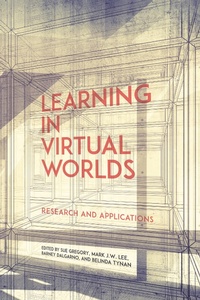
Learning in Virtual Worlds
Description

Three-dimensional (3D) immersive virtual worlds have been touted as being capable of facilitating highly interactive, engaging, multimodal learning experiences. Much of the evidence gathered to support these claims has been anecdotal but the potential that these environments hold to solve traditional problems in online and technology-mediated education-primarily learner isolation and student disengagement-has resulted in considerable investments in virtual world platforms like Second Life, OpenSimulator, and Open Wonderland by both professors and institutions. To justify this ongoing and sustained investment, institutions and proponents of simulated learning environments must assemble a robust body of evidence that illustrates the most effective use of this powerful learning tool.
In this authoritative collection, a team of international experts outline the emerging trends and developments in the use of 3D virtual worlds for teaching and learning. They explore aspects of learner interaction with virtual worlds, such as user wayfinding in Second Life, communication modes and perceived presence, and accessibility issues for elderly or disabled learners. They also examine advanced technologies that hold potential for the enhancement of learner immersion and discuss best practices in the design and implementation of virtual world-based learning interventions and tasks. By evaluating and documenting different methods, approaches, and strategies, the contributors to Learning in Virtual Worlds offer important information and insight to both scholars and practitioners in the field.
Contributors include Paul M. Baker, Francesca Bertacchini, Leanne Cameron, Chris Campbell, Helen S. Farley, Laura Fedeli, Sue Gregory, Christopher Hardy, Bob Heller, Vicki Knox, Shailey Minocha, Jessica Pater, Margarita Pérez García, Mike Procter, Torsten Reiners, Paul Resta, Corbin Rose, Miri Shonfeld, Ann Smith, Layla F. Tabatabaie, Assunta Tavernise, Robert L. Todd, Steven Warburton, and Stephany F. Wilkes.
More details
Other editions
Additional editions
Person
Content
List of Abbreviations
List of Tables and Figures
Acknowledgements
Foreword
Introduction
PART I. Human-Computer Interaction
1. Navigation and Wayfinding in Learning Spaces in 3D Virtual Worlds / Shailey Minocha and Christopher Hardy
2. Communication Modality, Learning, and Second Life / Stephany F. Wilkes
3. Virtual Body: Implications for Identity, Interaction, and Didactics / Laura Fedeli
4. (In)Accessible Learning in Virtual Worlds / Robert L. Todd, Jessica Pater, and Paul M. A. Baker
5. Benefits of Second Life in the Ageing Population / Ann Smith
6. The Reality of Authentic Learning in Virtual Worlds / Helen S. Farley
PART II. Advanced Technology
7. Conversational Agents in Second Life: Freudbot / Bob Heller, Mike Procter, and Corbin Rose
8. Virtual Bots: Their Influence on Virtual Worlds, and How They Can Increase Interactivity and Immersion through VirtualPREX / Torsten Reiners, Sue Gregory, and Vicki Knox
PART III. Learning Design and Implementation
9. Analyzing Teaching Practices in Second Life: A Design Taxonomy for the Implementation of Workshops in Virtual Worlds / Steven Warburton and Margarita Pérez García
10. Netconnect Virtual Worlds: Results of a Learning Experience / Francesca Bertacchini and Assunta Tavernise
11. Scaffolding Learning Through the Use of Virtual Worlds / Chris Campbell and Leanne Cameron
12. Challenges and Strategies in Designing Cross-national Learning: Team Projects in Virtual Worlds / Paul Resta and Miri Shonfeld
13. Introduction to Laws Relevant to Virtual Worlds in Higher Education / Layla F. Tabatabaie
Conclusion / List of Contributors / Index
