

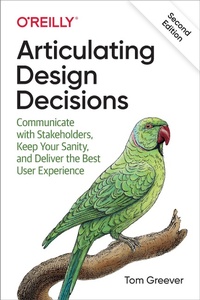
Articulating Design Decisions
Published on 3. August 2020
240 pages
978-1-4920-7919-4 (ISBN)
Description

Talking to people about your designs might seem like a basic skill, but it can be difficult to do well. In many cases, how you communicate with stakeholders, clients, and other nondesigners may be more important than the designs themselves. Because if you canâ??t get their support, your work will never see the light of dayâ??no matter how good it is.
This practical guide focuses on principles, tactics, and actionable methods for presenting your designs. Whether you design apps, websites, or products, youâ??ll learn how to get support from people who have influence over the project with the goal of creating the best user experience.
- Walk through the process of preparing and presenting your designs
- Understand stakeholder perspectives and learn how to empathize with them
- Cultivate both implicit and explicit listening skills
- Learn tactics and strategies for expressing the most effective response to feedback
- Create the right documentation for your decisions to avoid repeated conversations
- Learn why following through is just as important as the meeting itself
More details
Other editions
Additional editions
Tom Greever
Articulating Design Decisions
Communicate with Stakeholders, Keep Your Sanity, and Deliver the Best User Experience
Book
10/2020
2nd Edition
O'Reilly
€50.00
Available immediately
Content
- Intro
- [ contents ]
- [ Preface ]
- Chapter 1. Great Designers Are Great Communicators
- The Big Meeting
- Design Is Subjective...Sort Of
- Too Many Cooks
- Everyone Is a Designer!
- The Interface Is Your Interface
- There Is No U or X in Team
- Communication Is the Job
- Being Articulate Means Success
- Becoming a Great Designer
- Chapter 2. Stakeholders Are People Too
- See Their Perspective
- Identifying Influencers
- Stakeholder Values
- Stakeholder Stories
- Build Good Relationships
- Chapter 3. Design the Meeting
- Set the Context
- Optimize for Memory
- Remove Distractions
- Anticipate Reactions
- Create a Support Network
- Do a Dress Rehearsal
- Chapter 4. Listen to Understand
- Implicit Listening
- Explicit Listening
- Chapter 5. Get in the Right Mindset
- Understand Your Role
- Check Your Ego at the Door
- Lead with a YES
- Establish a Positive Persona
- Change Your Vocabulary
- Make a Transition
- Chapter 6. Form a Response
- A UX Strategy for Responding
- Tactics Are Actions
- Chapter 7. Choose a Message
- Business
- Design
- Research
- Limitations
- Chapter 8. Lock In Agreement
- From IDEA to IDEAL
- Putting It All Together
- Chapter 9. Follow Up Afterward
- The Meeting After the Meeting
- Follow Up Fast
- Apply Filters
- Seek Out Individuals
- Do Something, Even If It's Wrong
- Chapter 10. Dealing with Changes
- Changes Are the Purpose, Right?
- What's Really Going On?
- Making Lemonade
- The Bank Account of Trust
- When You're Wrong
- Managing Expectations
- Over, but Never Done
- Chapter 11. How Executives Can Help Designers
- The King and the Blind Man
- Ten Tips for Working with Designers
- Design Project Checklist
- A Seat at the Table
- [ Index ]
- [ About the Author ]
