

Prescribing by Numbers
Drugs and the Definition of Disease
Published on 12. April 2007
336 pages
978-0-8018-9209-7 (ISBN)
Description

Winner, 2009 Rachel Carson Prize, Society for the Social Studies of ScienceWinner, 2012 Edward Kremers Award, American Institute of the History of Pharmacy
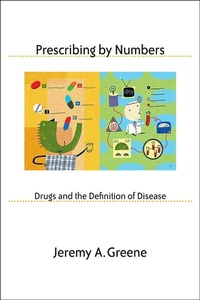
The second half of the twentieth century witnessed the emergence of a new model of chronic disease-diagnosed on the basis of numerical deviations rather than symptoms and treated on a preventive basis before any overt signs of illness develop-that arose in concert with a set of safe, effective, and highly marketable prescription drugs. In Prescribing by Numbers, physician-historian Jeremy A. Greene examines the mechanisms by which drugs and chronic disease categories define one another within medical research, clinical practice, and pharmaceutical marketing, and he explores how this interaction has profoundly altered the experience, politics, ethics, and economy of health in late-twentieth-century America.
Prescribing by Numbers highlights the complex historical role of pharmaceuticals in the transformation of disease categories. Greene narrates the expanding definition of the three principal cardiovascular risk factors-hypertension, diabetes, and high cholesterol-each intersecting with the career of a particular pharmaceutical agent. Drawing on documents from corporate archives and contemporary pharmaceutical marketing literature in concert with the clinical literature and the records of researchers, clinicians, and public health advocates, Greene produces a fascinating account of the expansion of the pharmaceutical treatment of chronic disease over the past fifty years.
While acknowledging the influence of pharmaceutical marketing on physicians, Greene avoids demonizing drug companies. Rather, his provocative and comprehensive analysis sheds light on the increasing presence of the subjectively healthy but highly medicated individual in the American medical landscape, suggesting how historical analysis can help to address the problems inherent in the program of pharmaceutical prevention.
The second half of the twentieth century witnessed the emergence of a new model of chronic disease-diagnosed on the basis of numerical deviations rather than symptoms and treated on a preventive basis before any overt signs of illness develop-that arose in concert with a set of safe, effective, and highly marketable prescription drugs. In Prescribing by Numbers, physician-historian Jeremy A. Greene examines the mechanisms by which drugs and chronic disease categories define one another within medical research, clinical practice, and pharmaceutical marketing, and he explores how this interaction has profoundly altered the experience, politics, ethics, and economy of health in late-twentieth-century America.
Prescribing by Numbers highlights the complex historical role of pharmaceuticals in the transformation of disease categories. Greene narrates the expanding definition of the three principal cardiovascular risk factors-hypertension, diabetes, and high cholesterol-each intersecting with the career of a particular pharmaceutical agent. Drawing on documents from corporate archives and contemporary pharmaceutical marketing literature in concert with the clinical literature and the records of researchers, clinicians, and public health advocates, Greene produces a fascinating account of the expansion of the pharmaceutical treatment of chronic disease over the past fifty years.
While acknowledging the influence of pharmaceutical marketing on physicians, Greene avoids demonizing drug companies. Rather, his provocative and comprehensive analysis sheds light on the increasing presence of the subjectively healthy but highly medicated individual in the American medical landscape, suggesting how historical analysis can help to address the problems inherent in the program of pharmaceutical prevention.
More details
Language
English
Place of publication
Baltimore
United States
Target group
Professional and scholarly
Illustrations
10 s/w Photographien bzw. Rasterbilder, 3 s/w Zeichnungen
3 Line drawings, black and white; 10 Halftones, black and white
File size
3,12 MB
ISBN-13
978-0-8018-9209-7 (9780801892097)
DOI
10.1353/book.3313
Copyright in bibliographic data and cover images is held by Nielsen Book Services Limited or by the publishers or by their respective licensors: all rights reserved.
Schweitzer Classification
Other editions
Additional editions
Book
02/2009
Johns Hopkins University Press
€36.80
Article not available for order

Book
04/2007
Johns Hopkins University Press
€74.47
Article exhausted; check different version
Person
Jeremy A. Greene is an associate professor of medicine and the Elizabeth Treide and A. McGehee Harvey Chair in the history of medicine at Johns Hopkins University School of Medicine. He is the author of Generic: The Unbranding of Modern Medicine and coeditor of Prescribed: Writing, Filling, Using, and Abusing the Prescription in Modern America, both published by Johns Hopkins.
Content
Preface
Acknowledgments
Introduction: The Pharmacopoeia of Risk Reduction
Part One: Diuril and Hypertension, 1957-1977
1. Releasing the Flood Waters: The Development and Promotion of Diuril
2. Shrinking the Symptom, Growing the Disease: Hypertension after Diuril
Part Two: Orinase and Diabetes, 1960-1980
3. Finding the Hidden Diabetic: Orinase Creates a New Market
4. Risk and the Symptom: The Trials of Orinase
Part Three: Mevacor and Cholesterol, 1970-2000
5. The Fall and Rise of a Risk Factor: Cholesterol and Its Remedies
6. Know Your Number: Cholesterol and the Threshold of Pathology
Conclusion: The Therapeutic Transition
Notes
Index
Acknowledgments
Introduction: The Pharmacopoeia of Risk Reduction
Part One: Diuril and Hypertension, 1957-1977
1. Releasing the Flood Waters: The Development and Promotion of Diuril
2. Shrinking the Symptom, Growing the Disease: Hypertension after Diuril
Part Two: Orinase and Diabetes, 1960-1980
3. Finding the Hidden Diabetic: Orinase Creates a New Market
4. Risk and the Symptom: The Trials of Orinase
Part Three: Mevacor and Cholesterol, 1970-2000
5. The Fall and Rise of a Risk Factor: Cholesterol and Its Remedies
6. Know Your Number: Cholesterol and the Threshold of Pathology
Conclusion: The Therapeutic Transition
Notes
Index
