

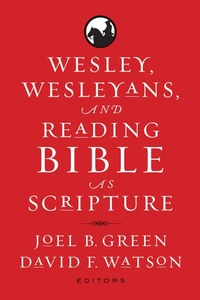
Wesley, Wesleyans, and Reading Bible as Scripture
Description

The theology of John Wesley has proven exceedingly influential in the religious and spiritual lives of Wesley's followers and his critics. However, Wesley did not leave behind a written doctrine on scripture. This collection presents an array of diverse approaches to understanding John Wesley's charge to read and interpret the Bible as scripture. Contributors move beyond the work of Wesley himself to discuss how Wesleyan communities have worked to address the difficult scriptural--and theological--conundrums of their time and place.
With contributions from William J. Abraham, Justo L. González, Joel B. Green, Elaine A. Heath, Randy L. Maddox, Karen B. Westerfield Tucker, Jason E. Vickers, Laceye Warner, David F. Watson, Kenneth J. Collins, Robert W. Wall, Reginald Broadnax, Meesaeng Lee Choi, Hunn Choi, Douglas M. Koskela, D. Brent Laytham, Steven J. Koskie, and Michael Pasquarello III, Wesley, Wesleyans, and Reading Bible as Scripture ultimately attempts to underscore what it means to stand in the Wesleyan stream and bring about holiness through--and within--daily occurrences.
More details
Other editions
Additional editions
Persons
Joel B. Green is Senior Professor of New Testament Interpretation at Fuller Theological Seminary. He is an award-winning author or editor of more than thirty books and serves as Teaching Pastor at La Cañada United Methodist Church. He lives in Pasadena, California.
David F. Watson is Academic Dean and Associate Professor of New Testament at United Theological Seminary and author of Honor Among Christians: The Cultural Key to the Messianic Secret. He lives in Dayton, Ohio.
Content
Introduction
SECTION ONE: WESLEY ON SCRIPTURE
1. John Wesley--"A Man of One Book" (Randy L. Maddox, Duke Divinity School)
2. Scripture as a Means of Grace (Kenneth J. Collins, Asbury Theological Seminary)
3. Reading Scripture, the Literal Sense, and the Analogy of Faith (Robert W. Wall, Seattle Pacific University)
4. Wesley as Interpreter of Scripture and the Emergence of "History" in Biblical Interpretation (Joel B. Green, Fuller Theological Seminary)
SECTION TWO: THE NATURE AND AUTHORITY OF SCRIPTURE AMONG WESLEYANS
5. Scripture among African American Methodists (Reginald Broadnax, Hood Theological Seminary)
6. Scripture among Hispanic Methodists (Justo L. González)
7. Scripture among Korean Methodists (Meesaeng Lee Choi, Asbury Theological Seminary; and Hunn Choi)
8. Scripture and Divine Revelation (William J. Abraham, Southern Methodist University)
9. A Wesleyan Understanding of the Authority of Scripture (Douglas M. Koskela ,Seattle Pacific University)
10. The Holiness of Scripture (Jason E. Vickers, United Theological Seminary)
11. Scripture as Canon (David F. Watson, United Theological Seminary)
SECTION THREE: WESLEYANS WORKING WITH SCRIPTURE
12. Scripture and Social Ethics (D. Brent Laytham, North Park Theological Seminary)
13. Can We Speak of a Wesleyan Theological Hermeneutic Today? (Steven J. Koskie)
14. Reading Scripture for Christian Formation (Elaine A. Heath, Southern Methodist University)
15. The Place of Scripture in Worship (Karen B. Westerfield Tucker,Boston University School of Theology)
16. The Place of Scripture in Preaching (Michael Pasquarello III, Asbury Theological Seminary)
17. Scripture and Evangelism (Laceye Warner, Duke Divinity School)
Index
