

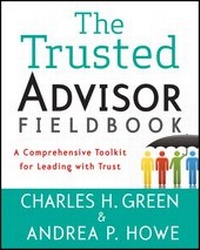
The Trusted Advisor Fieldbook
A Comprehensive Toolkit for Leading with Trust
Published on 24. October 2011
288 pages
978-1-118-16365-8 (ISBN)
Description

A practical guide to being a trusted advisor for leaders in anyindustry
In this hands-on successor to the popular book The TrustedAdvisor, you'll find answers to pervasive questions about trustand leadership--such as how to develop business with trust,nurture trust-based relationships, build and run a trustworthyorganization, and develop your trust skill set. This pragmaticworkbook delivers everyday tools, exercises, resources, andactionable to-do lists for the wide range of situations a trustedadvisor inevitably encounters. The authors speak in concrete termsabout how to dramatically improve your results in sales,relationship management, and organizational performance.
Your success as a leader will always be based on the degree towhich you are trusted by your stakeholders. Each chapter offersspecific ways to train your thinking and your habits in order toearn the trust that is necessary to be influential, successful, andknown as someone who makes a difference.
* Self-administered worksheets and coaching questions provideimmediate insights into your current business challenges
* Real-life examples demonstrate proven ways to "walk thetalk"
* Action plans bridge the gap between insights and outcomes
Put the knowledge and practices in this fieldbook to work, andyou'll be someone who earns trust quickly, consistently, andsustainably--in business and in life.
More details
Other editions
Additional editions
Charles H. Green | Andrea P. Howe
The Trusted Advisor Fieldbook
A Comprehensive Toolkit for Leading with Trust
Book
12/2011
Wiley
€30.00
Available immediately
Persons
Charles H. Green is founder and CEO of Trusted AdvisorAssociates. The author of Trust-Based Selling and coauthor of TheTrusted Advisor, he is a noted speaker on trust in sales, withinorganizations, and in external business relationships.
Andrea P. Howe is part of the leadership team of TrustedAdvisor Associates. She is also the founder and President ofBossaNova Consulting Group. A veteran consultant and seminarleader, Andrea specializes in serving global professional servicesfirms.
Content
- Intro
- The Trusted Advisor Fieldbook : A Comprehensive Toolkit for Leading with Trust
- contents
- introduction
- Why a Fieldbook
- Who Should Read this Book
- How to Use this Book
- Where to Begin
- Part I A Trust Primer
- Chapter 1 Fundamental Truths
- Trust Requires Trusting and Being Trusted
- Trust Is Personal
- Trust Is about Relationships
- Trust Is Created in Interactions
- There Is No Trust without Risk
- Trust Is Paradoxical
- Listening Drives Trust and Influence
- Trust Does Not Take Time
- Trust Is Strong and Durable, Not Fragile
- You Get What You Give
- Chapter 2 Fundamental Attitudes
- Principles over Processes
- You Are More Connected than You Think
- It's Not about You
- Curiosity Trumps Knowing
- Time Works for You
- Chapter 3 The Dynamics of influence
- Earning the Right to Be Right: Three Steps
- A Five-Point Checklist for Influencing Meetings
- Chapter 4 Three Trust Models
- The Trust Equation
- The Trust Creation Process
- The Trust Principles
- Chapter 5 Five Trust Skills
- Listen
- Partner
- Improvise
- Risk
- Know Yourself
- Part II Developing your Trust Skill Set
- Chapter 6 listen
- The Listening Differentiator: Empathy
- Four Barriers to Paying Attention
- Three-Level Listening
- Seven Listening Best Practices
- Your Everyday Empathy Workout: Low Weights, High Reps
- Chapter 7 Partner
- Partnering Traits
- Ten Common Partnering Barriers
- Self-Assessment: Are You Primed for Partnership?
- Specific Ways to Build Your Partnering Muscle
- Chapter 8 improvise
- The Science behind Moments of Truth
- How Moments of Truth Become Moments of Mastery
- The Practice of Improvisation
- Role-Play Your Way to Mastery
- Chapter 9 Risk
- The Relationship between Trust and Risk
- Six Ways to Practice Risk-Taking
- The Three-Question Transparency Test
- A Tool for Truth-Telling: Name It and Claim It
- The Power of Caveats
- Chapter 10 Know yourself
- How Blind Spots Impede Trust-Building
- Three Approaches to Expand Your Self-Knowledge
- How to Use Self-Knowledge to Increase Trust
- Part III Developing Business with Trust
- Chapter 11 Trust-Based Marketing and Business Development
- Focus on Your Customer
- Collaborate to Drive New Business
- Focus on Relationships, Not Transactions
- Be Transparent with Prospects and Clients
- Chapter 12 Trust-Based networking
- Ten Best Practices for Trust-Based Networking
- Technology and Trust-Based Networking
- Chapter 13 Delivering the Pitch
- Sometimes the Best Pitch Is No Pitch
- Don't Skip the Prepitch Warm-Up
- Make It Interactive
- Have a Point of View
- Take the Preoccupation Out of Price
- With PowerPoint, Less Is More
- Stop Selling Your Qualifications
- Do Not Denigrate the Competition
- Be Willing to Ditch the Pitch
- Chapter 14 handling objections
- The Problem: How You Think about Objections
- The Antidote: Change Your Thinking
- Three Ways to Improve the Quality of Your Conversations
- Chapter 15 Talking Price
- The Price Isn't the Problem
- When to Talk Price
- How to Address Price Concerns
- The Three Primary Drivers of Price Concerns
- A Special Case: The Engineer Buyer
- Chapter 16 closing the Deal
- Six Reasons Not to Always Be Closing
- Five Practices to Stop Closing and Start Helping
- Chapter 17 Developing new Business with existing clients
- First, Deepen the Relationship
- Move Upstream
- Cross-Sell
- Seek Referrals
- Chapter 18 Selling to the c-Suite
- What Sets the C-Suite Apart
- A Different Kind of Preparation
- Nine Best Practices for Successful C-Suite Meetings
- Chapter 19 Reviving Stalled Relationships
- How to Reengage
- When It's Time to Walk Away
- Part IV Managing Relationships with Trust
- Chapter 20 Starting off Right
- Three Ways Kickoffs Go Wrong
- Four Key Ingredients for a Successful Kickoff
- A Word of Caution
- Chapter 21 Accelerating Trust
- Three Steps for Creating Trust Quickly
- 21 Ways to Build Trust . Fast
- Chapter 22 navigating Politics
- Seven Best Practices for Dealing with Organizational Politics
- The Special Challenges of Client Politics
- Chapter 23 Shifting from Tactics to Strategy
- The Strategy Blind Spot
- Four Key Questions to Shift the Conversation
- How to Engage Strategically
- Chapter 24 My client is a Jerk: Transforming Relationships Gone Bad
- What Lies Behind Bad Behavior
- From Difficult to Rewarding: Three Steps
- Reframing: Five Steps to a Better Problem Statement
- Chapter 25 Dealing with Untrustworthy People
- Blame and an Inability to Confront
- Constructive Confrontation
- When You Can't Confront
- When to Walk Away
- Chapter 26 Trust-Based negotiations
- Where Negotiations Go Wrong
- Changing the Game by Working from Trust
- Chapter 27 Building Trust at a Distance
- The Key to Building Trust at a Distance: Familiarity
- The Role of Technology in Communication
- Ten Best Practices for Managing Virtual Teams
- Part V Building and Running a Trustworthy organization
- Chapter 28 Making the case for Trust
- Economic Benefits of Trust
- Social Benefits of Trust
- Ethical Benefits of Trust
- Chapter 29 creating a culture of Trust
- Two Keys to Trust Culture Change: Virtues and Values
- Implementing Trust Initiatives
- Spotlight on Trust Diagnostics
- Chapter 30 Trust in internal Staff Functions
- The Top Trust Barriers by Function
- Five Trust-Enhancing Opportunities for Internal Staff
- Don't Confuse Your Metrics with Your Mission
- Chapter 31 Training for Trustworthiness
- The One-Two Punch for Trustworthiness Training
- How to Set Off the Aha: A Nine-Point Checklist
- Eleven Ways to Make It Stick
- Create the Right Learning Environment
- List of Lists
- Chapter 1 Fundamental Truths
- Chapter 2 Fundamental Attitudes
- Chapter 3 The Dynamics of Influence
- Chapter 4 Three Trust Models
- Chapter 5 Five Trust Skills
- Chapter 6 Listen
- Chapter 7 Partner
- Chapter 8 Improvise
- Chapter 9 Risk
- Chapter 10 Know Yourself
- Chapter 11 Trust-Based Marketing and Business Development
- Chapter 12 Trust-Based Networking
- Chapter 13 Delivering the Pitch
- Chapter 14 Handling Objections
- Chapter 15 Talking Price
- Chapter 16 Closing the Deal
- Chapter 17 Developing New Business with Existing Clients
- Chapter 18 Selling to the C-Suite
- Chapter 19 Reviving Stalled Relationships
- Chapter 20 Starting Off Right
- Chapter 21 Accelerating Trust
- Chapter 22 Navigating Politics
- Chapter 23: Shifting from Tactics to Strategy
- Chapter 24 My Client Is a Jerk: Transforming Relationships Gone Bad
- Chapter 25 Dealing with Untrustworthy People
- Chapter 26 Trust-Based Negotiations
- Chapter 27 Building Trust at a Distance
- Chapter 28 Making the Case for Trust
- Chapter 29 Creating a Culture of Trust
- Chapter 30 Trust in Internal Staff Functions
- Chapter 31 Training for Trustworthiness
- notes
- Selected Bibliography
- About the Authors
- index
