

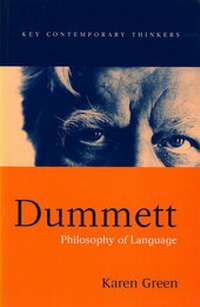
Dummett
Philosophy of Language
Published on 7. May 2013
248 pages
978-0-7456-7725-5 (ISBN)
Description

Michael Dummett stands out among his generation as the only Britishphilosopher of language to rival in stature the Americans, Davidsonand Quine. In conjunction with them he has been responsible formuch of the framework within which questions concerning meaning andunderstanding are raised and answered in the late twentieth-centuryAnglo-American tradition. Dummett's output has been prolific andhighly influential, but not always as accessible as it deserves tobe. This book sets out to rectify this situation.
Karen Green offers the first comprehensive introduction toDummett's philosophy of language, providing an overview and summaryof his most important arguments. She argues that Dummett should notbe understood as a determined advocate of anti-realism, but thathis greatest contribution to the philosophy of language is to haveset out the strengths and weaknesses of the three most influentialpositions within contemporary theory of meaning - realism, asepitomised by Frege, the holism to be found in Wittgenstein, Quineand Davidson and the constructivism which can be extracted fromBrouwer. It demonstrates that analytic philosophy as Dummettpractices it, is by no means an outmoded approach to thinking aboutlanguage, but that it is relevant both to cognitive science and tophenomenology.
Karen Green offers the first comprehensive introduction toDummett's philosophy of language, providing an overview and summaryof his most important arguments. She argues that Dummett should notbe understood as a determined advocate of anti-realism, but thathis greatest contribution to the philosophy of language is to haveset out the strengths and weaknesses of the three most influentialpositions within contemporary theory of meaning - realism, asepitomised by Frege, the holism to be found in Wittgenstein, Quineand Davidson and the constructivism which can be extracted fromBrouwer. It demonstrates that analytic philosophy as Dummettpractices it, is by no means an outmoded approach to thinking aboutlanguage, but that it is relevant both to cognitive science and tophenomenology.
More details
Other editions
Person
Karen Green is Senior Lecturer in Philosophy, Monash University, Australia.
Content
Introduction.
Fregean Foundations.
Sense and Reference in Frege and Dummett.
Truth Assertion and the Central Argument Against Bivalence.
Frege's Platonism.
Frege's Kantian Connections.
The Context Principle.
Wittgenstein and Quine.
The Manifestability Constraint and Rejection of Mentalism.
Dummett and Quine.
Two Challenges: Holism and Strict Finitism.
The Manifestability Constraint and the Priority of Language.
How do Anti-Mentalism and Anti-Psychologism Stand to EachOther?.
The Influence of Intuitionism .
Brouwer's Intuitionism.
The Intuitionist Case Against Bivalence.
Metaphysical debates and the Theory of Meaning.
The Traditional case for Nominalism and Subjective Idealism.
Moderate Idealism and the Denial of Bivalence.
The Case Against Strict Finitism.
Pure versus Mediated Constructivism: Truth Theories andSemantics.
A Common-Sense Realist Appropriation of the Argument AgainstBivalence.
The Reality of the Past.
Anti-Realism with Respect to the Past.
Anti-Realism with Respect to the Future.
What Do We Know When We Know A Language?.
Languages and Idiolects.
Davidson on Malapropism and the Social Character ofMeaning.
Psychologism, Phenomenology and Philosophy of Mind.
On the Relationship of Phenomenology to Analytic Philosophy.
How Close are Frege and Husserl on Sense and Reference?.
Wittgenstein and Intentionality.
Conclusion.
Notes.
Bibliography
Fregean Foundations.
Sense and Reference in Frege and Dummett.
Truth Assertion and the Central Argument Against Bivalence.
Frege's Platonism.
Frege's Kantian Connections.
The Context Principle.
Wittgenstein and Quine.
The Manifestability Constraint and Rejection of Mentalism.
Dummett and Quine.
Two Challenges: Holism and Strict Finitism.
The Manifestability Constraint and the Priority of Language.
How do Anti-Mentalism and Anti-Psychologism Stand to EachOther?.
The Influence of Intuitionism .
Brouwer's Intuitionism.
The Intuitionist Case Against Bivalence.
Metaphysical debates and the Theory of Meaning.
The Traditional case for Nominalism and Subjective Idealism.
Moderate Idealism and the Denial of Bivalence.
The Case Against Strict Finitism.
Pure versus Mediated Constructivism: Truth Theories andSemantics.
A Common-Sense Realist Appropriation of the Argument AgainstBivalence.
The Reality of the Past.
Anti-Realism with Respect to the Past.
Anti-Realism with Respect to the Future.
What Do We Know When We Know A Language?.
Languages and Idiolects.
Davidson on Malapropism and the Social Character ofMeaning.
Psychologism, Phenomenology and Philosophy of Mind.
On the Relationship of Phenomenology to Analytic Philosophy.
How Close are Frege and Husserl on Sense and Reference?.
Wittgenstein and Intentionality.
Conclusion.
Notes.
Bibliography
