

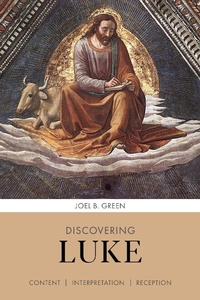
Discovering Luke
Description

Discovering Luke is the perfect introduction to the interpretation of Luke's gospel. Through a critical assessment of key interpreters and interpretative debates, this is a New Testament commentary that encourages in-depth study of the text and a genuine grappling with the theological and historical questions raised.
As part of the Discovering Biblical Texts series, Discovering Luke draws on a range of author-, text- and reader-centred methodological approaches as complementary rather than mutually exclusive ways of understanding the text. It also focuses on the reception history of Luke's gospel, increasingly viewed by Biblical scholars as a vital aspect of interpretation rather than an optional extra.
Discovering Luke is an ideal Bible commentary for students and those looking to dig deeper into this key book of the New Testament. You will gain a solid grasp of the structure and content of Luke's gospel, and a thorough understanding of a wide range of interpretative approaches and theological concerns that will enhance your own reading of the text.
More details
Other editions
Additional editions
Person
Content
- Intro
- Discovering Luke
- Contents
- Illustrations
- Figures
- Tables
- Abbreviations
- 1 Ways of reading Luke's Gospel: through the Middle Ages
- The early (and medieval) Church
- Irenaeus of Lyons (c.125-c.202)
- Origen (185-254)
- Ambrose of Milan (339-97)
- Cyril of Alexandria (c.378-444)
- From the early Church to the Middle Ages
- The Venerable Bede (675-735)
- Biblia Pauperum
- Catena Aurea
- Reflections
- 2Ways of reading Luke's Gospel: from the Reformation to the present
- The Reformation and post-Reformation Church
- Martin Luther (1483-1546)
- John Calvin (1509-64)
- Matthew Henry (1662-1714)
- Johann Albrecht Bengel (1687-1752)
- John Wesley (1703-91)
- The modern and postmodern eras
- Mary's Song in the modern era
- Postmodern readings of the Magnificat
- Reflections
- 3Reading Luke's Gospel
- Introducing Luke in the early Church
- Luke's preface (Luke 1.1-4)
- 'Many people': Luke among the Gospels
- Luke's sources?
- Luke's way of telling the story
- Luke's readers
- When was Luke's Gospel written?
- 'An account of the events (carefully ordered)': the genre and unity of Luke-Acts
- The question of genre
- The question of the unity of Luke-Acts
- 'I have also decided to write': Lukan authorship
- Reflections
- 4Mapping Luke's Gospel
- Luke and his world
- The 'worlds' of Luke
- Rome: ever-present, all-powerful
- Town life and country life
- Some economic considerations
- Conclusion
- Geography
- Gaining our bearings: Luke 17.11-19
- Jerusalem and its temple
- What happens in the wilderness?
- Synagogues and homes
- Conclusion
- Spatial metaphors
- Up-down
- In-out
- Conclusion
- Reflections
- 5The architecture of Luke's Gospel
- The anatomy of Luke's narrative
- Episodes, accounts and the anatomy of Luke-Acts
- The aim of Luke's Gospel
- The anatomy of Luke's Gospel
- Reflections
- 6'I rejoice in God my saviour': God, God's purpose and Luke's narrative
- God saves: the God of Mary's Song (Luke 1.46-55)
- God purposes
- God speaks
- Visionary experiences
- Phase 1: birth narratives
- Phase 2: Jesus' ministry
- Phase 3: Passion and resurrection narratives
- Revelatory prayer
- God's two books
- God empowers
- Reflections
- 7'I must preach the good news of God's kingdom': Jesus and his mission
- Mary's Song and the politics of the kingdom
- Jesus' advent and God's salvation
- God's salvation and Jesus' mission
- Jesus' missional programme
- The Nazareth sermon
- A ministry of 'release'
- Good news to whom?
- A question of identity
- Kingdom politics
- Jesus' death and resurrection
- Jesus attracts hostility
- Jesus' death and God's agenda
- Jesus' death and discipleship
- Reflections
- 8 'Take up their cross daily': disciples and discipleship
- Mary, Mary's Song and terms of allegiance
- Joy and happiness
- Mary, powerful in the Scriptures
- Patterns of allegiance
- Women and men
- The possibility of discipleship: God's prevenient action
- Faithful following
- The conversionary journey (and its wrong turns)25
- Poverty and wealth
- Prayer
- Reflections
- Bibliography
- Scripture acknowledgements
- Index of Scripture references and ancient authors
- Index of modern authors
- Index of subjects
