

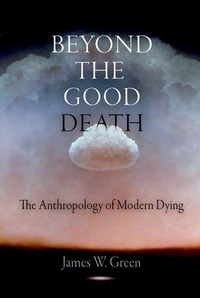
Beyond the Good Death
The Anthropology of Modern Dying
1st Edition
Published on 15. March 2012
272 pages
978-0-8122-0207-6 (ISBN)
Description

In November 1998, millions of television viewers watched as Thomas Youk died. Suffering from the late stages of Lou Gehrig's disease, Youk had called upon infamous Michigan pathologist Dr. Jack Kevorkian to help end his life on his own terms. After delivering the videotape to 60 Minutes, Kevorkian was arrested and convicted of manslaughter, despite the fact that Youk's family firmly believed that the ending of his life qualified as a good death.
Death is political, as the controversies surrounding Jack Kevorkian and, more recently, Terri Schiavo have shown. While death is a natural event, modern end-of-life experiences are shaped by new medical, demographic, and cultural trends. People who are dying are kept alive, sometimes against their will or the will of their family, with powerful medications, machines, and "heroic measures." Current research on end-of-life issues is substantial, involving many fields. Beyond the Good Death takes an anthropological approach, examining the changes in our concept of death over the last several decades. As author James W. Green determines, the attitudes of today's baby boomers differ greatly from those of their parents and grandparents, who spoke politely and in hushed voices of those who had "passed away." Dr. Elisabeth KUEbler-Ross, in the 1960s, gave the public a new language for speaking openly about death with her "five steps of dying." If we talked more about death, she emphasized, it would become less fearful for everyone.
The term "good death" reentered the public consciousness as narratives of AIDS, cancer, and other chronic diseases were featured on talk shows and in popular books such as the best-selling Tuesdays with Morrie. Green looks at a number of contemporary secular American death practices that are still informed by an ancient religious ethos. Most important, Beyond the Good Death provides an interpretation of the ways in which Americans react when death is at hand for themselves or for those they care about.
Death is political, as the controversies surrounding Jack Kevorkian and, more recently, Terri Schiavo have shown. While death is a natural event, modern end-of-life experiences are shaped by new medical, demographic, and cultural trends. People who are dying are kept alive, sometimes against their will or the will of their family, with powerful medications, machines, and "heroic measures." Current research on end-of-life issues is substantial, involving many fields. Beyond the Good Death takes an anthropological approach, examining the changes in our concept of death over the last several decades. As author James W. Green determines, the attitudes of today's baby boomers differ greatly from those of their parents and grandparents, who spoke politely and in hushed voices of those who had "passed away." Dr. Elisabeth KUEbler-Ross, in the 1960s, gave the public a new language for speaking openly about death with her "five steps of dying." If we talked more about death, she emphasized, it would become less fearful for everyone.
The term "good death" reentered the public consciousness as narratives of AIDS, cancer, and other chronic diseases were featured on talk shows and in popular books such as the best-selling Tuesdays with Morrie. Green looks at a number of contemporary secular American death practices that are still informed by an ancient religious ethos. Most important, Beyond the Good Death provides an interpretation of the ways in which Americans react when death is at hand for themselves or for those they care about.
Reviews / Votes
"Fascinating. . . . Green strikes just the right tone in his treatment of some especially sensitive topics. He is always respectful, with an irreverent sense of humor that does not offend."-Journal of the American Medical Association"Using an anthropological approach, Green explores the changes in the US concepts of death and practices of dying in the last several decades. Drawing on a variety of sources, he examines modern-day care for the dying, modes of disposing of the corpse, near-death experience accounts and beliefs about the afterlife, presentation of death in children's literature, and ways of memorializing the deceased. . . . Highly recommended."-Choice
"I recommend this book to all who have an academic or clinical interest in thanatology as a must-read current synthesis of the state of the art in our field."-psycCritiques
"This book in my opinion is what an academic work should aim to be-accessible and intellectually appealing-while making good use of relevant contemporary examples."-Ageing and Society
More details
Language
English
Place of publication
Pennsylvania
United States
Target group
College/higher education
File size
1,58 MB
ISBN-13
978-0-8122-0207-6 (9780812202076)
Copyright in bibliographic data and cover images is held by Nielsen Book Services Limited or by the publishers or by their respective licensors: all rights reserved.
Schweitzer Classification
Other editions
Additional editions
Book
02/2012
University of Pennsylvania Press
€28.50
Shipment within 10-20 days
Person
James W. Green teaches anthropology at the University of Washington in Seattle and is author of Cultural Awareness in the Human Services: A Multi-Ethnic Approach.
Content
Chapter One: Getting Dead
Chapter Two: Exit Strategies
Chapter Three: The Body as Relic
Chapter Four: Soulscapes
Chapter Five: Passing It On
Chapter Six: In Our Hearts Forever
Chapter Seven: The Future of Death
Notes
Bibliography
Index
Acknowledgments
Chapter Two: Exit Strategies
Chapter Three: The Body as Relic
Chapter Four: Soulscapes
Chapter Five: Passing It On
Chapter Six: In Our Hearts Forever
Chapter Seven: The Future of Death
Notes
Bibliography
Index
Acknowledgments
