

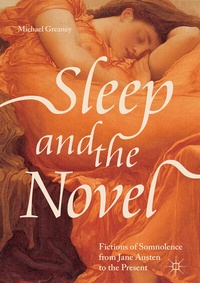
Sleep and the Novel
Description

Sleep and the Novel is a study of representations of the sleeping body in fiction from 1800 to the present day which traces the ways in which novelists have engaged with this universal, indispensable -- but seemingly nondescript -- region of human experience. Covering the narrativization of sleep in Austen, the politicization of sleep in Dickens, the queering of sleep in Goncharov, the aestheticization of sleep in Proust, and the medicalization of sleep in contemporary fiction, it examines the ways in which novelists envision the figure of the sleeper, the meanings they discover in human sleep, and the values they attach to it. It argues that literary fiction harbours, on its margins, a "sleeping partner", one that we can nickname the Schlafroman or "sleep-novel", whose quiet absorption in the wordlessness and passivity of human slumber subtly complicates the imperatives of self-awareness and purposive action that traditionally govern the novel.
Reviews / Votes
"With Sleep and the Novel, Michael Greaney makes a valuable contribution to an under-researched area of the novel and makes a good case for ways in which attention to sleep-and expressly not dream sleep-might, despite its marginal position in narrative, have wider-ranging effects on our reading. . Fluent, attentive, and engaging, this is a book that deserves to be read." (Stephen Thomson, The Review of English Studies, September, 2018)More details
Other editions
Additional editions
Person
Content
1. Introduction.- 2. "The Yawns of Lady Bertram": Sleep, Subjectivity and Sociability in Jane Austen.- 3. "Snoring for the Million": Dickens the Sleep-watcher.- 4. From Bildungsroman to Schlafroman : Goncharov's Oblomov.- 5. Proust and the Sleep of Others.- 6. "Observed, Measured, Contained": Contemporary Fiction and the Science of Sleep.- 7. Conclusion: "A World Without a Lullaby"?.
