

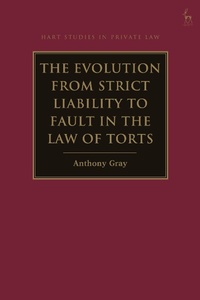
The Evolution from Strict Liability to Fault in the Law of Torts
1st Edition
Published on 25. February 2021
296 pages
978-1-5099-4101-8 (ISBN)
Description

Gradually, the law of tort has shifted away from a strict-liability approach to one where fault predominates. This book charts important case law documenting this shift. It seeks to understand how and why it occurred. Given that the Rylands v Fletcher decision is typically seen as a prime exemplar of strict liability, it focusses particularly on that case, as part of the historical development of tort law. It considers the intellectual arguments made in favour of strict liability, and for fault-based liability. Having done so, it then focusses on particular areas of the law of tort, including nuisance, defamation and trespass. It is somewhat anomalous that though most would view these as examples of torts of strict liability, fault considerations have become prominent in their application. This presents an uneasy compromise, where torts that are notionally strict in nature are infused with fault considerations, often through exceptions or defences. This book advocates for further development in the law of tort to better reflect a primarily fault-based approach to liability, at least in the common law. This would make the law of tort more coherent.
More details
Series
Edition
1. Auflage
Language
English
Place of publication
London
United Kingdom
Publishing group
Bloomsbury Publishing PLC
Target group
College/higher education
ISBN-13
978-1-5099-4101-8 (9781509941018)
Copyright in bibliographic data and cover images is held by Nielsen Book Services Limited or by the publishers or by their respective licensors: all rights reserved.
Schweitzer Classification
Other editions
Additional editions
Book
10/2022
Hart Publishing
€73.31
Shipment within 15-20 days
Person
Anthony Gray is Professor of Law at the University of Southern Queensland, Australia.
Content
PART I
STRICT LIABILITY AND LEGAL HISTORY
1. Strict Liability and the Common Law
Ancient Times
English Law
Importance of Forms of Action
Influence of Criminal Law on the Civil Law
Fault becomes More (Expressly) Prominent in the Civil Law
Full Acceptance of Fault
Th e Important Influence of Statute on Development of the Common Law
Conclusion
2. Strict Liability and Particular Torts in Legal History
Strict Liability and Damage to Property Interests
Common Carriers
Innkeepers
Fire
Firearms
Animals
Unifying Factors, if Any, in Cases of Continued Strict Liability
Strict Liability and the Law of Defamation
Strict Liability and Trespass to the Person
Development of the Tort of Negligence
Conclusions
PART II
RYLANDS v FLETCHER STRICT LIABILITY IN THE COMMON LAW WORLD
3. Rylands v Fletcher in the United Kingdom
Introduction
Facts
Judgment of the Court of Exchequer
Judgment of the Exchequer Chamber
Judgment of the House of Lords
Reflections
Possible Explanations for the Decision in Rylands v Fletcher
Enterprise Risk-Type Philosophy
Reciprocal Risks
Subsequent UK Decisions
Conclusion
4. Comparative Approach to Rylands v Fletcher Liability
Australia
Canada
United States
Conclusion
PART III
THE THEORETICAL DEBATE: STRICT LIABILITY AND FAULT-BASED LIABILITY
5. Summary of the Theoretical Debate: Strict Liability and Fault-based Liability
Introduction
Jeremiah Smith
Young Smith
Fleming James
Gregory Keating
Utilitarian Support for Strict Liability: Jeremy Bentham
Richard Epstein
Howard Klemme
Albert Ehrenzweig
Christine Beuermann
Argument for Strict Liability based on Difficulties of Proof
Law and Economics: Guido Calabresi and Others
Judicial Consideration of these Rationales in the Context of Strict Liability
Theories against Strict Liability
Law and Economics and Negligence
Conclusion
6. Critical Reflections on the Justifications for Strict Liability
Inappropriateness of Taking into Account Loss Spreading and 'Efficiency' when Making Judicial Decisions
Inappropriateness of Focus on Deterrence
Use of Terms with Highly Contested Meanings
Liability for Non-reciprocal Risks
Who Gets the Benefits?
Difficulties of Proof
Th e Plaintiff 's Activity or Behaviour
Conclusion
PART IV
FAULT IN OTHER TORTS
7. Th e Tort of Nuisance and Fault
History and Early Development
Developments in UK Nuisance Law in the Last 50 Years
Some Australian Authorities
Academic Views
Reflections
Conclusion
8. Strict Liability in the Law of Defamation
Introduction to Freedom of Speech
Development of Law of Defamation
Early Examples of the Strictness with which Liability Attached for Defamation
Strict Liability Elsewhere in the Common Law World
Fault Considerations in UK Defamation Law
Introduction of Fault and Negligence Principles to American Defamation Law
Reflections
Conclusion
9. Trespass and Fault
Convergence of Trespass and Negligence - Case Law
Convergence between Trespass and Negligence - Academic Views
Conclusion
STRICT LIABILITY AND LEGAL HISTORY
1. Strict Liability and the Common Law
Ancient Times
English Law
Importance of Forms of Action
Influence of Criminal Law on the Civil Law
Fault becomes More (Expressly) Prominent in the Civil Law
Full Acceptance of Fault
Th e Important Influence of Statute on Development of the Common Law
Conclusion
2. Strict Liability and Particular Torts in Legal History
Strict Liability and Damage to Property Interests
Common Carriers
Innkeepers
Fire
Firearms
Animals
Unifying Factors, if Any, in Cases of Continued Strict Liability
Strict Liability and the Law of Defamation
Strict Liability and Trespass to the Person
Development of the Tort of Negligence
Conclusions
PART II
RYLANDS v FLETCHER STRICT LIABILITY IN THE COMMON LAW WORLD
3. Rylands v Fletcher in the United Kingdom
Introduction
Facts
Judgment of the Court of Exchequer
Judgment of the Exchequer Chamber
Judgment of the House of Lords
Reflections
Possible Explanations for the Decision in Rylands v Fletcher
Enterprise Risk-Type Philosophy
Reciprocal Risks
Subsequent UK Decisions
Conclusion
4. Comparative Approach to Rylands v Fletcher Liability
Australia
Canada
United States
Conclusion
PART III
THE THEORETICAL DEBATE: STRICT LIABILITY AND FAULT-BASED LIABILITY
5. Summary of the Theoretical Debate: Strict Liability and Fault-based Liability
Introduction
Jeremiah Smith
Young Smith
Fleming James
Gregory Keating
Utilitarian Support for Strict Liability: Jeremy Bentham
Richard Epstein
Howard Klemme
Albert Ehrenzweig
Christine Beuermann
Argument for Strict Liability based on Difficulties of Proof
Law and Economics: Guido Calabresi and Others
Judicial Consideration of these Rationales in the Context of Strict Liability
Theories against Strict Liability
Law and Economics and Negligence
Conclusion
6. Critical Reflections on the Justifications for Strict Liability
Inappropriateness of Taking into Account Loss Spreading and 'Efficiency' when Making Judicial Decisions
Inappropriateness of Focus on Deterrence
Use of Terms with Highly Contested Meanings
Liability for Non-reciprocal Risks
Who Gets the Benefits?
Difficulties of Proof
Th e Plaintiff 's Activity or Behaviour
Conclusion
PART IV
FAULT IN OTHER TORTS
7. Th e Tort of Nuisance and Fault
History and Early Development
Developments in UK Nuisance Law in the Last 50 Years
Some Australian Authorities
Academic Views
Reflections
Conclusion
8. Strict Liability in the Law of Defamation
Introduction to Freedom of Speech
Development of Law of Defamation
Early Examples of the Strictness with which Liability Attached for Defamation
Strict Liability Elsewhere in the Common Law World
Fault Considerations in UK Defamation Law
Introduction of Fault and Negligence Principles to American Defamation Law
Reflections
Conclusion
9. Trespass and Fault
Convergence of Trespass and Negligence - Case Law
Convergence between Trespass and Negligence - Academic Views
Conclusion
