

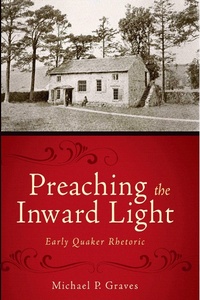
Preaching the Inward Light
Description

Studying the history of early Quaker preaching, Michael Graves uses careful rhetorical analysis to provide insights into Quaker theology and practice. Situating the movement within the intellectual context of early seventeenth century Europe, he explores both seminal preachers and lesser known figures who were nonetheless important rhetoricians. Through extant sermons he demonstrates that the early Quakers could be a vocal, even "revivalistic," sect that sought to put into effect world-wide the moral, spiritual, and practical virtues of what they called "primitive Christianity." Thus, Graves challenges the stereotypes of the early movement and shows the denomination to be theologically innovative and socially important. Well-researched and well-written, Preaching the Inward Light is a timely look backward to these spirited people.
More details
Other editions
Additional editions
Person
Content
Preface
Introduction
Ch. 1 Cultural Constraints on Early Quaker Preaching
Ch. 2 Presuppositions of Early Quaker Preaching
Ch. 3 The Development of Seventeenth Century Quaker Impromptu Preaching Theory
Ch. 4 Robert Barclay and the Grounding of Early Quaker Homiletic Theory
Ch. 5 The Flowering of Early Quaker Homiletic Theory: Samuel Bownas' Manual for Itinerant Impromptu Preachers
Ch. 6 Thematic Characteristics of Quaker Sermons, 1671-1700
Ch. 7 Key Metaphors in Early Quaker Sermons, 1671-1700
Ch. 8 Other Salient Characteristics of Quaker Sermons, 1671-1700
Ch. 9 George Fox Faces the Yearly Meeting in 1674: The Challenge of Legitimacy in a Culture that Values Impromptu, Inspired Discourse
Ch. 10 Stephen Crisp and the Bedrock of Early Quakerism
Ch. 11 "This is my testimony unto you from the life of God": The Theorist Tests His Own Advice
Ch. 12 William Penn Preaches an Impromptu Funeral Sermon
Epilogue
Bibliography
Appendices
