

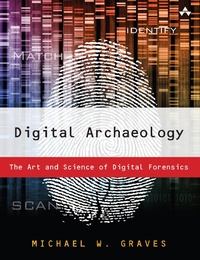
Digital Archaeology
The Art and Science of Digital Forensics
1st Edition
Published on 16. August 2013
608 pages
978-0-13-285379-8 (ISBN)
Description

The rapid proliferation of cyber crime is increasing the demand for digital forensics experts in both law enforcement and in the private sector. In Digital Archaeology, expert practitioner Michael Graves has written the most thorough, realistic, and up-to-date guide to the principles and techniques of modern digital forensics.
Graves begins by providing a solid understanding of the legal underpinnings of and critical laws affecting computer forensics, including key principles of evidence and case law. Next, he explains how to systematically and thoroughly investigate computer systems to unearth crimes or other misbehaviour, and back it up with evidence that will stand up in court.
Drawing on the analogy of archaeological research, Graves explains each key tool and method investigators use to reliably uncover hidden information in digital systems. His detailed demonstrations often include the actual syntax of command-line utilities. Along the way, he presents exclusive coverage of facilities management, a full chapter on the crucial topic of first response to a digital crime scene, and up-to-the-minute coverage of investigating evidence in the cloud.
Graves concludes by presenting coverage of important professional and business issues associated with building a career in digital forensics, including current licensing and certification requirements.
Topics Covered Include
Acquiring and analysing data in ways consistent with forensic procedure
Recovering and examining e-mail, Web, and networking activity
Investigating users' behavior on mobile devices
Overcoming anti-forensics measures that seek to prevent data capture and analysis
Performing comprehensive electronic discovery in connection with lawsuits
Effectively managing cases and documenting the evidence you find
Planning and building your career in digital forensics
The full text downloaded to your computer
With eBooks you can:
search for key concepts, words and phrases
make highlights and notes as you study
share your notes with friends
eBooks are downloaded to your computer and accessible either offline through the Bookshelf (available as a free download), available online and also via the iPad and Android apps.
Upon purchase, you'll gain instant access to this eBook.
Time limit
The eBooks products do not have an expiry date. You will continue to access your digital ebook products whilst you have your Bookshelf installed.
Graves begins by providing a solid understanding of the legal underpinnings of and critical laws affecting computer forensics, including key principles of evidence and case law. Next, he explains how to systematically and thoroughly investigate computer systems to unearth crimes or other misbehaviour, and back it up with evidence that will stand up in court.
Drawing on the analogy of archaeological research, Graves explains each key tool and method investigators use to reliably uncover hidden information in digital systems. His detailed demonstrations often include the actual syntax of command-line utilities. Along the way, he presents exclusive coverage of facilities management, a full chapter on the crucial topic of first response to a digital crime scene, and up-to-the-minute coverage of investigating evidence in the cloud.
Graves concludes by presenting coverage of important professional and business issues associated with building a career in digital forensics, including current licensing and certification requirements.
Topics Covered Include
Acquiring and analysing data in ways consistent with forensic procedure
Recovering and examining e-mail, Web, and networking activity
Investigating users' behavior on mobile devices
Overcoming anti-forensics measures that seek to prevent data capture and analysis
Performing comprehensive electronic discovery in connection with lawsuits
Effectively managing cases and documenting the evidence you find
Planning and building your career in digital forensics
The full text downloaded to your computer
With eBooks you can:
search for key concepts, words and phrases
make highlights and notes as you study
share your notes with friends
eBooks are downloaded to your computer and accessible either offline through the Bookshelf (available as a free download), available online and also via the iPad and Android apps.
Upon purchase, you'll gain instant access to this eBook.
Time limit
The eBooks products do not have an expiry date. You will continue to access your digital ebook products whilst you have your Bookshelf installed.
More details
Edition
1. Auflage
Language
English
Place of publication
Hoboken
United States
Publishing group
Pearson Education (US)
Target group
College/higher education
File size
34,77 MB
ISBN-13
978-0-13-285379-8 (9780132853798)
Copyright in bibliographic data and cover images is held by Nielsen Book Services Limited or by the publishers or by their respective licensors: all rights reserved.
Schweitzer Classification
Other editions
Additional editions
Michael Graves | Michael W. Graves
Digital Archaeology: The Art and Science of Digital Forensics
The Art and Science of Digital Forensics
Book
09/2013
1st Edition
Addison Wesley
€76.99
Shipment within 10-20 days
Person
Michael W. Graves has worked for more than fifteen years as a network specialist, security analyst, and forensic analyst. He worked as a contractor for the federal government on jobs involving digital investigations ranging from simple employee violations to potential national security threats, and participated in e-discovery for a major bank. Graves holds an M.S. in digital investigation from Champlain College, where he studied under pioneers Gary Kessler and Robert Simpson, among others. He also served several semesters as adjunct professor of computer science for the college.
Content
Chapter 1: The Anatomy of a Digital Investigation
Chapter 2: Laws Affecting Forensic Investigations
Chapter 3: Search Warrants and Subpoenas
Chapter 4: Legislated Privacy Concerns
Chapter 5: The Admissibility of Evidence
Chapter 6: First Response and the Digital Investigator
Chapter 7: Data Acquisition
Chapter 8: Finding Lost Files
Chapter 9: Document Analysis
Chapter 10: E-mail Forensics
Chapter 11: Web Forensics
Chapter 12: Searching the Network
Chapter 13: Excavating a Cloud
Chapter 14: Mobile Device Forensics
Chapter 15: Fighting Antiforensics
Chapter 16: Litigation and Electronic Discovery
Chapter 17: Case Management and Report Writing
Chapter 18: Tools of the Digital Investigator
Chapter 19: Building a Forensic Workstation
Chapter 20: Licensing and Certification
Chapter 21: The Business of Digital Forensics
Appendix A: Chapter Review Answers
Appendix B: Sample Forms
Glossary
Index
Chapter 2: Laws Affecting Forensic Investigations
Chapter 3: Search Warrants and Subpoenas
Chapter 4: Legislated Privacy Concerns
Chapter 5: The Admissibility of Evidence
Chapter 6: First Response and the Digital Investigator
Chapter 7: Data Acquisition
Chapter 8: Finding Lost Files
Chapter 9: Document Analysis
Chapter 10: E-mail Forensics
Chapter 11: Web Forensics
Chapter 12: Searching the Network
Chapter 13: Excavating a Cloud
Chapter 14: Mobile Device Forensics
Chapter 15: Fighting Antiforensics
Chapter 16: Litigation and Electronic Discovery
Chapter 17: Case Management and Report Writing
Chapter 18: Tools of the Digital Investigator
Chapter 19: Building a Forensic Workstation
Chapter 20: Licensing and Certification
Chapter 21: The Business of Digital Forensics
Appendix A: Chapter Review Answers
Appendix B: Sample Forms
Glossary
Index
