

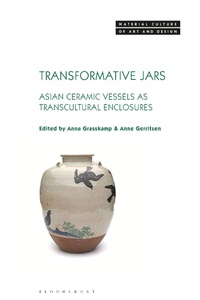
Transformative Jars
Asian Ceramic Vessels as Transcultural Enclosures
1st Edition
Published on 1. December 2022
296 pages
978-1-350-27744-1 (ISBN)
Description

The term 'jar' refers to any man-made shape with the capacity to enclose something. Few objects are as universal and multi-functional as a jar - regardless of whether they contain food or drink, matter or a void, life-giving medicine or the ashes of the deceased. As ubiquitous as they may seem, such containers, storage vessels and urns are, as this book demonstrates, highly significant cultural and historical artefacts that mediate between content and environment, exterior worlds and interior enclosures, local and global, this-worldly and otherworldly realms.
The contributors to this volume understand jars not only as household utensils or evidence of human civilizations, but also as artefacts in their own right. Asian jars are culturally and aesthetically defined crafted goods and as objects charged with spiritual meanings and ritual significance. Transformative Jars situates Asian jars in a global context and focuses on relationships between the filling, emptying and re-filling of jars with a variety of contents and meanings through time and throughout space.
Transformative Jars brings together an interdisciplinary team of scholars with backgrounds in curating, art history and anthropology to offer perspectives that go beyond archaeological approaches with detailed analyses of a broad range of objects. By looking at jars as things in the hands of makers, users and collectors, this book presents these objects as agents of change in cultures of craftsmanship and consumption.
The contributors to this volume understand jars not only as household utensils or evidence of human civilizations, but also as artefacts in their own right. Asian jars are culturally and aesthetically defined crafted goods and as objects charged with spiritual meanings and ritual significance. Transformative Jars situates Asian jars in a global context and focuses on relationships between the filling, emptying and re-filling of jars with a variety of contents and meanings through time and throughout space.
Transformative Jars brings together an interdisciplinary team of scholars with backgrounds in curating, art history and anthropology to offer perspectives that go beyond archaeological approaches with detailed analyses of a broad range of objects. By looking at jars as things in the hands of makers, users and collectors, this book presents these objects as agents of change in cultures of craftsmanship and consumption.
More details
Series
Edition
1. Auflage
Language
English
Place of publication
London
United Kingdom
Publishing group
Bloomsbury Publishing PLC
Target group
Professional and scholarly
Illustrations
28 colour & 40 bw illus
ISBN-13
978-1-350-27744-1 (9781350277441)
Copyright in bibliographic data and cover images is held by Nielsen Book Services Limited or by the publishers or by their respective licensors: all rights reserved.
Schweitzer Classification
Other editions
Additional editions
Anna Grasskamp | Anne Gerritsen
Transformative Jars
Asian Ceramic Vessels as Transcultural Enclosures
Book
06/2024
Bloomsbury Visual Arts
€55.89
Shipment within 15-20 days
Anna Grasskamp | Anne Gerritsen
Transformative Jars
Asian Ceramic Vessels as Transcultural Enclosures
Book
12/2022
Bloomsbury Visual Arts
€126.28
Shipment within 15-20 days
Persons
Anna Grasskamp is Lecturer at the School of Art History at University of St Andrews, UK. She is the author of Objects in Frames: Displaying Foreign Collectibles in Early Modern China and Europe (2019) and Art and Ocean Objects of Early Modern Eurasia: Shells, Bodies, and Materiality (2021).
Anne Gerritsen is Professor of History at the University of Warwick, UK, and Chair of Asian Art at University of Leiden, Netherlands. She is the author of Ji'an Literati and the Local (2007), and The City of Blue and White: Chinese Porcelain and the Early Modern World (2020). At Warwick, she co-directs the Global History and Culture Centre.
Anne Gerritsen is Professor of History at the University of Warwick, UK, and Chair of Asian Art at University of Leiden, Netherlands. She is the author of Ji'an Literati and the Local (2007), and The City of Blue and White: Chinese Porcelain and the Early Modern World (2020). At Warwick, she co-directs the Global History and Culture Centre.
Content
List of Contributors
List of Illustrations
Transformative Jars: An Introduction
Anna Grasskamp, University of St Andrews, UK; Anne Gerritsen, University of Warwick, UK, and Leiden University, Netherlands
Part I. Transformative Matters: Ceramic Vessels, Chemistry and Socio-Economic Change
Chapter 1. Dreams of Transformation: A 14th-century Flask from Cizhou
Anne Gerritsen, University of Warwick and Leiden University
Chapter 2. Jars that Cheered: Alcohol and Stoneware Containers in Java before 1500
Jiri Jakl, University of Heidelberg
Part II. Transformative Spaces: Ceramic Vessels and Asian Locations
Chapter 3. Siamese Jars and their Significance in Southeast-Asian Trade from the 14th to the 18th Century
Atthasit Sukkham, Bangkok University
Chapter 4. Weaving Networks: Production and Exchange of Ceramic Jars in South China and Vietnam from the 14th to the 16th Century
Wong Wai-yee Sharon, Chinese University of Hong Kong
Part III. Transcultural Enclosures: Containers and their Contents in Global Context
Chapter 5. For Oil, Date Syrup and the Tomb of a Chinese Queen: The Reciprocal Trade in Chinese and West Asian Jars in the Late Tang/Early Abbasid Periods
Eva Ströber, Curator Emerita, National Museum of Ceramics Princessehof Leeuwarden
Chapter 6. Translocation and Transformation: The Lives of Chinese Fishbowls in the Early Modern Period
Wen-ting Wu, National Taiwan University
Part IV. Transformative Containers: Individual Jars and Modes of Agency
Chapter 7. The Jars Have Ears: Circulation and Proliferation of Chinese Prototype Container Jars and their Offspring in Asia
Louise Cort, Curator Emerita for Ceramics, Freer Gallery of Art and Arthur M. Sackler Gallery, Smithsonian Institution
Chapter 8. Dragons in Flux: A Changing Relationship between People and Jars in the Kelabit Highlands, Borneo, from the 19th to the 21st century
Borbala Nyiri, independent scholar
Chapter 9. Jar Interventions: Ceramic Containers as Disobedient Objects in Contemporary Asian Art
Sooyoung Leam, The Courtauld Institute of Art, UK; Anna Grasskamp, University of St Andrews, UK
Chapter 10. Concluding Thoughts on Transformative Jars: Asian Ceramic Vessels as Transcultural Enclosures
Anna Grasskamp, University of St Andrews, UK; Anne Gerritsen, University of Warwick, UK, and Leiden University, Netherlands
Index
List of Illustrations
Transformative Jars: An Introduction
Anna Grasskamp, University of St Andrews, UK; Anne Gerritsen, University of Warwick, UK, and Leiden University, Netherlands
Part I. Transformative Matters: Ceramic Vessels, Chemistry and Socio-Economic Change
Chapter 1. Dreams of Transformation: A 14th-century Flask from Cizhou
Anne Gerritsen, University of Warwick and Leiden University
Chapter 2. Jars that Cheered: Alcohol and Stoneware Containers in Java before 1500
Jiri Jakl, University of Heidelberg
Part II. Transformative Spaces: Ceramic Vessels and Asian Locations
Chapter 3. Siamese Jars and their Significance in Southeast-Asian Trade from the 14th to the 18th Century
Atthasit Sukkham, Bangkok University
Chapter 4. Weaving Networks: Production and Exchange of Ceramic Jars in South China and Vietnam from the 14th to the 16th Century
Wong Wai-yee Sharon, Chinese University of Hong Kong
Part III. Transcultural Enclosures: Containers and their Contents in Global Context
Chapter 5. For Oil, Date Syrup and the Tomb of a Chinese Queen: The Reciprocal Trade in Chinese and West Asian Jars in the Late Tang/Early Abbasid Periods
Eva Ströber, Curator Emerita, National Museum of Ceramics Princessehof Leeuwarden
Chapter 6. Translocation and Transformation: The Lives of Chinese Fishbowls in the Early Modern Period
Wen-ting Wu, National Taiwan University
Part IV. Transformative Containers: Individual Jars and Modes of Agency
Chapter 7. The Jars Have Ears: Circulation and Proliferation of Chinese Prototype Container Jars and their Offspring in Asia
Louise Cort, Curator Emerita for Ceramics, Freer Gallery of Art and Arthur M. Sackler Gallery, Smithsonian Institution
Chapter 8. Dragons in Flux: A Changing Relationship between People and Jars in the Kelabit Highlands, Borneo, from the 19th to the 21st century
Borbala Nyiri, independent scholar
Chapter 9. Jar Interventions: Ceramic Containers as Disobedient Objects in Contemporary Asian Art
Sooyoung Leam, The Courtauld Institute of Art, UK; Anna Grasskamp, University of St Andrews, UK
Chapter 10. Concluding Thoughts on Transformative Jars: Asian Ceramic Vessels as Transcultural Enclosures
Anna Grasskamp, University of St Andrews, UK; Anne Gerritsen, University of Warwick, UK, and Leiden University, Netherlands
Index
