

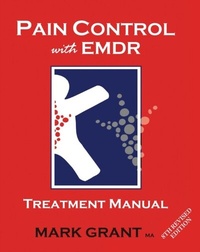
Pain Control with EMDR
Treatment manual 8th Revised Edition
1st Edition
Published on 16. February 2023
322 pages
978-1-922270-91-7 (ISBN)
Description

In this 8th revised edition of Pain Control with EMDR, Mark Grant, MA, describes how to apply this method to the treatment of chronic pain and medically unexplained symptoms (MUS). EMDR is indicated as a treatment for chronic pain/MUS because of its efficacy with trauma and the high comorbidity between trauma and pain. Somatic symptoms are an aspect of many psychological problems, offering a doorway to dissociated material and a pathway to healing to the trained eye.
Based on over 30 years of clinical experience and research, Pain Control with EMDR includes topics such as:
- Explanation of relationship between trauma (including emotional neglect/abuse) and pain
- Trauma, pain, and the brain
- Dissociative phenomena and chronic pain/MUS
- Trauma-informed case conceptualization
- EMDR pain protocol
- EMDR resourcing for pain
- EMDR, somatic interventions, and hypnosis
- Extensive treatment aids, resources, and patient handouts
- Numerous case studies
More details
Person
Mark Grant is an Australian psychologist/researcher with 30 years of clinical experience. He has worked extensively with survivors of all sorts of trauma and sufferers of stress-related health problems (chronic pain, fatigue, IBS etc). He has also researched the use of EMDR as a treatment for chronic pain resulting in several peer reviewed publications.Mark believes that most people know more than they think, and they just need help to recover that early-learning growth mindset that they were born with. This means strategies that are consistent with what we know about how the mind and body work - strategies which appeal to sensory-emotional aspects of brain functioning and learning. Such strategies are more intuitive, and quicker than traditional modalities that rely on insight or thinking. This can lead to surprising results - Marks Anxiety Release app, which was designed according to these principles, stimulated the first published account of an app being used to completely resolve chronic pain (in a carpal tunnel syndrome sufferer). Mark is currently co-author on two chapters regarding EMDR treatment of pain for the Oxford University Press Handbook of EMDR (2023). Mark's latest research project (2022) consists of an RCT to investigate the efficacy of a series of apps he has created to address the four main effects of PTSD; anxiety, medically unexplained pain, insomnia and damaged sense of self.
Content
- Intro
- Copyright
- Contents
- Introduction
- PART ONE: RESEARCH AND THEORY
- 1 The Problem of Pain
- What is pain?
- Early theories of pain
- The cognitive behavioral approach
- Back to the future
- Remember the squid
- Nosology of pain
- DSM-5 Categorization of pain
- 2 Trauma and Pain
- PTSD and pain
- What is PTSD?
- Attachment trauma and pain
- Dissociative phenomena in chronic pain and MUS
- Summary
- 3 Pain and the Brain
- Pain in the brain
- Body schemas and maps
- Neuroplasticity and pain
- Brain-based theories of pain
- Neuroplasticity and healing
- 4 EMDR as a Treatment for Pain
- Pain and the AIP model
- Overview of EMDR treatment model
- The 7 tasks of pain management
- Case study #1: EMDR treatment of combat-related pain
- Case study #2: EMDR in the treatment of medical pain
- PART TWO: EMDR PAIN PROTOCOL
- 5 Phase One: History and Treatment Planning
- Purpose of history taking
- Case conceptualization and treatment planning
- An integrated approach
- 6 Phase Two: Preparation
- Safety
- Safe place for clients with no safe place
- Safe place for clients facing present threat
- Self-care
- Self-control techniques
- Pain and the AIP model
- Expectations
- 7 Phase Three: Assessment
- Memory
- Dissociation and chronic pain
- Other targeting considerations
- Negative cognition (NC)
- Positive cognition (PC)
- Partial positive cognition
- Subjective units of disturbance scale (SUDs)
- Future template
- Targeting case examples
- Conceptual Issues
- 8 Phase Four: Desensitization
- Desensitization
- Commencing bilateral stimulation
- Installation (positive cognition)
- A closer look at bilateral stimulation
- 9 Phases Five to Eight: Installation to Closure
- What is a resource?
- Affect-based resources
- How to build resources somatically
- Healing resource installation
- Future template
- Helping clients who feel they have no resources
- Phase six: body scan
- Phase seven: closure
- Phase eight: re-evaluation
- 10 EMDR Pain Protocol
- EMDR pain protocol script
- EMDR target
- Negative cognition (NC)
- Positive cognition (PC)
- VoC
- Emotions
- SUDs
- Sensation/Location
- Desensitization
- Installation (antidote imagery)
- Installation phase
- Body scan
- Closure
- Re-evaluation
- Desensitization case example
- Pain protocol variations
- 11 Dealing with Blockages
- Client inability to detect sensory changes
- Pain moves around
- Pain increases
- Unconscious fears
- Dissociation
- Safety/containment
- Affect tolerance and regulation
- Developing internal cooperation between parts of the ego system
- Trauma processing
- Strong left-hemisphere dominance
- Physical pathology
- 12 Hypnosis
- Imagery
- Hypnosis
- Hypnosis and EMDR
- When to utilize hypnosis?
- Formal (scripted) trances
- Five hypnotic suggestions for chronic pain
- Naturalistic induction
- Accesing target material
- Imagery
- Healing light
- Water
- Neuropathic pain script
- Fear reduction
- Summary
- 13 Adjunctive Strategies and Treatments
- Sleep
- Sleep management
- Mrs. Erickson's Induction
- Improving quality of sleep trance
- Free-sleeping tip sheet
- Exercise
- Exercise and pain
- Why exercise?
- Pleasure and pain
- Resilience
- How to increase resilience
- The need for goals
- Knowing how to turn a problem into a strength
- Getting better takes time
- 14 22 Things I Wish I'd Known Before I Started Working with Chronic Pain
- PART THREE: TREATMENT RESOURCES
- 15 Therapist Resources
- 6 things every pain therapist should know
- EMDR treatment of chronic pain "cheat sheet"
- Intake questionnaire
- Pain risk factors questionnaire
- History
- BLS rationale for pain
- Case conceptualization comet
- EMDR pain protocol (short version)
- Pain and comfort words
- Effects of bilateral stimulation menu
- Containing the pain with pendulation
- The Somatoform Dissociation Questionnaire SDQ-20
- Adjunctive strategies for pain control (EMDR+)
- Adjunctive strategies for pain control (EMDR-)
- Self-help book for pain sufferers, based on EMDR
- Healing traumatic stress app series
- 16 Client Resources
- Mark Grant's chronic pain fact sheet
- Normal emotional stages and reactions to pain
- Understanding feelings
- Basic relaxation/meditation script
- Pendulation for pain
- Mark Grant's pain management recipe
- How to talk about pain
- Further reading
- Appendices
- How does EMDR work?
- Research review
- References
- Index
- Cover
