


Bayesian Meta-Analysis
A Practical Introduction
Published on 27. June 2025
328 pages
978-1-040-35796-5 (ISBN)
Description

Meta-analysis is the statistical combination of previously conducted studies, often from summary statistics but sometimes with individual participant data. It is widespread in life sciences and is gaining popularity in economics and beyond. In many real-life meta-analyses, challenges in the source information, such as unreported statistics or biases, can be incorporated using Bayesian methods. Bayesian Meta-Analysis: A Practical Introduction provides an approachable introduction for researchers who are new to Bayes, meta-analysis, or both. There is an emphasis on hands-on learning using a variety of software packages.
Key Features
Introductory chapters assume no prior experience or mathematical training, and are aimed at non-statistical researchers
Examples of basic meta-analyses in seven different software alternatives: BUGS, JAGS, Stan, bayesmeta, brms, Stata, and JASP
Practical advice on extracting information from studies, eliciting expert opinions, managing project decisions, and writing up findings
Discussion of specific problems, including publication bias, unreported statistics, and a mixture of study designs, with code examples
Accompanying online blog and forum, with all code and data from the book, plus more translations to different software
This book aims to bridge the gap between the researcher who wants to carry out tailored meta-analysis and the techniques they need, which have previously been available only in mathematically or computationally demanding publications.
Key Features
Introductory chapters assume no prior experience or mathematical training, and are aimed at non-statistical researchers
Examples of basic meta-analyses in seven different software alternatives: BUGS, JAGS, Stan, bayesmeta, brms, Stata, and JASP
Practical advice on extracting information from studies, eliciting expert opinions, managing project decisions, and writing up findings
Discussion of specific problems, including publication bias, unreported statistics, and a mixture of study designs, with code examples
Accompanying online blog and forum, with all code and data from the book, plus more translations to different software
This book aims to bridge the gap between the researcher who wants to carry out tailored meta-analysis and the techniques they need, which have previously been available only in mathematically or computationally demanding publications.
Reviews / Votes
"The authors begin by setting out the principles of statistical inference, simple models for meta-analysis and code for fitting them in a Bayesian framework. One of the great strengths of the book is that code is provided for performing Bayesian meta-analysis in multiple software packages, enabling beginners to get started easily or helping more experienced users to try out alternative Bayesian software. The second part of the book covers extraction of summary statistics, elicitation of opinions to inform priors and communication of methods and findings. In the third part, the authors present a range of models for more complex settings such as network meta-analysis, IPD meta-analysis, selection models for publication bias, multiple outcomes and handling missing summary statistics, again with code provided for implementation. This book will be a valuable resource for anyone wanting to learn more about the potential and practicalities of Bayesian meta-analysis, from students to experienced researchers."~Becky Turner, University College London, MRC Clinical Trials Unit
In our field of study on congenital anomalies, where rare diseases and small numbers of events in studies are the rule, the book can be particularly helpful. Frequentist (agnostic) methods of evidence synthesis can present improtant limits in our field and Bayesian methods can be more efficient and informative as one can draw on the wealth of population-based data available on baseline prevalence of anomalies. Hence, one can find reasonable prior distributions with plausible bounds and gain more insights about the question at hand using Bayeisan meta-analysis as delineated in the book."
~Babak KHOSHNOOD, Universite Paris Cite
"...this book is extremely timely...not just a technical exposition, but provides practical guidance about using different software platforms, as well as valuable advice about extracting summary statistics, eliciting prior information, communicating results, visualisation, and many other issues...reflects years of thoughtful experience, and should be of huge value to anyone faced with pooling studies into a coherent whole."
~From the Foreword by Professor Sir David Spiegelhalter
"This is an excellent text for anyone who wants to fully understand and use Bayesian methods for meta-analysis. Organised into three parts, it starts with a gentle introduction to Bayesian statistics and meta-analysis which are then expanded to more advanced topics, highlighting the situations where a Bayesian approach is particularly useful. Technical concepts are introduced gently and as needed, making the material easy to follow. Clearly defined learning objectives for each Chapter help the reader decide whether they are ready, or need, to delve into the material provided which makes the book easy to navigate. Code and an introduction to different Bayesian software are provided to allow the reader to explore the examples and get started with fitting their own meta-analysis models. If you want to learn about Bayesian methods for meta-analysis, this is where to start."
~Sofia Dias, Professor in Health Technology Assessment CRD, University of York
"...an excellent new textbook on Bayesian methods in meta-analysis...The book is written for users who are familiar with traditional frequentist meta-analysis methods but are interested in Bayesian alternatives and software for fitting meta-analysis models...the authors have made a deliberate decision to focus on mastery rather than mathematics...Readers can find more detail on theory and mathematics in the numerous other texts that provide this, and in the meantime, they will be able to learn how to ft, interpret, and present results from Bayesian meta-analysis...The language is clear and the code-rich examples are valuable for learning. Furthermore, the helpful opinions, insights, and advice for conducting analyses, interpreting results, and making results useful for policy and decision making, based on the authors depth of expertise and experience, will help assure that users make appropriate modeling decisions. Grant and di Tanna have succeeded in producing a practical introduction to a complex topic that will allow users to be able to conduct Bayesian meta-analysis with confidence."
~ Christopher S. Hollenbeak, Pennsylvania State University, USA, in PharmacoEconomics, June 2025
More details
Language
English
Place of publication
London
United Kingdom
Publishing group
Taylor & Francis Ltd
Target group
College/higher education
Professional and scholarly
Adult education
Illustrations
18 Tables, black and white; 64 Line drawings, black and white; 64 Illustrations, black and white
File size
14,26 MB
ISBN-13
978-1-040-35796-5 (9781040357965)
Copyright in bibliographic data and cover images is held by Nielsen Book Services Limited or by the publishers or by their respective licensors: all rights reserved.
Schweitzer Classification
Other editions
Additional editions
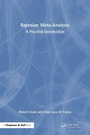
Book
06/2025
1st Edition
Chapman & Hall/CRC
€187.90
Shipment within 10-20 days
Book
06/2025
1st Edition
Chapman & Hall/CRC
€67.60
Shipment within 10-20 days
Persons
Robert Grant is a statistician who has worked throughout his career with evidence synthesis and Bayesian models. He is one of the developers of Stan software, and a chartered fellow of the Royal Statistical Society. He worked on health service quality indicators and clinical guidelines for the Royal College of Physicians and the National Institute for Health and Care Excellence from 1998-2010, then on epidemiological and health services research, and teaching for health care professionals around statistics and research methods, at St George's, University of London and Kingston University from 2010-2017. He provided freelance coaching, training and consultancy to clients from various sectors from 2017-2024.
Gian Luca Di Tanna is a biostatistician and health economist who has focused his career on applied statistical methodologies for randomized clinical trials and observational research, particularly Bayesian methods and evidence synthesis/meta-analysis.
He has held academic positions at Sapienza University of Rome, the University of Birmingham, the London School of Hygiene and Tropical Medicine, and Queen Mary University of London. He worked at the George Institute for Global Health at the University of New South Wales, Australia, where he served as Head of the Biostatistics Division and co-Head of the Meta-Research and Evidence Synthesis Unit.
From 2020 to 2022, he chaired the Statistical Methods for Health Economics and Outcomes Research Special Interest Group of the International Society for Pharmacoeconomics and Outcomes Research (ISPOR). He contributes as a Statistical Editor to Cochrane groups and serves on the editorial boards of PharmacoEconomics and BMC Medical Research Methodology. He was listed among the World's Top 2% Scientists in both the 2023 and 2024 rankings published by Stanford University and Clarivate Analytics. He is a Chartered Statistician of the Royal Statistical Society.
He is currently a Full Professor of Biostatistics and Health Economics and Head of Research and Services at the Department of Business Economics, Health, and Social Care at the University of Applied Sciences and Arts of Southern Switzerland (SUPSI). Additionally, he is a member of the Academic Board of the Swiss School of Public Health.
Gian Luca Di Tanna is a biostatistician and health economist who has focused his career on applied statistical methodologies for randomized clinical trials and observational research, particularly Bayesian methods and evidence synthesis/meta-analysis.
He has held academic positions at Sapienza University of Rome, the University of Birmingham, the London School of Hygiene and Tropical Medicine, and Queen Mary University of London. He worked at the George Institute for Global Health at the University of New South Wales, Australia, where he served as Head of the Biostatistics Division and co-Head of the Meta-Research and Evidence Synthesis Unit.
From 2020 to 2022, he chaired the Statistical Methods for Health Economics and Outcomes Research Special Interest Group of the International Society for Pharmacoeconomics and Outcomes Research (ISPOR). He contributes as a Statistical Editor to Cochrane groups and serves on the editorial boards of PharmacoEconomics and BMC Medical Research Methodology. He was listed among the World's Top 2% Scientists in both the 2023 and 2024 rankings published by Stanford University and Clarivate Analytics. He is a Chartered Statistician of the Royal Statistical Society.
He is currently a Full Professor of Biostatistics and Health Economics and Head of Research and Services at the Department of Business Economics, Health, and Social Care at the University of Applied Sciences and Arts of Southern Switzerland (SUPSI). Additionally, he is a member of the Academic Board of the Swiss School of Public Health.
Content
1. A statistical inference primer. 2. What is Bayesian statistics?. 3. Common effect meta-analysis. 4. Random effects meta-analysis and heterogeneity. 5. How to extract statistics from published papers. 6. Eliciting priors. 7. Writing up your meta-analysis. 8. Using arm- and time-based statistics. 9. Network meta-analysis. 10. Individual participant data. 11. Unreported statistics. 12. Living systematic reviews and Bayesian updating. 13. Publication bias. 14. Multiple statistics. 15. Multiple outcomes or study designs. 16. Informing policy and economic evaluation. 17. Emerging topics in Bayesian meta-analysis.
