

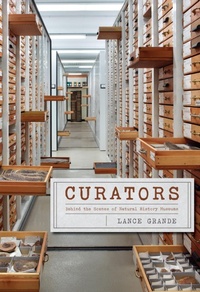
Curators
Description

"The author brings curatorial work to life through absorbing stories about fossils, gems, and other natural objects and the men and women who find them." - Kirkus Reviews
Over the centuries, natural history museums have evolved from being little more than musty repositories of stuffed animals and pinned bugs, to being crucial generators of new scientific knowledge. They have also become vibrant educational centers, full of engaging exhibits that share those discoveries with students and an enthusiastic general public. At the heart of it all from the very start have been curators. Yet after three decades as a natural history curator, Lance Grande found that he still had to explain to people what he does. This book is the answer-and, oh, what an answer it is: lively, exciting, up-to-date, it offers a portrait of curators and their research like none we've seen, one that conveys the intellectual excitement and the educational and social value of curation. Grande uses the personal story of his own career-most of it spent at Chicago's storied Field Museum-to structure his account as he explores the value of research and collections, the importance of public engagement, changing ecological and ethical considerations, and the impact of rapidly improving technology. Throughout, we are guided by Grande's keen sense of mission, of a job where thewhyis always as important as thewhat. This beautifully written and richly illustrated book is a clear-eyed but loving account of natural history museums, their curators, and their ever-expanding roles in the twenty-first century.
More details
Other editions
Additional editions
Person
Content
- Intro
- Contents
- Preface: Curators of Natural History and Human Culture
- 1. Moving toward the Life of a Curator
- 2. Beginning a Curatorial Career
- 3. Staking Out a Field Site in Wyoming
- 4. Mexico and the Hotel NSF
- 5. Willy, Radioactive Rayfins, and the Fish Rodeo
- 6. A Dino Named SUE
- 7. Adventures of My Curatorial Colleagues from the Field
- 8. The Spirit of K-P Schmidt and the Hazards of Herpetology
- 9. Executive Management
- 10. Exhibition and the Grainger Hall of Gems
- 11. Grave Concerns
- 12. Hunting-and Conserving-Lions
- 13. Saving the Planet's Ecosystems
- 14. Where Do We Go from Here?
- Acknowledgments
- Notes, Added Commentary, References, and Figure Credits
- Index
