

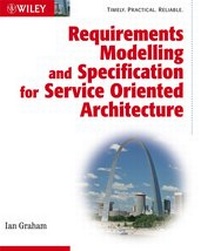
Requirements Modelling and Specification for Service Oriented Architecture
Published on 20. November 2008
320 pages
978-0-470-71232-0 (ISBN)
Description

Many software developers often confuse requirements engineering with software specification and, as a result, build unusable systems, despite meeting specifications. Bringing together all the techniques needed by the modern software developer, here is a practical handbook to requirements engineering and systems specification for developers building systems within a service oriented architecture. It introduces the concepts of SOA and relevant standards and technology, such as Web services and ESBs, and then presents a range of modern requirements engineering techniques.
More details
Other editions
Additional editions
Book
10/2008
1st Edition
Wiley
€46.90
Article exhausted; check different version
Person
Ian Graham is Principle Consultant at Trireme International Ltd, and has over 20 years' experience in the industry. He is an expert in the field of requirements, specification and modelling, and was a pioneer of agile processes or rapid application development. He also co-developed the OPEN process specification.
He is associated with both UK and international professional organizations and is frequently quoted in the IT and financial press. He has authored ten books and numerous articles.
He is associated with both UK and international professional organizations and is frequently quoted in the IT and financial press. He has authored ten books and numerous articles.
Content
Foreword by Mark McGregor.
Foreword by Professor Neil Maiden.
Preface.
1. Principles of SOA.
1.1. Why Projects Fail.
1.2. Aligning IT with Business - Speaking a Common Language.
1.3. What is Service Oriented Architecture?
1.4. Business Drivers for SOA.
1.5. Technology Drivers.
1.6. Benefits, Pitfalls and Prospects.
1.7. Migration Strategies.
1.8. Summary.
1.9. Bibliographical Notes.
2. Architecture - Objects, Components, Services.
2.1. What is Architecture?
2.2. Architecture through the Ages.
2.3. Objects and Components.
2.4. Architecture and SOA.
2.5. Stateless Services.
2.6. Practical Principles for Developing, Maintaining andExploiting SOA.
2.7. Summary.
2.8. Bibliographical Notes.
3. Approaches to Requirements Engineering.
3.1. Conventional Approaches.
3.2. Classic Requirements versus Use Cases.
3.3. Problem Frames.
3.4. Requirements and Business Rules.
3.5. Establishing and Prioritizing the Business Objectives.
3.6. Soft Techniques for Requirements Elicitation.
3.7. Summary.
3.8. Bibliographical Notes.
4. Business Process Modelling.
4.1. The Origins of and Need for Business Process Modelling.
4.2. Business Process Modelling in a Nutshell.
4.3. UML Activity Diagrams.
4.4. BPMN.
4.5. WS-BPEL.
4.6. Orchestration and Choreography.
4.7. Process Algebra and Petri Nets.
4.8. The Human Side of Business Process Management.
4.9. Summary.
4.10. Bibliographical Notes.
5. Catalysis Conversation Analysis.
5.1. What is a Business Process?
5.2. Conversations.
5.3. Conversation Stereotypes and Scripts.
5.4. Conversations as Components.
5.5. Contracts and Goals.
5.6. Conversations, Collaborations and Services.
5.7. Checking Model Consistency.
5.8. Summary.
5.9. Bibliographical Notes.
6. Models of Large Enterprises.
6.1. Business Process Modelling and SOA in the Large.
6.2. Business Rules in the Mission Grid.
6.3. The Mission Grid as a Roadmap for SOA.
6.4. Other Approaches.
6.5. Summary.
6.6. Bibliographical Notes.
7. Specification Modelling.
7.1. From Requirements to Specification.
7.2. Some Problems with the Conventional Approach to UseCases.
7.3. Describing Boundary Conversations or Use Cases.
7.4. Establishing the Type Model.
7.5. Finding Services from State Models.
7.6. Finding Business Rules.
7.7. Ontology, Type Models and Business Rules.
7.8. Documenting the Specification.
7.9. Associations, Rules and Encapsulation.
7.10. Summary.
7.11. Bibliographical Notes.
8. Standards.
8.1. BPM Standards.
8.2. Web Services Standards.
8.3. Other Miscellaneous Standards.
8.4. Bibliographical Notes.
Appendix A. Requirements Engineering and SpecificationPatterns.
Appendix B. The Fundamental Concepts of Service OrientedArchitecture.
References and Bibliography.
Index.
Foreword by Professor Neil Maiden.
Preface.
1. Principles of SOA.
1.1. Why Projects Fail.
1.2. Aligning IT with Business - Speaking a Common Language.
1.3. What is Service Oriented Architecture?
1.4. Business Drivers for SOA.
1.5. Technology Drivers.
1.6. Benefits, Pitfalls and Prospects.
1.7. Migration Strategies.
1.8. Summary.
1.9. Bibliographical Notes.
2. Architecture - Objects, Components, Services.
2.1. What is Architecture?
2.2. Architecture through the Ages.
2.3. Objects and Components.
2.4. Architecture and SOA.
2.5. Stateless Services.
2.6. Practical Principles for Developing, Maintaining andExploiting SOA.
2.7. Summary.
2.8. Bibliographical Notes.
3. Approaches to Requirements Engineering.
3.1. Conventional Approaches.
3.2. Classic Requirements versus Use Cases.
3.3. Problem Frames.
3.4. Requirements and Business Rules.
3.5. Establishing and Prioritizing the Business Objectives.
3.6. Soft Techniques for Requirements Elicitation.
3.7. Summary.
3.8. Bibliographical Notes.
4. Business Process Modelling.
4.1. The Origins of and Need for Business Process Modelling.
4.2. Business Process Modelling in a Nutshell.
4.3. UML Activity Diagrams.
4.4. BPMN.
4.5. WS-BPEL.
4.6. Orchestration and Choreography.
4.7. Process Algebra and Petri Nets.
4.8. The Human Side of Business Process Management.
4.9. Summary.
4.10. Bibliographical Notes.
5. Catalysis Conversation Analysis.
5.1. What is a Business Process?
5.2. Conversations.
5.3. Conversation Stereotypes and Scripts.
5.4. Conversations as Components.
5.5. Contracts and Goals.
5.6. Conversations, Collaborations and Services.
5.7. Checking Model Consistency.
5.8. Summary.
5.9. Bibliographical Notes.
6. Models of Large Enterprises.
6.1. Business Process Modelling and SOA in the Large.
6.2. Business Rules in the Mission Grid.
6.3. The Mission Grid as a Roadmap for SOA.
6.4. Other Approaches.
6.5. Summary.
6.6. Bibliographical Notes.
7. Specification Modelling.
7.1. From Requirements to Specification.
7.2. Some Problems with the Conventional Approach to UseCases.
7.3. Describing Boundary Conversations or Use Cases.
7.4. Establishing the Type Model.
7.5. Finding Services from State Models.
7.6. Finding Business Rules.
7.7. Ontology, Type Models and Business Rules.
7.8. Documenting the Specification.
7.9. Associations, Rules and Encapsulation.
7.10. Summary.
7.11. Bibliographical Notes.
8. Standards.
8.1. BPM Standards.
8.2. Web Services Standards.
8.3. Other Miscellaneous Standards.
8.4. Bibliographical Notes.
Appendix A. Requirements Engineering and SpecificationPatterns.
Appendix B. The Fundamental Concepts of Service OrientedArchitecture.
References and Bibliography.
Index.
