

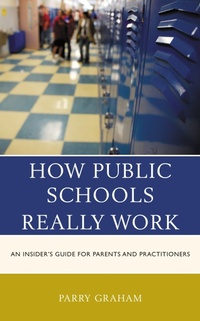
How Public Schools Really Work
An Insider's Guide for Parents and Practitioners
1st Edition
Published on 14. September 2022
188 pages
978-1-4758-6716-9 (ISBN)
Description

Since March of 2019, parents across the US have gained an unprecedented peek into their children's schools and classrooms. In many cases, this has led to a newfound respect and appreciation for the hard work of teachers and administrators. But it has also raised important questions about the roles that parents can and should play in their children's education.This book is a collection of insider information, not to help parents beat the system, but to help them work with the system-and to make sure the system works with them.Full of tips, strategies, resources, and real-life stories, this book will help any parent navigate the often confusing world of public schools. Whether you want to advocate for your child's classroom experience, support your child when they get in trouble, or just help make a difference in your child's school, this book will show you how.
More details
Edition
1. Auflage
Language
English
Place of publication
New York
United States
Publishing group
Bloomsbury Publishing Plc
ISBN-13
978-1-4758-6716-9 (9781475867169)
Copyright in bibliographic data and cover images is held by Nielsen Book Services Limited or by the publishers or by their respective licensors: all rights reserved.
Schweitzer Classification
Other editions
Additional editions
Book
10/2022
Rowman & Littlefield Publishers
€66.60
Shipment within 10-20 days
Person
Parry Graham has worked in public education for over 25 years as a teacher, principal, central office administrator, graduate school professor, and independent consultant. His previous books include the award-winning Building a Professional Learning Community at Work: A Guide to the First Year and Making Teamwork Meaningful: Leading Progress-Driven Collaboration in a PLC at Work.
Content
- Cover
- Half Title
- Title Page
- Copyright Page
- Dedication
- Contents
- Acknowledgments
- Author page
- Introduction
- Organization of the Book
- Final Notes
- Section I: Teachers
- Notes
- Chapter 1: How Do You Spot and Take Advantage of a Good Teacher?
- (1) Good Teachers Care
- (2) Good Teachers Are Organized
- (3) Good Teachers Set Big Goals for Their Kids and for Themselves
- (4) Good Teachers Provide Lots of Feedback
- (5) Good Teachers Have Deep Content Knowledge
- (6) Good Teachers Are With-It
- Taking Advantage of a Good Teacher
- Chapter 2: How Do You Get a Good Teacher for Your Child?
- Know Your Child
- Know the Teachers
- Provide Information, Not Requests
- Understand the Differences between Elementary, Middle, and High Schools
- Chapter 3: How Do You Make the Best of an Average Teacher?
- Build a Good Relationship
- Learn about the Curriculum
- Monitor Your Child's Progress
- Chapter 4: How Do You Work with a Teacher about a Question or Concern?
- Be Polite
- Seek to Understand
- Be Clear and Specific
- Use E-mail Carefully
- Don't Get Your Child Involved
- Pick Your Battles
- Involve Administration as a Last Resort
- Chapter 5: How Do You Handle a Truly Bad Teacher?
- Personnel Practices in Public Education: The Good, the Bad, and the Ugly
- What Parents Can Do about Ineffective Teachers
- Notes
- Setion II: Student Discipline
- Chapter 6: How Do Schools Deal with Student Discipline?
- A Practical Example of a Disciplinary Incident
- How the School Discipline Process Works
- Note
- Chapter 7: What Are Common Disciplinary Consequences and What Do They Mean for Students?
- The Range of Disciplinary Consequences
- This Will (Most Likely Not) Go Down on Your Permanent Record
- Note
- Chapter 8: Your Child Got Into Trouble with a Teacher-Now What?
- Understand the Situation and the Concern
- Listen to Your Child
- Work with the Teacher
- Escalate when Necessary
- Chapter 9: Your Child Got Into Trouble with an Administrator-Now What?
- Understand the Facts and the Process
- Support Your Child and Work with the School
- Dealing with Especially Serious Situations
- Chapter 10: Your Child Got into Trouble and You Think the School Screwed Up-What Do You Do?
- You Think Your Child Is Innocent
- You Think the School Screwed Up the Process
- You Think the Consequences Are Excessive
- Chapter 11: Your Child Is a Victim-What Do You Do?
- Your Child Is a Victim of Another Student's Behavior, and the School Is Unaware
- Your Child Is a Victim of Another Student's Behavior in a School-Investigated Situation
- Your Child Is the Victim of a School Staff Member's Behavior
- Section III: Parent Involvement
- Chapter 12: You Want to Help Out-How Can You Add Value within the System?
- Examples of What Adding Value Looks Like
- How to Find Opportunities to Add Value
- How to Make Your Contribution Truly Valuable
- Chapter 13: You Want to Help the System Get Better-How Can Parents be a School's Quality Control?
- Seek to Understand How the Current System Works
- Know What Is-and Isn't-Your Lane
- Find and Make Allies
- Building Relationships with Influential Staff
- Figure Out Where You Draw the Line
- Section 1 Appendix
- Seeing the Qualities of Effective Teachers in Action
- Spotting the Qualities of Effective Teachers
- List of Phrases to Use in Describing Your Elementary-Age Child
- Sample Letter about Child for Teacher Selection
- Section 2 Appendix
- Questions to Ask When Your Child Gets into Trouble with an Administrator
- Questions to Ask the School in Significant Disciplinary Situations
- Section 3 Appendix
- Picking a Way to Get Involved in Your Child's School
