

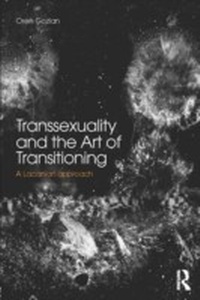
Transsexuality and the Art of Transitioning
A Lacanian approach
1st Edition
Published on 13. August 2014
120 pages
978-1-317-62908-5 (ISBN)
Description

Winner of The American Board and Academy of Psychoanalysis (ABAPsa) Book Prize for 2015
Transsexuality and the Art of Transitioning: A Lacanian approach presents a startling new way to consider psychoanalytic dilemmas of sexual difference and gender through the meeting of arts and the clinic. Informed by a Lacanian perspective that locates transsexuality in the intermediate space between the clinic and culture, Oren Gozlan joins current conversations around the question of sexual difference with the insistence that identity never fully expresses sexuality and, as such, cannot be replaced by gender.
The book goes beyond the idea of gender as an experience that gives rise to multiple identities and instead considers identity as split from the outset. This view transforms transsexuality into a particular psychic position, able to encounter the paradoxes of transitional experience and the valence of phantasy and affect that accompany aesthetic conflicts over the nature of beauty and being. Gozlan brings readers into the enigmatic qualities of representation as desire for completion and transformation through notions of tension, difference and aesthetics through examining the artwork of Anish Kapoor and Louise Bourgeois and the role played by confusion in the aesthetics of transformation in literature and memoir. Each chapter of the book presents a productive take on understanding the psychoanalytic demand to sustain and consider the dilemma that the unconscious presents to the knowledge and recognition of gender. Fundamentally, this work understands transsexuality as a creative act, rich with desire and danger, in which thinking of the transsexual body as both an analytic and a subjective object helps us to reveal the creativity of sexuality.
Ideal for psychoanalysts, psychologists, psychiatrists and social workers as well as students of psychoanalysis, cultural studies, literature studies and philosophy, Transsexuality and the Art of Transitioning offers a unique insight into psychoanalytic approaches to transsexuality and the question of assuming a position in gender.
Transsexuality and the Art of Transitioning: A Lacanian approach presents a startling new way to consider psychoanalytic dilemmas of sexual difference and gender through the meeting of arts and the clinic. Informed by a Lacanian perspective that locates transsexuality in the intermediate space between the clinic and culture, Oren Gozlan joins current conversations around the question of sexual difference with the insistence that identity never fully expresses sexuality and, as such, cannot be replaced by gender.
The book goes beyond the idea of gender as an experience that gives rise to multiple identities and instead considers identity as split from the outset. This view transforms transsexuality into a particular psychic position, able to encounter the paradoxes of transitional experience and the valence of phantasy and affect that accompany aesthetic conflicts over the nature of beauty and being. Gozlan brings readers into the enigmatic qualities of representation as desire for completion and transformation through notions of tension, difference and aesthetics through examining the artwork of Anish Kapoor and Louise Bourgeois and the role played by confusion in the aesthetics of transformation in literature and memoir. Each chapter of the book presents a productive take on understanding the psychoanalytic demand to sustain and consider the dilemma that the unconscious presents to the knowledge and recognition of gender. Fundamentally, this work understands transsexuality as a creative act, rich with desire and danger, in which thinking of the transsexual body as both an analytic and a subjective object helps us to reveal the creativity of sexuality.
Ideal for psychoanalysts, psychologists, psychiatrists and social workers as well as students of psychoanalysis, cultural studies, literature studies and philosophy, Transsexuality and the Art of Transitioning offers a unique insight into psychoanalytic approaches to transsexuality and the question of assuming a position in gender.
Reviews / Votes
'As psychoanalyst at work, Oren Gozlan presents gender on the move and in transition. It is within the enigmas of life, Gozlan argues, best expressed between the clinic and the creative arts that open psychoanalysis to alterity. The novel analysis of transsexuality is presented through the aesthetic conflicts of psychical space and their literary destiny. Between the clinic and its critique, readers can examine changing views of transsexuality. Through his evocative frame, Gozlan offers new ways to trace the representations of gender from the advent of memoir and identity claims into the enigmatic literature and to abstract sculpture. Revisiting a number of psychoanalytic debates on the heteroglossia of the drives and sublimation, this book is a bold move from reading the body to writing upon it.' - Deborah P. Britzman, FRSC and author of Freud and Education.'In this magnificent work, Dr. Gozlan offers a depth of knowledge that is both scholarly and emotionally informed, presenting greatly needed originality of thought in an area relatively new to psychoanalysis.He explores the physical and emotional realities of transsexuality and the process of transitioning from a perspective that integrates psychoanalytic process and aesthetics. The title of the book alone speaks volumes: The art of transitioning involves physical artistry, with the body as canvas, and the use of the body as canvas involves what is essential to all artistry-psyche as canvas, psyche as artist...In reading this bold, innovative book, we discover our own contradictions,anxieties, and phantasies, with the recognition that culturally and socially in our contemporary world, transsexual people hold these dichotomies for all of us.' Merle Molofsky, Psychoanalytic Review, 102(3), June 2015
'Oren Gozlan is one of the most original thinkers in psychoanalysis today. In this very succinct and well written text, he challenges the antiquated and prejudiced historical views of transsexuality perpetrated by the field of psychoanalysis and recasts the questions of sexuality, gender, identity, and authenticity by reexamining the puzzlement and aesthetics of desire. As a practicing analyst and psychologist who treats preoperative transsexuals in the process of transitioning, he provides an intimate view into the psychic reality of these people and offers a philosophy of sexuation based on sustaining internal conflict. Rather than pathologizing or normalizing transsexuality, Gozlan situates the question as one of tolerating uncertainty and ambiguity. [...] This is a highly nuanced book packed with supple meanings conveyed through deft and stylized prose about the psychology of the interior, and one that audiences in the fields of gender studies, feminine philosophy, queer theory, and GLBTQ initiatives will appreciate for its complexity, respect, and honest appraisal in illuminating the dynamics of transsexuality both inside and outside the clinic.' -Jon Mills, PsyD, PhD, author, Adler Graduate Professional School in Toronto, Transgender Studies Quarterly
More details
Language
English
Place of publication
London
United Kingdom
Publishing group
Taylor & Francis Ltd
Target group
College/higher education
Professional and scholarly
File size
0,85 MB
ISBN-13
978-1-317-62908-5 (9781317629085)
Copyright in bibliographic data and cover images is held by Nielsen Book Services Limited or by the publishers or by their respective licensors: all rights reserved.
Schweitzer Classification
Other editions
Additional editions
Book
08/2014
1st Edition
Routledge
€251.10
Shipment within 15-20 days
Book
08/2014
1st Edition
Routledge
€64.40
Shipment within 15-20 days
Person
Oren Gozlan, Psy.D., ABPP, is a clinical psychologist and a psychoanalyst in private practice and professor and director of clinical training at the Adler Graduate School in Toronto. He is a Diplomate in Psychoanalysis with the American Board of Professional Psychology where he serves as Treasurer, Fellow of the Academy of Psychoanalysis and is also the Chair of the Gender and Sexuality Committee of the International Forum for Psychoanalytic Education.
Content
Acknolwedgements. Introduction 1. Transsexuality as a State of Mind: Questions of learning and indeterminacy 2. The Aesthetics of Transitioning 3. Narrating Transsexuality: Transition from memoir to literature 4. Transsexual Surgery: A novel reminder and a navel remainder 5. The "Real" Time of Gender 6. Re-writing the Screen. Conclusion: Afterwordness.
