

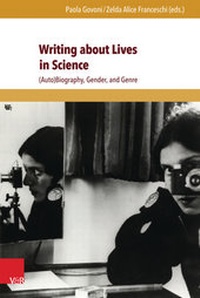
Writing about Lives in Science
Description

Following discussions on scientific biography carried out over the past few decades, this book proposes a kaleidoscopic survey of the uses of biography as a tool to understand science and its context. It offers food for thought on the role played by the gender of the biographer and the biographee in the process of writing. To provide orientation in such a challenging field, some of the authors have accepted to write about their own professional experience while reflecting on the case studies they have been working on. Focusing on (auto)biography may help us to build bridges between different approaches to men and women's lives in science. The authors belong to a variety of academic and professional fields, including the history of science, anthropology, literary studies, and science journalism. The period covered spans from 1732, when Laura Bassi was the first woman to get a tenured professorship of physics, to 2009, when Elizabeth H. Blackburn and Carol W. Greider were the first women's team to have won a Nobel Prize in science
More details
Other editions
Additional editions
Persons
Content
- Intro
- Table of Contents
- Body
- Paola Govoni: Crafting Scientific (Auto)?Biographies
- I. Positioning Biography and Autobiography within the History of Science
- II. The Trouble with Biography
- III. Featuring Diversity
- IV. Back to (Auto)?Biography
- Part I Between Biography and Autobiography
- Evelyn Fox Keller: Pot-holes Everywhere: How (not) to Read my Biography of Barbara McClintock
- I. Act One: Circa 1977
- II. Act Two: Feminist Responses after the Nobel Prize
- III. Act Three: The Scientific Community Responds to the Nobel Prize
- Londa Schiebinger: Following the Story: From The Mind Has No Sex? to Gendered Innovations
- Georgina Ferry: Telling Stories or Making History? Two Lives in X-ray Crystallography
- I. Dorothy Hodgkin's Life and Work
- II. The Biographical Process
- III. Max Perutz
- IV. The Reception of Scientific Biography
- V. Science on Stage
- VI. Conclusion
- Part II Shaping Biographies
- Marta Cavazza: The Biographies of Laura Bassi
- I. Towards a Laura Bassi Metabiography?
- II. Rhetorical Strategies
- III. Appendix: Laura Bassi's Biographies
- Paula Findlen: Listening to the Archives: Searching for the Eighteenth-Century Women of Science
- I. Between the Archive and the Encyclopedia
- II. The Biographer's Subjectivity
- III. Observing the Biographer at Work
- Massimo Mazzotti: Rethinking Scientific Biography: The Enlightenment of Maria Gaetana Agnesi
- I. Scientific Biography as a Genre
- II. The Enigma of Agnesi
- III. Mysticism and Logic
- IV. Conclusion
- Part III Networking
- Vita Fortunati: Mirror Shards: Conflicting Images between Marie Curie's Autobiography and her Biographies
- I. Biographies, Biographers, and Biographees
- II. The Case of Marie Curie
- III. Between History and Fiction
- Zelda Alice Franceschi: Women in the Field: Writing the History. Genealogies and Science in Margaret Mead's Autobiographical Writings
- I. Margaret Mead: Autobiography and History of the Discipline
- II. Her Mentor's Biography: An Anthropologist at Work (1959)
- III. Conclusion
- Paola Govoni: The Making of Italo Calvino: Women and Men in the `Two Cultures' Home Laboratory
- I. The `Old Russian Writer': Olga Resnevic Signorelli
- II. Signorina Beatrice Duval
- III. Efisio Mameli, His `Uncle the Chemist'
- IV. Anna Mannessier Mameli, His `Aunt the Chemist'
- V. Eva Mameli: From Sardinia to Lombardy
- VI. Mario Calvino, Agronomist and Traveler
- VII. The Calvino Mamelis: In South America and Back to Fascist Italy
- VIII. Conclusion
- Pnina G. Abir-Am: Women Scientists of the 1970s: An Ego-Histoire of a Lost Generation
- I. Prologue: How did I Come to Focus on this Trio of Women Scientists?
- II. The First ever Team of Women Nobel Laureates: Elizabeth (Liz) Blackburn and Carol W. Greider
- III. The Discrete Charm of `Ellen's Story': Why Historicize a `Scientist, Interrupted'?
- IV. Conclusions
- V. Appendix: Career Trajectories as Historical Data
- Afterword
- Zelda Alice Franceschi: On the Margins of the Margins: Awareness and Delay
- Biographies and the Writing of Biographies
- Contributors
- Acknowledgments
