

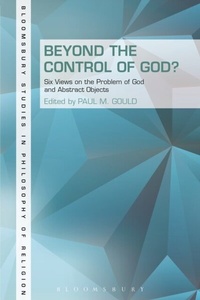
Beyond the Control of God?
Six Views on the Problem of God and Abstract Objects
1st Edition
Published on 27. March 2014
224 pages
978-1-62356-937-2 (ISBN)
Description

The question of God's relationship to abstract objects touches on a number of perennial concerns related to the nature of God. God is typically thought to be an independent and self-sufficient being. Further, God is typically thought to be supremely sovereign such that all reality distinct from God is dependent on God's creative and sustaining activity. However, the view that there are abstract objects seems to be a repudiation of this traditional understanding of God. Abstract objects are typically thought to exist necessarily and it is natural to think that if something exists necessarily, it does so because it is its nature to exist. Thus, abstract objects exist independently of God. Philosophers have called this the problem of God and abstract objects.
In this book, six contemporary solutions to the problem are set out and defended against objections. It will be valuable for all students or scholars who are interested in the concept and nature of God.
In this book, six contemporary solutions to the problem are set out and defended against objections. It will be valuable for all students or scholars who are interested in the concept and nature of God.
Reviews / Votes
The Nicene Creed begins with the claim that God is "the maker of heaven and earth, of all that is, seen and unseen." Does this claim necessitate the claim that God is also the creator of abstract objects-propositions, sets, concepts, etc.-if such there be? In this volume, Paul Gould brings together a first rate collection of scholars articulating and defending a wide range of positions regarding the relationship between abstracta and God. The introduction and the responses to each chapter by the other contributors make this a very approachable and teachable volume. Beyond the Control of God? is a much-needed and-for many like me-long-awaited book! Here we have a lively metaphysical engagement by leading philosophers on the fascinating, long-standing, and vitally important conversation about God, Platonism, nominalism, universals/abstract objects, particulars/concrete objects, and (non)instantiation. A superb resource and guide! * Paul Copan, Professor and Pledger Family Chair of Philosophy and Ethics, Palm Beach Atlantic University, West Palm Beach, Florida * Paul Gould's edited book updates the state of play, and can serve as an excellent introduction to the debate for those of us who have not been following it closely. After Gould's introduction, there are six major contributions, each followed by critiques from each of the other contributors and a final rejoinder from the main author of the section. [...] Clearly, there are a lot of moving parts in this discussion; achieving simplicity along one dimension often brings with it unanticipated complexity in other respects. The essays in Beyond the Control of God? may not point us to a clear solution, but they enable to see a lot of what is at stake in the controversy. Highly recommended. * Notre Dame Philosophical Reviews * This book offers a riveting introduction to the nature of abstract objects, and God's relationship to such objects. The debate format makes the discussion engaging. The lead essays are short, and the critical responses are even shorter. This forces the authors to get straight to the point, which has its own perks for the reader. It makes the essays easier to consume. ... Beyond the Control of God certainly whets the appetite. It is highly recommended for those interested in the philosophy of religion. * Faith and Philosophy, Vol. 32, No. 1, January 2015, reviewed by R.T. Mullins, University of Notre Dame, USA *More details
Series
Edition
1. Auflage
Language
English
Place of publication
New York
United States
Publishing group
Bloomsbury Publishing PLC (Digital)
ISBN-13
978-1-62356-937-2 (9781623569372)
Copyright in bibliographic data and cover images is held by Nielsen Book Services Limited or by the publishers or by their respective licensors: all rights reserved.
Schweitzer Classification
Other editions
Additional editions
Book
05/2014
Bloomsbury Academic USA
€44.70
Shipment within 3-4 weeks
Person
Paul M. Gould is Assistant Professor of Philosophy and Christian Apologetics at Southwestern Baptist Theological Seminary, USA.
Content
Acknowledgments
Introduction to the Problem of God and Abstract Objects Paul M. Gould, Southwest Baptist Theological Seminary, USA
1. God and Propositions Keith Yandell, University of Wisconsin, USA
Response to Yandell
Paul M. Gould, Southwest Baptist Theological Seminary, USA & Richard Brian Davis, Tyndale University, Canada
Greg Welty, Southeastern Baptist Theological Seminary, USA
William Lane Craig, Talbot School of Theology, USA
Scott A. Shalkowski, University of Leeds, United Kingdom
Graham Oppy, Monash University, Australia
Response to Critics
Keith Yandell, University of Wisconsin, USA
2. Modified Theistic Activism Paul M. Gould, Southwest Baptist Theological Seminary, USA & Richard Brian Davis, Tyndale University, Canada
Response to Gould/Davis
Keith Yandell, University of Wisconsin, USA
Greg Welty, Southeastern Baptist Theological Seminary, USA
William Lane Craig, Talbot School of Theology, USA
Scott A. Shalkowski, University of Leeds, United Kingdom
Graham Oppy, Monash University, Australia
Response to Critics
Paul M. Gould, Southwest Baptist Theological Seminary, USA & Richard Brian Davis, Tyndale University, Canada
3. Theistic Conceptual Realism Greg Welty, Southeastern Baptist Theological Seminary, USA
Response to Welty
Keith Yandell, University of Wisconsin, USA
Paul M. Gould, Southwest Baptist Theological Seminary, USA & Richard Brian Davis, Tyndale University, Canada
William Lane Craig, Talbot School of Theology, USA
Scott A. Shalkowski, University of Leeds, United Kingdom
Graham Oppy, Monash University, Australia
Response to Critics
Greg Welty, Southeastern Baptist Theological Seminary, USA
4. Anti-Platonism William Lane Craig, Talbot School of Theology, USA
Response to Craig
Keith Yandell, University of Wisconsin, USA
Paul M. Gould, Southwest Baptist Theological Seminary, USA & Richard Brian Davis, Tyndale University, Canada
Greg Welty, Southeastern Baptist Theological Seminary, USA
Scott A. Shalkowski, University of Leeds, United Kingdom
Graham Oppy, Monash University, Australia
Response to Critics
William Lane Craig, Talbot School of Theology, USA
5. God with or without Abstract Objects Scott A. Shalkowski, University of Leeds, United Kingdom
Response to Shalkowski
Keith Yandell, University of Wisconsin, USA
Paul M. Gould, Southwest Baptist Theological Seminary, USA & Richard Brian Davis, Tyndale University, Canada
Greg Welty, Southeastern Baptist Theological Seminary, USA
William Lane Craig, Talbot School of Theology, USA
Graham Oppy, Monash University, Australia
Response to Critics
Scott A. Shalkowski, University of Leeds, United Kingdom
6. Abstract Objects? Who Cares! Graham Oppy, Monash University, Australia
Response to Oppy
Keith Yandell, University of Wisconsin, USA
Paul M. Gould, Southwest Baptist Theological Seminary, USA & Richard Brian Davis, Tyndale University, Canada
Greg Welty, Southeastern Baptist Theological Seminary, USA
William Lane Craig, Talbot School of Theology, USA
Scott A. Shalkowski, University of Leeds, United Kingdom
Response to Critics
Graham Oppy, Monash University, Australia
Bibliography
Contributors
Index
Introduction to the Problem of God and Abstract Objects Paul M. Gould, Southwest Baptist Theological Seminary, USA
1. God and Propositions Keith Yandell, University of Wisconsin, USA
Response to Yandell
Paul M. Gould, Southwest Baptist Theological Seminary, USA & Richard Brian Davis, Tyndale University, Canada
Greg Welty, Southeastern Baptist Theological Seminary, USA
William Lane Craig, Talbot School of Theology, USA
Scott A. Shalkowski, University of Leeds, United Kingdom
Graham Oppy, Monash University, Australia
Response to Critics
Keith Yandell, University of Wisconsin, USA
2. Modified Theistic Activism Paul M. Gould, Southwest Baptist Theological Seminary, USA & Richard Brian Davis, Tyndale University, Canada
Response to Gould/Davis
Keith Yandell, University of Wisconsin, USA
Greg Welty, Southeastern Baptist Theological Seminary, USA
William Lane Craig, Talbot School of Theology, USA
Scott A. Shalkowski, University of Leeds, United Kingdom
Graham Oppy, Monash University, Australia
Response to Critics
Paul M. Gould, Southwest Baptist Theological Seminary, USA & Richard Brian Davis, Tyndale University, Canada
3. Theistic Conceptual Realism Greg Welty, Southeastern Baptist Theological Seminary, USA
Response to Welty
Keith Yandell, University of Wisconsin, USA
Paul M. Gould, Southwest Baptist Theological Seminary, USA & Richard Brian Davis, Tyndale University, Canada
William Lane Craig, Talbot School of Theology, USA
Scott A. Shalkowski, University of Leeds, United Kingdom
Graham Oppy, Monash University, Australia
Response to Critics
Greg Welty, Southeastern Baptist Theological Seminary, USA
4. Anti-Platonism William Lane Craig, Talbot School of Theology, USA
Response to Craig
Keith Yandell, University of Wisconsin, USA
Paul M. Gould, Southwest Baptist Theological Seminary, USA & Richard Brian Davis, Tyndale University, Canada
Greg Welty, Southeastern Baptist Theological Seminary, USA
Scott A. Shalkowski, University of Leeds, United Kingdom
Graham Oppy, Monash University, Australia
Response to Critics
William Lane Craig, Talbot School of Theology, USA
5. God with or without Abstract Objects Scott A. Shalkowski, University of Leeds, United Kingdom
Response to Shalkowski
Keith Yandell, University of Wisconsin, USA
Paul M. Gould, Southwest Baptist Theological Seminary, USA & Richard Brian Davis, Tyndale University, Canada
Greg Welty, Southeastern Baptist Theological Seminary, USA
William Lane Craig, Talbot School of Theology, USA
Graham Oppy, Monash University, Australia
Response to Critics
Scott A. Shalkowski, University of Leeds, United Kingdom
6. Abstract Objects? Who Cares! Graham Oppy, Monash University, Australia
Response to Oppy
Keith Yandell, University of Wisconsin, USA
Paul M. Gould, Southwest Baptist Theological Seminary, USA & Richard Brian Davis, Tyndale University, Canada
Greg Welty, Southeastern Baptist Theological Seminary, USA
William Lane Craig, Talbot School of Theology, USA
Scott A. Shalkowski, University of Leeds, United Kingdom
Response to Critics
Graham Oppy, Monash University, Australia
Bibliography
Contributors
Index
