


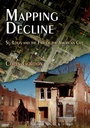
Mapping Decline
St. Louis and the Fate of the American City
1st Edition
Published on 12. September 2014
304 pages
978-0-8122-9150-6 (ISBN)
Description

Once a thriving metropolis on the banks of the Mississippi, St. Louis, Missouri, is now a ghostly landscape of vacant houses, boarded-up storefronts, and abandoned factories. The Gateway City is, by any measure, one of the most depopulated, deindustrialized, and deeply segregated examples of American urban decay. "Not a typical city," as one observer noted in the late 1970s, "but, like a Eugene O'Neill play, it shows a general condition in a stark and dramatic form."
Mapping Decline examines the causes and consequences of St. Louis's urban crisis. It traces the complicity of private real estate restrictions, local planning and zoning, and federal housing policies in the "white flight" of people and wealth from the central city. And it traces the inadequacy-and often sheer folly-of a generation of urban renewal, in which even programs and resources aimed at eradicating blight in the city ended up encouraging flight to the suburbs. The urban crisis, as this study of St. Louis makes clear, is not just a consequence of economic and demographic change; it is also the most profound political failure of our recent history.
Mapping Decline is the first history of a modern American city to combine extensive local archival research with the latest geographic information system (GIS) digital mapping techniques. More than 75 full-color maps-rendered from census data, archival sources, case law, and local planning and property records-illustrate, in often stark and dramatic ways, the still-unfolding political history of our neglected cities.
Mapping Decline examines the causes and consequences of St. Louis's urban crisis. It traces the complicity of private real estate restrictions, local planning and zoning, and federal housing policies in the "white flight" of people and wealth from the central city. And it traces the inadequacy-and often sheer folly-of a generation of urban renewal, in which even programs and resources aimed at eradicating blight in the city ended up encouraging flight to the suburbs. The urban crisis, as this study of St. Louis makes clear, is not just a consequence of economic and demographic change; it is also the most profound political failure of our recent history.
Mapping Decline is the first history of a modern American city to combine extensive local archival research with the latest geographic information system (GIS) digital mapping techniques. More than 75 full-color maps-rendered from census data, archival sources, case law, and local planning and property records-illustrate, in often stark and dramatic ways, the still-unfolding political history of our neglected cities.
Reviews / Votes
"Colin Gordon combines intellectual rigor, a compelling argument, and extensive archival research with the latest geographic information system digital mapping techniques. Dozens of color maps, together with numerous figures and tables, allow the reader to examine the data with fresh eyes. Gordon's focus on a single city, a single neighborhood (Greater Ville), and even a single house (4635 North Market Street) gives his comprehensive analysis an immediacy and power that it might otherwise lack. And the prose is so thoughtful, so well written, and so engaged with recent scholarship that scholars on the topic will be fascinated." (Kenneth Jackson, Political Science Quarterly) "Knowledgeably argued, exhaustively researched, and accessibly written, Gordon's book also employs the latest in digital mapping technology. . . . For brick-and-mortar urban specialists . . . Mapping Decline is nothing short of monumental." (Urban History) "A searing indictment of policymakers, realtors, and mortgage lenders for deliberate decisions that sacrificed their own city of St. Louis on the altar of race. Colin Gordon's use of cartography to visualize this painful pattern of injustice and bad sense is a forceful exemplar for a new kind of history: one told visually as well as textually; analyzed spatially as well as chronologically. Written with empathy, Mapping Decline is a new milestone on the road toward a necessary reckoning of the precise responsibility for the extended urban crises of the twentieth and twenty-first centuries." (Philip J. Ethington, University of Southern California) "Colin Gordon has infused the 'old' story of urban decline with new energy and urgency. His mapping of St. Louis's evolution is a powerful indictment of the distorting, segregating, and wasteful effects of public policy over several generations. Yet the book is not just about history. Incredibly, as Gordon shows, current national and state policies and governmental fragmentation continue to undermine the recovery of American cities at the precise moment when they matter again-economically, environmentally, and socially." (Bruce Katz, Brookings Institution)More details
Series
Language
English
Place of publication
Pennsylvania
United States
Target group
College/higher education
Illustrations
78 color illus.
78 color illus.
File size
15,86 MB
ISBN-13
978-0-8122-9150-6 (9780812291506)
Copyright in bibliographic data and cover images is held by Nielsen Book Services Limited or by the publishers or by their respective licensors: all rights reserved.
Schweitzer Classification
Other editions
Additional editions
Book
10/2009
University of Pennsylvania Press
€47.00
Shipment within 10-20 days
Person
Colin Gordon is Professor of History at The University of Iowa and author of Dead on Arrival: The Politics of Health Care in Twentieth- Century America and New Deals: Business, Labor, and Politics in America, 1920-1935.
Content
List of Maps, Figures, and Tables
Preface
Introduction. Our House: The Twentieth Century at 4635 North Market Street
Local Politics, Local Power: Governing Greater St. Louis, 1940-2000
"The Steel Ring": Race and Realty in Greater St. Louis
Patchwork Metropolis: Municipal Zoning in Greater St. Louis
Fighting Blight: Urban Renewal Policies and Programs, 1945-2000
City of Blight: The Limits of Urban Renewal in Greater St. Louis
Conclusion. Our House Revisited: The Twenty-First Century at 4635 North Market Street
Notes
Index
Preface
Introduction. Our House: The Twentieth Century at 4635 North Market Street
Local Politics, Local Power: Governing Greater St. Louis, 1940-2000
"The Steel Ring": Race and Realty in Greater St. Louis
Patchwork Metropolis: Municipal Zoning in Greater St. Louis
Fighting Blight: Urban Renewal Policies and Programs, 1945-2000
City of Blight: The Limits of Urban Renewal in Greater St. Louis
Conclusion. Our House Revisited: The Twenty-First Century at 4635 North Market Street
Notes
Index
