

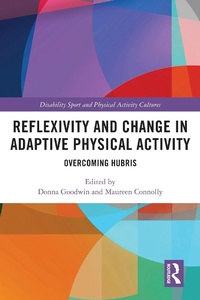
Reflexivity and Change in Adaptive Physical Activity
Overcoming Hubris
1st Edition
Published on 5. December 2022
266 pages
978-1-000-80304-4 (ISBN)
Description

This provocative and challenging book argues for the vital importance of critical self-reflexion in the field of adaptive physical activity (APA).
It makes a powerful case for embracing discussions of the harm caused by ableist assumptions of the ideal body, maximizing capabilities and perfecting normative-based movement that dominate contemporary discourse in APA, and calls for more critical introspection about what APA is, how it is performed, and what might be needed to bring a collaborative relational ethic to this field. The book focuses on two key themes. Firstly, how ableism as a foundational belief system of APA is present in the undergraduate curriculum, professional preparation, professional practice, and organizational policies. Secondly, how to make the comfortable uncomfortable by openly debating the harm that results from non-reflexive (nondisabled) hubris in APA. The goal is to spark an exchange of ideas among scholars, practitioners, and organizational leaders and therefore to shift the paradigm from one of professional expertism to one that centres disability wisdom holders, bringing a fundamental change to how we perform adaptive physical activity.
This book is important, progressive reading for anybody with an interest in adaptive physical activity, adapted physical education, disability sport, inclusive education, the philosophy and ethics of disability and sport, or disability in wider society.
It makes a powerful case for embracing discussions of the harm caused by ableist assumptions of the ideal body, maximizing capabilities and perfecting normative-based movement that dominate contemporary discourse in APA, and calls for more critical introspection about what APA is, how it is performed, and what might be needed to bring a collaborative relational ethic to this field. The book focuses on two key themes. Firstly, how ableism as a foundational belief system of APA is present in the undergraduate curriculum, professional preparation, professional practice, and organizational policies. Secondly, how to make the comfortable uncomfortable by openly debating the harm that results from non-reflexive (nondisabled) hubris in APA. The goal is to spark an exchange of ideas among scholars, practitioners, and organizational leaders and therefore to shift the paradigm from one of professional expertism to one that centres disability wisdom holders, bringing a fundamental change to how we perform adaptive physical activity.
This book is important, progressive reading for anybody with an interest in adaptive physical activity, adapted physical education, disability sport, inclusive education, the philosophy and ethics of disability and sport, or disability in wider society.
More details
Series
Edition
1. Auflage
Language
English
Place of publication
London
United Kingdom
Publishing group
Taylor & Francis Ltd
Target group
College/higher education
Professional and scholarly
Illustrations
1 Tables, black and white; 3 Line drawings, black and white; 3 Illustrations, black and white
ISBN-13
978-1-000-80304-4 (9781000803044)
Copyright in bibliographic data and cover images is held by Nielsen Book Services Limited or by the publishers or by their respective licensors: all rights reserved.
Schweitzer Classification
Other editions
Additional editions
Donna Goodwin | Maureen Connolly
Reflexivity and Change in Adaptive Physical Activity
Overcoming Hubris
Book
08/2024
1st Edition
Routledge
€63.50
Shipment within 10-20 days
Donna Goodwin | Maureen Connolly
Reflexivity and Change in Adaptive Physical Activity
Overcoming Hubris
Book
12/2022
1st Edition
Routledge
€186.30
Shipment within 10-20 days
Persons
Donna Goodwin is Professor Emerita in the Faculty of Kinesiology, Sport, and Recreation at the University of Alberta, Canada. Her research focuses on bringing to light the literal and metaphorical lives of disabled people as they negotiate the social and cultural impediments to engagement in physical activity and community life. She grounds her teaching philosophy in the need for crucial self-reflexion on taken-for granted pedagogical practices in teacher education and professional service delivery.
Maureen Connolly is Professor of Physical Education and Kinesiology in the Faculty of Applied Health Sciences at Brock University, Canada. Maureen works with qualitative arts-based inquiry, narrative, poetic, and bodily expressive modalities and how these function across scholarly, pedagogic, and other creative outlets. She is a YWCA Woman of Distinction, a university teaching award winner and 3M National Teaching Fellow (2003), and a 2009 Erasmus Mundus scholar. Her teaching and research interests include curriculum, stressed embodiment, dance, and movement education.
Maureen Connolly is Professor of Physical Education and Kinesiology in the Faculty of Applied Health Sciences at Brock University, Canada. Maureen works with qualitative arts-based inquiry, narrative, poetic, and bodily expressive modalities and how these function across scholarly, pedagogic, and other creative outlets. She is a YWCA Woman of Distinction, a university teaching award winner and 3M National Teaching Fellow (2003), and a 2009 Erasmus Mundus scholar. Her teaching and research interests include curriculum, stressed embodiment, dance, and movement education.
Content
Ableism Hiding in Plain Sight: An Introduction in Four Acts
MAUREEN CONNOLLY
PART I
Making the Comfortable Uncomfortable
1 Disrupting Ableism in Adaptive Physical Activity through Anti-ableist Research and Practice
KAREN P. DEPAUW
2 10 Things I Hate about 'Inclusion' in Physical Education
JUSTIN A. HAEGELE AND WESLEY J. WILSON
3 Disablism, Ableism, and Enlightened Ableism in Contemporary Adapted Physical Activity Textbooks: Practising What We Preach?
DANIELLE PEERS, LINDSAY EALES, AND DONNA GOODWIN
4 The Ethics of Wilful Ignorance: "Someone Needs to Tell Those Parents There Is Something Wrong with Their Kid"
DONNA GOODWIN
PART II
Ableism in Adaptive Physical Activity: The Taken-for-Granted
5 Adaptive Physical Activity Practices That Can Perpetuate or Perpetrate Trauma and Mental Distress: More Harm Than Good?
LINDSAY EALES
6 Counterstories of Community Service Learning: "We Are Not an Eight-Hour Dumping Ground"
KYOUNG JUNE YI
7 Emulating Disability: Disrupting a Taken-for-granted Practice
JENNIFER LEO
PART III
Social Justice and Critical Pedagogy
8 Critical Self-Reflexivity in the Education of Adaptive Physical Activity Practitioners: Disputing the Severely Able-bodied Student
OYVIND FORLAND STANDAL
9 Towards a Critical Discourse of Physical Literacy in Adapted Physical Activity
KYLE PUSHKARENKO
10 Intersectionality, Disability, Justice, and Critical Pedagogy
SAMUEL R. HODGE, ROSS D. JORDAN, AND KIMBERLY J. SMITH
11 Engaging in Reflexive Writing in Adaptive Physical Activity
BRENDA ROSSOW KIMBALL
PART IV
Organizational Spaces that Exclude
12 Ableism within Adapted/Physical Education Teacher Education: Implications for Practice
MICHELLE GRENIER AND MARTIN GIESE
13 Divergent Professionalism in Inclusive Physical Education:
Neglecting Collaboration in Preparation, Professional Development, and Practice
HAYLEY J. MORRISON
14 Dis/ability Sport for "All": The Ultimate Dream
CARLA FILOMENA SILVA AND P. DAVID HOWE
PART V
Reflexivity: A Moral Imperative for Change and Optimism
15 Reflections on Sport, Disability, and the Need for Adaptive Physical Activity to Evolve: Growing Up
HEATHER R. KUTTAI
16 Critical Service-Learning and Reflection on Power and Assumptive Thinking
JIHOUN AN
17 Inspiration Porn and Disability Sport
JEFFREY J. MARTIN
18 How Critical Engagement with Embodiment, Agency, and Hope Contributes to Authentic Pedagogy in Adaptive Physical Activity
MAUREEN CONNOLLY
Conclusion: An Emerging Era for Adaptive Physical Activity
DONNA GOODWIN
MAUREEN CONNOLLY
PART I
Making the Comfortable Uncomfortable
1 Disrupting Ableism in Adaptive Physical Activity through Anti-ableist Research and Practice
KAREN P. DEPAUW
2 10 Things I Hate about 'Inclusion' in Physical Education
JUSTIN A. HAEGELE AND WESLEY J. WILSON
3 Disablism, Ableism, and Enlightened Ableism in Contemporary Adapted Physical Activity Textbooks: Practising What We Preach?
DANIELLE PEERS, LINDSAY EALES, AND DONNA GOODWIN
4 The Ethics of Wilful Ignorance: "Someone Needs to Tell Those Parents There Is Something Wrong with Their Kid"
DONNA GOODWIN
PART II
Ableism in Adaptive Physical Activity: The Taken-for-Granted
5 Adaptive Physical Activity Practices That Can Perpetuate or Perpetrate Trauma and Mental Distress: More Harm Than Good?
LINDSAY EALES
6 Counterstories of Community Service Learning: "We Are Not an Eight-Hour Dumping Ground"
KYOUNG JUNE YI
7 Emulating Disability: Disrupting a Taken-for-granted Practice
JENNIFER LEO
PART III
Social Justice and Critical Pedagogy
8 Critical Self-Reflexivity in the Education of Adaptive Physical Activity Practitioners: Disputing the Severely Able-bodied Student
OYVIND FORLAND STANDAL
9 Towards a Critical Discourse of Physical Literacy in Adapted Physical Activity
KYLE PUSHKARENKO
10 Intersectionality, Disability, Justice, and Critical Pedagogy
SAMUEL R. HODGE, ROSS D. JORDAN, AND KIMBERLY J. SMITH
11 Engaging in Reflexive Writing in Adaptive Physical Activity
BRENDA ROSSOW KIMBALL
PART IV
Organizational Spaces that Exclude
12 Ableism within Adapted/Physical Education Teacher Education: Implications for Practice
MICHELLE GRENIER AND MARTIN GIESE
13 Divergent Professionalism in Inclusive Physical Education:
Neglecting Collaboration in Preparation, Professional Development, and Practice
HAYLEY J. MORRISON
14 Dis/ability Sport for "All": The Ultimate Dream
CARLA FILOMENA SILVA AND P. DAVID HOWE
PART V
Reflexivity: A Moral Imperative for Change and Optimism
15 Reflections on Sport, Disability, and the Need for Adaptive Physical Activity to Evolve: Growing Up
HEATHER R. KUTTAI
16 Critical Service-Learning and Reflection on Power and Assumptive Thinking
JIHOUN AN
17 Inspiration Porn and Disability Sport
JEFFREY J. MARTIN
18 How Critical Engagement with Embodiment, Agency, and Hope Contributes to Authentic Pedagogy in Adaptive Physical Activity
MAUREEN CONNOLLY
Conclusion: An Emerging Era for Adaptive Physical Activity
DONNA GOODWIN
