

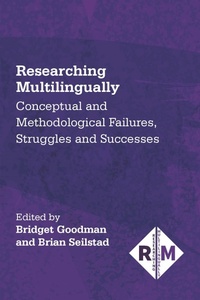
Researching Multilingually
Conceptual and Methodological Failures, Struggles and Successes
Published on 14. January 2025
316 pages
978-1-78892-571-6 (ISBN)
Description

This book examines what 'researching multilingually' means in practice and theory. It is multinational and transnational in scope, including the voices of both experienced and emerging scholars who reflect on the process of conducting, analyzing and reporting multilingual research in various settings. Together the chapters address issues including theorizing multilingualism and collaborative research with multilingual scholars and research participants; navigating insider or outsider positioning with research participants; making and accepting language choices among researchers and participants during research; translating and interpreting multilingual data; and confronting policy challenges of multilingual research design and reporting in English-dominant contexts. The book ties these processes to existing theories of multilingualism in research and proposes new ways of understanding best practices while also wrestling with challenges and at times 'failures' in the research process.
Reviews / Votes
This engaging volume offers new ways of theorizing research on, with and by multilingual speakers in multilingual contexts. It provides a rich collection of testimonies from younger and older scholars on how they have researched the teaching of English in a 'multilingual' manner in various parts of the world. Their honest and mature reflections raise interesting questions about the educational benefits and the political risks of researching multilingually. * Claire Kramsch, University of California, Berkeley, USA * It is rare to see words like 'failures' and 'struggles' in a book title. Yet it is precisely for that reason that this book is so valuable. The editors and contributors have done a great service to the academic community by detailing their experiences of researching multilingually. There are many lessons for us all. The impact of these lessons will be felt for a very long time to come. * Li Wei, UCL Institute of Education, UK * Offering critical insights on challenges and opportunities associated with conducting research multilingually in a variety of international, disciplinary, and educational contexts, this timely edited volume exemplifies the multilingual turn and heteroglossic ideologies in applied linguistics. The contributors offer rich theoretical, empirical, and practical insights that will further advance multilingual research methods and reflexivity in our field. * Patricia A. Duff, University of British Columbia, Canada *More details
Series
Language
English
Place of publication
Bristol
United Kingdom
Target group
College/higher education
Product notice
Reflowable
ISBN-13
978-1-78892-571-6 (9781788925716)
Copyright in bibliographic data and cover images is held by Nielsen Book Services Limited or by the publishers or by their respective licensors: all rights reserved.
Schweitzer Classification
Other editions
Additional editions
Bridget Goodman | Brian Seilstad
Researching Multilingually
Conceptual and Methodological Failures, Struggles and Successes
Book
01/2025
Multilingual Matters
€57.50
Shipment within 3-4 weeks
Persons
Bridget Goodman is an Associate Professor, Nazarbayev University, Kazakhstan. She is co-editor of Autoethnographic Explorations of Lived Raciolinguistic Experiences Among Multilingual Scholars: Looking Inward to Move Forward (with Qianqian Zhang-Wu, Multilingual Matters, 2025).
Brian Seilstad is Director for Internationalization and Partnerships, Al Akhawayn University in Ifrane, Morocco. He is the author of Educating Adolescent Newcomers in the Superdiverse Midwest: Multilingual Students in English-centric Contexts (Multilingual Matters, 2021).
Brian Seilstad is Director for Internationalization and Partnerships, Al Akhawayn University in Ifrane, Morocco. He is the author of Educating Adolescent Newcomers in the Superdiverse Midwest: Multilingual Students in English-centric Contexts (Multilingual Matters, 2021).
Content
Contributors
Chapter 1. Bridget Goodman and Brian Seilstad: Making Meaning of 'Researching Multilingually'
Part 1: Revisiting and Reimagining Multilingual Approaches to Research
Chapter 2. Anthony J. Liddicoat and Martine Derivry-Plard: Research Practice as a Multilingual Habitus
Chapter 3. Michael Singh and L? Xi?o-Li (???): Bourdieu and Sayad's Contributions to Researching Multilingually: Creating Knowledge through Postmonolingual Theorising
Chapter 4. Theron Muller and John Lindsay Adamson: Translanguaging in Writing for Academic and Publication Purposes: Autoethnographic Insights from the Japanese Tertiary Context
Chapter 5. Nhung Nguy?n: Making an Original Contribution to Transknowledging: Researching Multilingually through Postmonolingual Theorising
Part 2: Wrestling with the Complexity of Researching Multilingually
Chapter 6. Bridget Goodman and Ainur Almukhambetova: Conducting Research Multilingually in an English-Medium University: Reflexive Narratives of a Student and a Supervisor
Chapter 7. Sary Silvhiany: Navigating Languages and Identities: A Reflexive Account of Learning to Research Multilingually
Chapter 8. Michele Back: When Multilingualism Fails: Positioning 'Failure' in Intergenerational Language Transmission, Language Learning and Language Teaching
Chapter 9. G Yeon Park and Jae-hyun Im: A Translingual Perspective on Data Collection and Analysis in Computer-Mediated Communication
Chapter 10. Juval V. Racelis, Yuching Jill Yang and Daniel V. Bommarito: Harnessing Benefits of Multilingual Data Collection: An Examination of Two Critical Sites of Translation
Part 3: Embracing the Challenges of Researching Multilingually
Chapter 11. Mateus Yumarnamto: Transcribing and Translating Multilingual Data: Discovering the Third Space, Imagined Communities and the Malin Kundang Curse
Chapter 12. Fiona Willans and Rajendra Prasad: Researching Multilingual, Multimodal Insights into the Online Learning Experience: Getting in the Zone
Chapter 13. Yoo Young Ahn: A New Researcher's Journey of Researching Transnationally and Multilingually: A Practical Guide Reflecting on Significance and Methodological Changes
Chapter 14. Artanti Puspita Sari: 'Am I an Insider or an Outsider?' The Dilemmas of Positionality in One's Own Multilingual Community
Chapter 15. Fatma F.S. Said: Navigating Multilingual Data in Sociolinguistics: Challenges and Strategies for Transcription, Translation and Presentation
Chapter 16. Mary M. Jacobs: English Hegemony Hovers: Monolingual Reflections on Multilingual Research with Newly Settled Families in Aotearoa New Zealand
Chapter 17. Brian Seilstad: Translanguaging and its Methodological Implications for Multilingual Research: A Reflection from Ethnographic Work with Adolescent Newcomers in Superdiverse Central Ohio
Chapter 18. Bridget Goodman and Brian Seilstad: Reflections and Future Directions for Researching Multilingually
Index
Chapter 1. Bridget Goodman and Brian Seilstad: Making Meaning of 'Researching Multilingually'
Part 1: Revisiting and Reimagining Multilingual Approaches to Research
Chapter 2. Anthony J. Liddicoat and Martine Derivry-Plard: Research Practice as a Multilingual Habitus
Chapter 3. Michael Singh and L? Xi?o-Li (???): Bourdieu and Sayad's Contributions to Researching Multilingually: Creating Knowledge through Postmonolingual Theorising
Chapter 4. Theron Muller and John Lindsay Adamson: Translanguaging in Writing for Academic and Publication Purposes: Autoethnographic Insights from the Japanese Tertiary Context
Chapter 5. Nhung Nguy?n: Making an Original Contribution to Transknowledging: Researching Multilingually through Postmonolingual Theorising
Part 2: Wrestling with the Complexity of Researching Multilingually
Chapter 6. Bridget Goodman and Ainur Almukhambetova: Conducting Research Multilingually in an English-Medium University: Reflexive Narratives of a Student and a Supervisor
Chapter 7. Sary Silvhiany: Navigating Languages and Identities: A Reflexive Account of Learning to Research Multilingually
Chapter 8. Michele Back: When Multilingualism Fails: Positioning 'Failure' in Intergenerational Language Transmission, Language Learning and Language Teaching
Chapter 9. G Yeon Park and Jae-hyun Im: A Translingual Perspective on Data Collection and Analysis in Computer-Mediated Communication
Chapter 10. Juval V. Racelis, Yuching Jill Yang and Daniel V. Bommarito: Harnessing Benefits of Multilingual Data Collection: An Examination of Two Critical Sites of Translation
Part 3: Embracing the Challenges of Researching Multilingually
Chapter 11. Mateus Yumarnamto: Transcribing and Translating Multilingual Data: Discovering the Third Space, Imagined Communities and the Malin Kundang Curse
Chapter 12. Fiona Willans and Rajendra Prasad: Researching Multilingual, Multimodal Insights into the Online Learning Experience: Getting in the Zone
Chapter 13. Yoo Young Ahn: A New Researcher's Journey of Researching Transnationally and Multilingually: A Practical Guide Reflecting on Significance and Methodological Changes
Chapter 14. Artanti Puspita Sari: 'Am I an Insider or an Outsider?' The Dilemmas of Positionality in One's Own Multilingual Community
Chapter 15. Fatma F.S. Said: Navigating Multilingual Data in Sociolinguistics: Challenges and Strategies for Transcription, Translation and Presentation
Chapter 16. Mary M. Jacobs: English Hegemony Hovers: Monolingual Reflections on Multilingual Research with Newly Settled Families in Aotearoa New Zealand
Chapter 17. Brian Seilstad: Translanguaging and its Methodological Implications for Multilingual Research: A Reflection from Ethnographic Work with Adolescent Newcomers in Superdiverse Central Ohio
Chapter 18. Bridget Goodman and Brian Seilstad: Reflections and Future Directions for Researching Multilingually
Index
